MMTEB: Massive Multilingual Text Embedding Benchmark
- Author
- Kenneth Enevoldsen et al.
- Affiliations
- CentraleSupélec, Université Paris-Saclay
- Hugging Face
- others
- Accepted at
- ICLR 2025
- Date
- arXiv
- 2502.13595
Abstract
Text embeddings are typically evaluated on a limited set of tasks, which are constrained by language, domain, and task diversity. To address these limitations and provide a more comprehensive evaluation, we introduce the Massive Multilingual Text Embedding Benchmark (MMTEB) - a large-scale, community-driven expansion of MTEB, covering over 500 quality-controlled evaluation tasks across 250+ languages. MMTEB includes a diverse set of challenging, novel tasks such as instruction following, long-document retrieval, and code retrieval, representing the largest multilingual collection of evaluation tasks for embedding models to date. Using this collection, we develop several highly multilingual benchmarks, which we use to evaluate a representative set of models. We find that while large language models (LLMs) with billions of parameters can achieve state-of-the-art performance on certain language subsets and task categories, the best-performing publicly available model is multilingual-e5-large-instruct with only 560 million parameters. To facilitate accessibility and reduce computational cost, we introduce a novel downsampling method based on inter-task correlation, ensuring a diverse selection while preserving relative model rankings. Furthermore, we optimize tasks such as retrieval by sampling hard negatives, creating smaller but effective splits. These optimizations allow us to introduce benchmarks that drastically reduce computational demands. For instance, our newly introduced zero-shot English benchmark maintains a ranking order similar to the full-scale version but at a fraction of the computational cost.
Cite this paper
@inproceedings{al2025mmteb,
  title = {MMTEB: Massive Multilingual Text Embedding Benchmark},
  author = {Kenneth Enevoldsen et al.},
  booktitle = {International Conference on Learning Representations (ICLR 2025)},
  year = {2025}
}Copied
Introduction
Text embeddings are used in many applications, such as semantic search (Reimers & Gurevych, 2019; Muennighoff, 2022; Hendriksen et al., 2023; Winata et al., 2023a; Winata et al., 2024b) and classification tasks (Wang et al., 2018; Wang et al., 2019). Additionally, text embeddings play a crucial role in retrieval-augmented generation (RAG; Borgeaud et al. 2022; Lewis et al. 2021), and often provide significant gains in performance on low- to mid-resource languages, enabling the incorporation of previously inaccessible information. Despite the wide range of applications, there’s a lack of benchmarks that evaluate text embeddings across multiple domains, languages, and tasks. Existing benchmarks tend to focus on specific domains, demarcated by subject (e.g., medical, legal, fiction (Thorne et al., 2018b)), particular tasks (e.g., retrieval (Thakur et al., 2021)), literary type (e.g., fiction, and non-fiction) or form (e.g., spoken and written). Embeddings also tend to focus on a subset of languages (Nørregaard & Derczynski, 2021).
While recent efforts (Thakur et al., 2021; Muennighoff et al., 2023b; Zhang et al., 2022) have aimed to broaden the scope by encompassing more tasks, domains, or languages (Cohan et al., 2020a; Wrzalik & Krechel, 2021), a large gap in language coverage remains. This work bridges this gap by creating a benchmark that includes a much broader range of low- to mid-resource languages, along with broader coverage of domains and task categories. To create such an expansive benchmark, we initiated a large-scale, open collaboration. Contributors include native speakers from diverse linguistic backgrounds, NLP practitioners, academic and industry researchers, and enthusiasts. To ensure high-quality submissions, each dataset required systematic tests, detailed metadata, and a review.
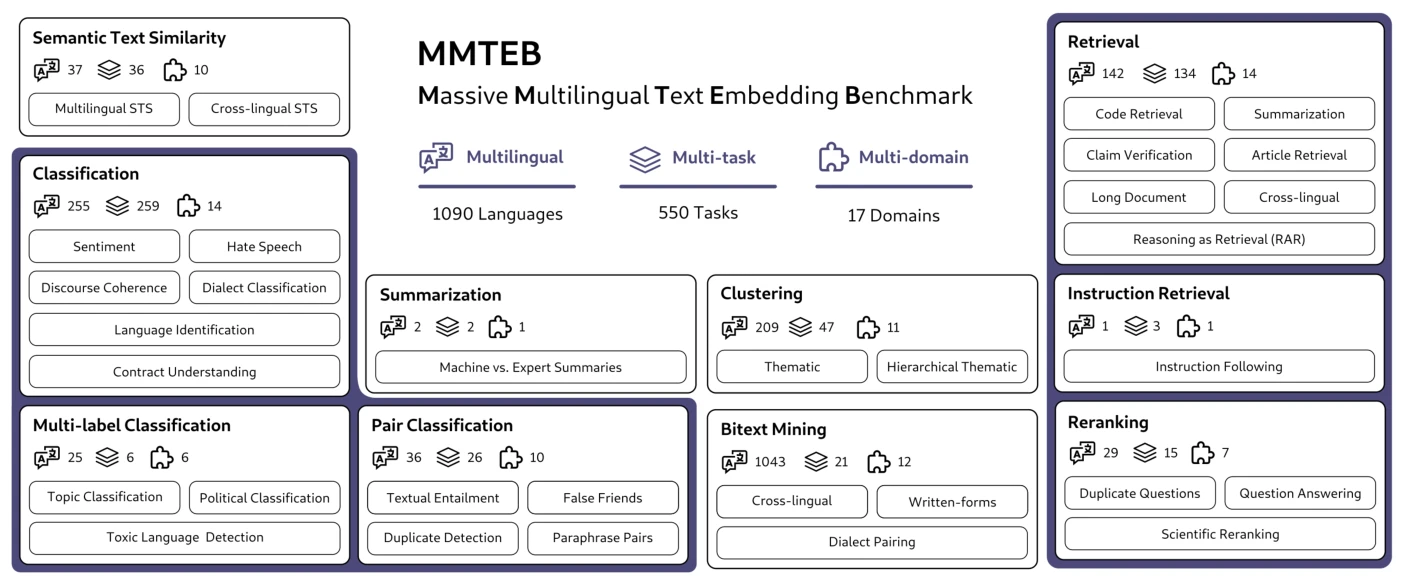
The result of this extensive collaborative effort is MMTEB, the Massive Multilingual Text Embedding Benchmark, which comprises more than 500 distinct tasks across 10 task categories, covering over 250 languages, and spans a wide array of domains such as fiction, social media, medical texts, and technical programming documentation. It also integrates recent, high-quality benchmarks that test a model’s capabilities in following instructions (Winata et al., 2021; Weller et al., 2024), embedding long documents (Zhu et al., 2024), solving reasoning tasks (Xiao et al., 2024a; Su et al., 2024), and cross-lingual retrieval (Franco-Salvador et al., 2014). For an overview see Figure 1.
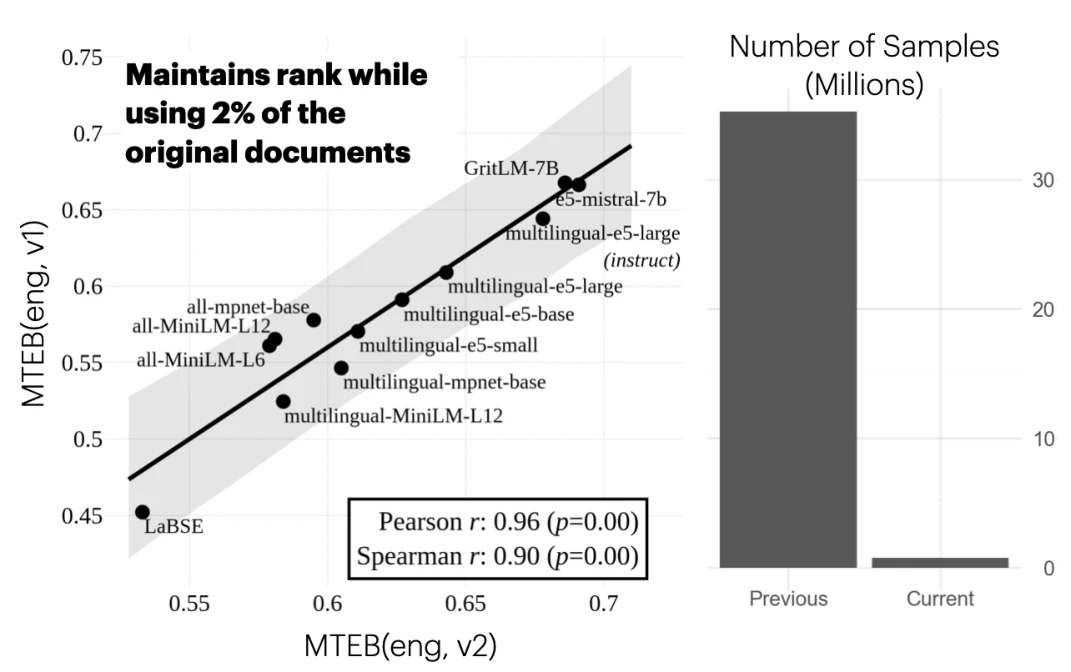
Given the known co-occurrence of limited computational resources and low-resource languages, often referred to as the “low-resource double bind” (Ahia et al., 2021), we made it our goal to make the MMTEB benchmark accessible to low-resource communities. Evaluating models extensively is often resource-intensive. For example, evaluating a single 7B large language model (LLM) on the HELM benchmark consumes over 4,000 GPU hours (Liang et al., 2022). Similarly, the English MTEB (henceforth referred to as MTEB(eng, v1)) benchmark requires up to two days of processing on a single A100 GPU even for moderately sized LLMs (Muennighoff et al., 2023b; BehnamGhader et al., 2024). These high resource demands pose a challenge for low-resource language communities that often lack access to powerful computing resources. MMTEB addresses these challenges by expanding its coverage and optimizing the evaluation process. It significantly reduces computational cost (3.11 hours on an H100 GPU for a 7B model) by using only 2% of the original documents (6% of the original number of characters) while maintaining sensitivity as a benchmark to rank models accurately.
MMTEB Construction
Open science effort
To ensure the broad applicability of MMTEB across various domains, we recruited a diverse group of contributors. We actively encouraged participation from industry professionals, low-resource language communities, and academic researchers. To clarify authorship assignment and recognize desired contributions, we implemented a point-based system, similar to Lovenia et al. (2024). To facilitate transparency, coordination was managed through GitHub. A detailed breakdown of contributors and the point system can be found in Appendix A.
Ensuring task quality
To guarantee the quality of the added tasks, each task was reviewed by at least one of the main contributors. In addition, we required task submissions to include metadata fields. These fields included details such as annotation source, dataset source, license, dialects, and citation information. Appendix B.4 provides a comprehensive description of each field.
Furthermore, we ensured that the performance on submitted tasks fell within a reasonable range to avoid trivially low or unrealistically high performance. Therefore, we required two multilingual models to be run on the task; multilingual-e5-small (Wang et al., 2022) and MiniLM-L12 (Reimers & Gurevych, 2019). A task was examined further if the models obtained scores close to a random baseline (within a 2% margin), a near-perfect score, or if both models obtained roughly similar scores. These tasks were examined for flawed implementation or poor data quality. Afterwards, a decision was made to either exclude or include the task. We consulted with contributors who are familiar with the target language whenever possible before the final decision. A task could be included despite failing these checks. For example, scores close to the random baseline might be due to the task’s inherent difficulty rather than poor data quality.
Accessibility and benchmark optimization
As detailed in Section 1, extensive benchmark evaluations often require significant computational resources. This trend is also observed in MTEB(eng, v1) (Muennighoff et al., 2023b), where running moderately sized LLMs can take up to two days on a single A100 GPU. Accessibility for low-resource communities is particularly important for MMTEB, considering the common co-occurrence of computational constraints (Ahia et al., 2021).
Below, we discuss three main strategies implemented to make our benchmark more efficient. We additionally elaborate further code optimization in Appendix C.2.
Downsampling and caching embeddings
The first strategy involves optimizing the evaluation process by downsampling datasets and caching embeddings. Encoding a large volume of documents for tasks such as retrieval and clustering can be a significant bottleneck in evaluation. Downsampling involves selecting a representative subset of the dataset and reducing the number of documents that require processing. Caching embeddings prevents redundant encoding by using already processed documents.
In MTEB, clustering is evaluated by computing the v-measure score (Rosenberg & Hirschberg, 2007) on text embeddings clustered using k-means. This process is repeated over multiple distinct sets, inevitably resulting in a large number of documents being encoded. To reduce this encoding burden, we propose a bootstrapping approach that reuses encoded documents across sets. We first encode a 4% subsample of the corpus and sample 10 sets without replacement. Each set undergoes k-means clustering, and we record performance estimates. For certain tasks, this approach reduces the number of documents encoded by 100 . In Appendix B.2, we compare both approaches and find an average speedup of 16.11x across tasks, while preserving the relative ranking of models (Average Spearman correlation: 0.96).
A key challenge in retrieval tasks is encoding large document collections, which can contain millions of entries Nguyen et al. (2024). To maintain performance comparable to the original datasets while reducing the collection size, we adopted the TREC pooling strategy (Buckley et al., 2007; Soboroff & Robertson, 2003), which aggregates scores from multiple models to select representative documents. For each dataset, we retained the top 250 ranked documents per query, a threshold determined through initial tests that showed negligible differences in absolute scores and no changes in relative rankings across representative models (see Appendix C.1.2 for details on downsampling effects). These documents are merged to form a smaller representative collection. For datasets exceeding 1,000 queries, we randomly sampled 1,000 queries, reducing the largest datasets from over 5 million documents to a maximum of 250,000. This approach accelerated evaluation while preserving ranking performance.
We apply similar optimization to bitext mining tasks. Some datasets, such as Flores (Costa-jussà et al., 2022) share the same sentences across several language pairs (e.g., English sentences are the same in the English-Hindi pair and the English-Bosnian pair). By caching the embeddings, we reduce the number of embedding computations, making it linear in the number of languages instead of quadratic. For the English documents within Flores this results in a reduction of documents needed to be embedded from 410,000 in MTEB(eng, v1) to just 1,012 in our benchmark.
Encouraging smaller dataset submissions
The second strategy focused on encouraging contributors to downsample datasets before submission. To achieve this, we used a stratified split based on target categories. This helped us to ensure that the downsampled datasets could effectively differentiate between candidate models. To validate the process, we compared scores before and after downsampling. For details, we refer to Appendix C.1.
Task Selection
To further reduce the computation overhead we seek to construct a task subset that can reliably predict task scores outside the subset.
For task selection, we followed an approach inspired by Xia et al. (2020). We seek to estimate the model scores on an unobserved task based on scores on observed tasks . This allows us to consider the performance of tasks as features within a prediction problem. Thus we can treat task selection as feature reduction, a well-formulated task within machine learning. Note that this formulation allows us to keep the unobserved task arbitrary, representing generalization to unseen tasks (Chollet, 2019). We used a backward selection method, where one task is left out to be predicted, an estimator is fitted on the performance of all models except one, and the score of the held-out model is predicted. This process is repeated until predicted scores are generated for all models on all tasks. The most predictable task is then removed, leaving the estimators in the task subset group. Optionally, we can add additional criteria to ensure task diversity and language representation. Spearman’s rank correlation was chosen as the similarity score, as it best preserved the relative ranking when applied to the MTEB(eng, v1).
Benchmark construction
From the extensive collection of tasks in MMTEB, we developed several representative benchmarks, including a highly multilingual benchmark, MTEB(Multilingual), as well as regional geopolitical benchmarks, MTEB(Europe) and MTEB(Indic). Additionally, we introduce a faster version of MTEB(eng, v1) (Muennighoff et al., 2023b), which we refer to as MTEB(eng, v2). MMTEB also integrates domain-specific benchmarks like CoIR for code retrieval (Li et al., 2024) and LongEmbed for long document retrieval (Zhu et al., 2024). MMTEB also introduces language-specific benchmarks, extending the existing suite that includes Scandinavian (Enevoldsen et al., 2024), Chinese (Xiao et al., 2024b), Polish (Poświata et al., 2024), and French (Ciancone et al., 2024). For an overview of the benchmarks, we refer to Appendix H.1.
In the following section, we detail a methodology that we designed to create more targeted and concise benchmarks. This methodology includes: 1) clearly defining the initial scope of the benchmark (Initial Scope), 2) reducing the number of tasks by iterative task selection tasks based on intertask correlation (Refined Scope), and 3) performing a thorough manual review (Task Selection and Review). We provide an overview in Table 1.
In addition to these benchmarks, we provide accompanying code to facilitate the creation of new benchmarks, to allow communities and companies to create tailored benchmarks. In the following, we present MTEB(Multilingual) and MTEB(eng, v2) as two example cases. For a comprehensive overview of benchmark construction and the tasks included in each benchmark, we refer to Appendix H.2.
MTEB(Multilingual): We select all available languages within MMTEB as the initial scope of the benchmark. This results in 550 tasks. We reduce this selection by removing machine-translated datasets, datasets with under-specified licenses, and highly domain-specific datasets such as code-retrieval datasets. This results in 343 tasks covering 250 languages. Following this selection, we evaluate this subset using a representative selection of models (See Section 3.1) and apply task selection to remove the most predictable tasks. To ensure language diversity and representation across task categories, we avoid removing a task that would eliminate a language from the respective task category. Additionally, we did not remove a task if the mean squared error between predicted and observed scores exceeded 0.5 standard deviations. This is to avoid inadvertantly overindexing to easier tasks. The process of iterative task removal (Section 2.3.3) is repeated until the most predictable held-out task obtained a Spearman correlation of less than 0.8 between predicted and observed scores, or if no tasks were available for filtering. This results in a final selection of 131 diverse tasks. Finally, the selected tasks were reviewed, if possible, by contributors who spoke the target language. If needed, the selection criteria were updated, and some tasks were manually replaced with higher-quality alternatives.
MTEB(eng, v2): Unlike the multilingual benchmarks which target a language group, this benchmark is designed to match MTEB(eng, v1), incorporating computational efficiencies (see Section 2.3) and reducing the intertask correlation using task selection. To prevent overfitting, we intend it as a zero-shot benchmark, excluding tasks like MS MARCO (Nguyen et al., 2016) and Natural Questions (Kwiatkowski et al., 2019), which are frequently used in fine-tuning.
We start the construction by replacing each task with its optimized variant. This updated set obtains a Spearman correlation of , (Pearson , ) with MTEB(eng, v1) using mean aggregation for the selected models (see Subsection 3.1). The task selection process then proceeds similarly to MTEB(Multilingual), ensuring task diversity by retaining a task if its removal would eliminate a task category. Tasks, where the mean squared error between predicted and observed performance exceeds 0.2 standard deviations, are also retained. This process continues until the most predictable held-out task yields a Spearman correlation below 0.9 between predicted and observed scores. The final selection consists of 41 tasks. We compare this with MTEB(eng, v1) (Muennighoff et al., 2023b) in Section 4.
Experimental Settings
Models
We select a representative set of models, focusing on multilingual models across various size categories. We benchmark the multilingual LaBSE (Feng et al., 2022), trained on paraphrase corpora, English and multilingual versions of MPNet (Song et al., 2020), and MiniLM (Wang et al., 2021b) model, trained on diverse datasets. We also evaluate the multilingual e5 series models (Wang et al., 2024; Wang et al., 2022) trained using a two-step approach utilizing weak supervision. Additionally, to understand the role of scale as well as instruction finetuning, we benchmark GritLM-7B (Muennighoff et al., 2024) and e5-multilingual-7b-instruct (Wang et al., 2023), which are both based on the Mistral 7B model (Jiang et al., 2023).
Revision IDs, model implementation, and prompts used are available in Appendix G. We ran the models on all the implemented tasks to encourage further analysis of the model results. Results, including multiple performance metrics, runtime, CO2 emissions, model metadata, etc., are publicly available in the versioned results repository (https://github.com/embeddings-benchmark/results).
Evaluation Scores
For our performance metrics, we report average scores across all tasks, scores per task category, and weighted by task category. We compute model ranks using the Borda count method (Colombo et al., 2022), derived from social choice theory. This method, which is also employed in election systems based on preference ranking, has been shown to be more robust for comparing NLP systems. To compute this score, we consider each task as a preference voter voting for each model, and scores are aggregated according to the Borda Count method. In the case of ties, we use the tournament Borda count method.
Multilingual performance
While MMTEB includes multiple benchmarks (see Appendix H.1), we select three multilingual benchmarks to showcase. These constitute a fully multilingual benchmark MTEB(Multilingual) and two targeting languages with varying levels of resources: MTEB(Europe) and MTEB(Indic). The performance of our selected models on these tasks can be seen in Table 2. For performance metrics per task, across domains, etc., we refer to Appendix E.
Analysis and Discussion
Table 2shows the performance across the three presented multilingual benchmarks. Two trends are clearly observable;
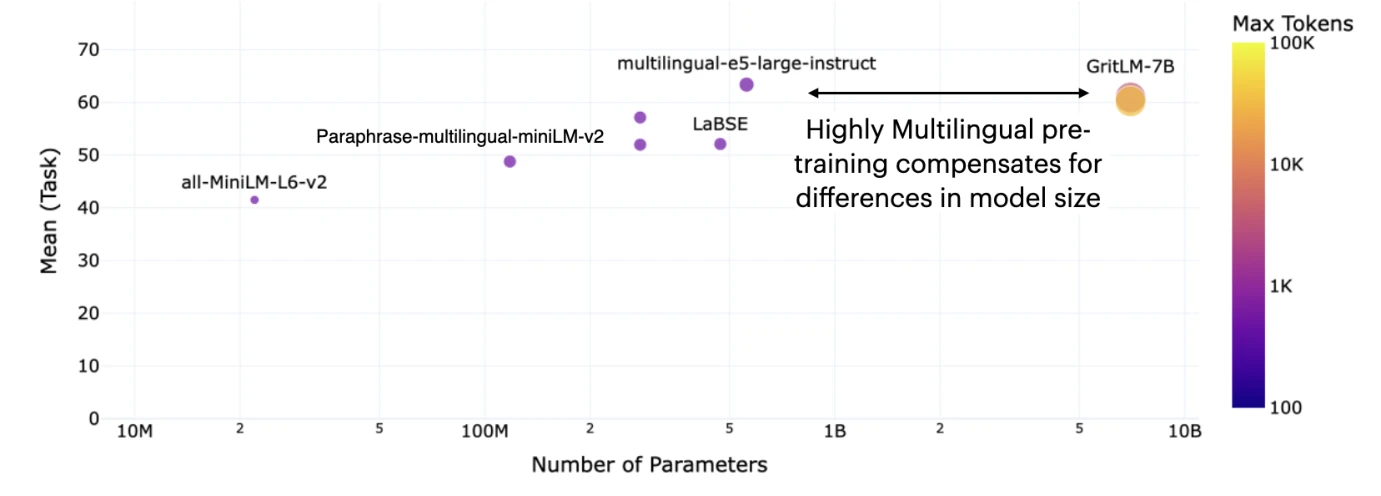
Models trained with instruction-tuning perform significantly better compared to those without it. This is especially clear when comparing the multilingual-e5-large to its instruction-tuned counterpart (multilingual-e5-large-instruct). Instruction tuning increases performance most drastically on bitext mining and clustering, though the effect remains pronounced across all task categories. Notably, this happens despite many tasks using generic prompts for the task category and no model-specific tuning of prompts per task. Surprisingly, multilingual-e5-large(-instruct) models, based on XLM-R Large (Conneau et al., 2019) generally outperform the considerably larger e5-mistral-7b-instruct and GritLM-7B, both of which are based on Mistral-7B (Jiang et al., 2023). This effect is notably pronounced for mid-to-low resource languages (<300M speaker; see Appendix E.1) and likely emerges due to differences in pre-training, with Mistral being predominantly pre-trained on English, while XLM-R targets 100 languages. All three models utilize similarly multilingual datasets for fine-tuning. However, GritLM still remains best in class for retrieval on MTEB(Multilingual), it has a higher maximum sequence length (see Figure 2) and outperforms the multilingual-e5-large-instruct on MTEB(Code) and MTEB(eng, v2).
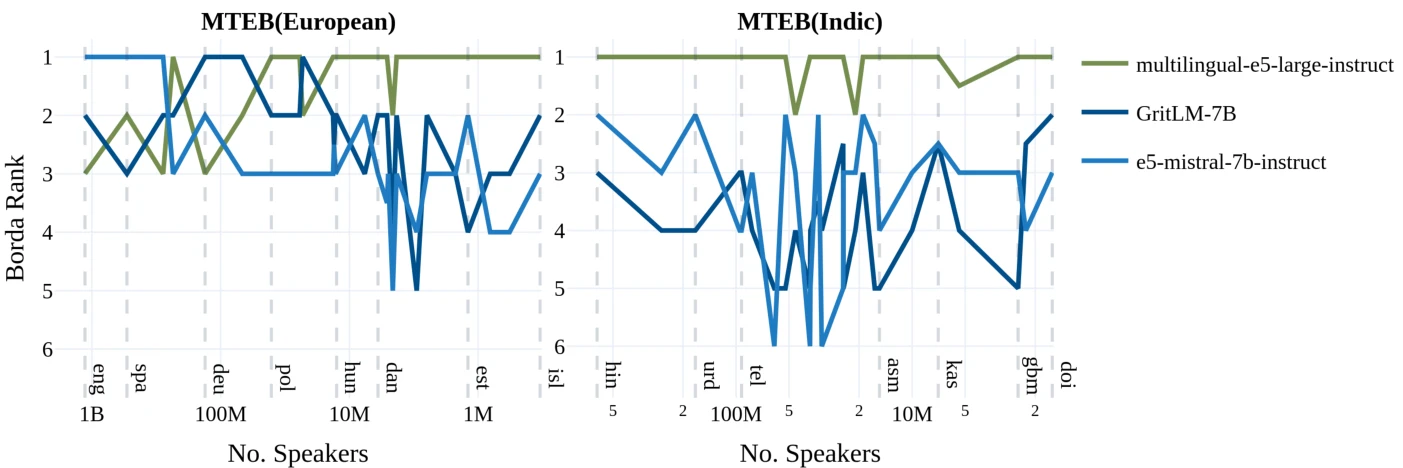
Discrepancies in Multilingual benchmarks ranking seem to stem from discrepancies in pre-training. While the multilingual benchmarks obtain seemingly similar performance rankings, we see a few notable discrepancies. These discrepancies seem to mainly stem from a narrow multilingual focus (GritLM-7B, e5-mistral-7b-instruct, multilingual-mpnet-base) during training, resulting in disproportionally higher performance on the targeted languages (typically mid-high resource or European ones). These are typically outperformed by the multilingually pre trained XLM-Roberta-based multilingual-e5-large-instruct on lower-resource languages in MTEB(Europe) and all languages in MTEB(Indic) (see Figure 3), despite being substantially smaller than Mistral models, the performance of which steadily decreases and becomes more volatile for languages with increasingly lower number of native speakers and this trade-off is well-known (Xue et al., 2020).
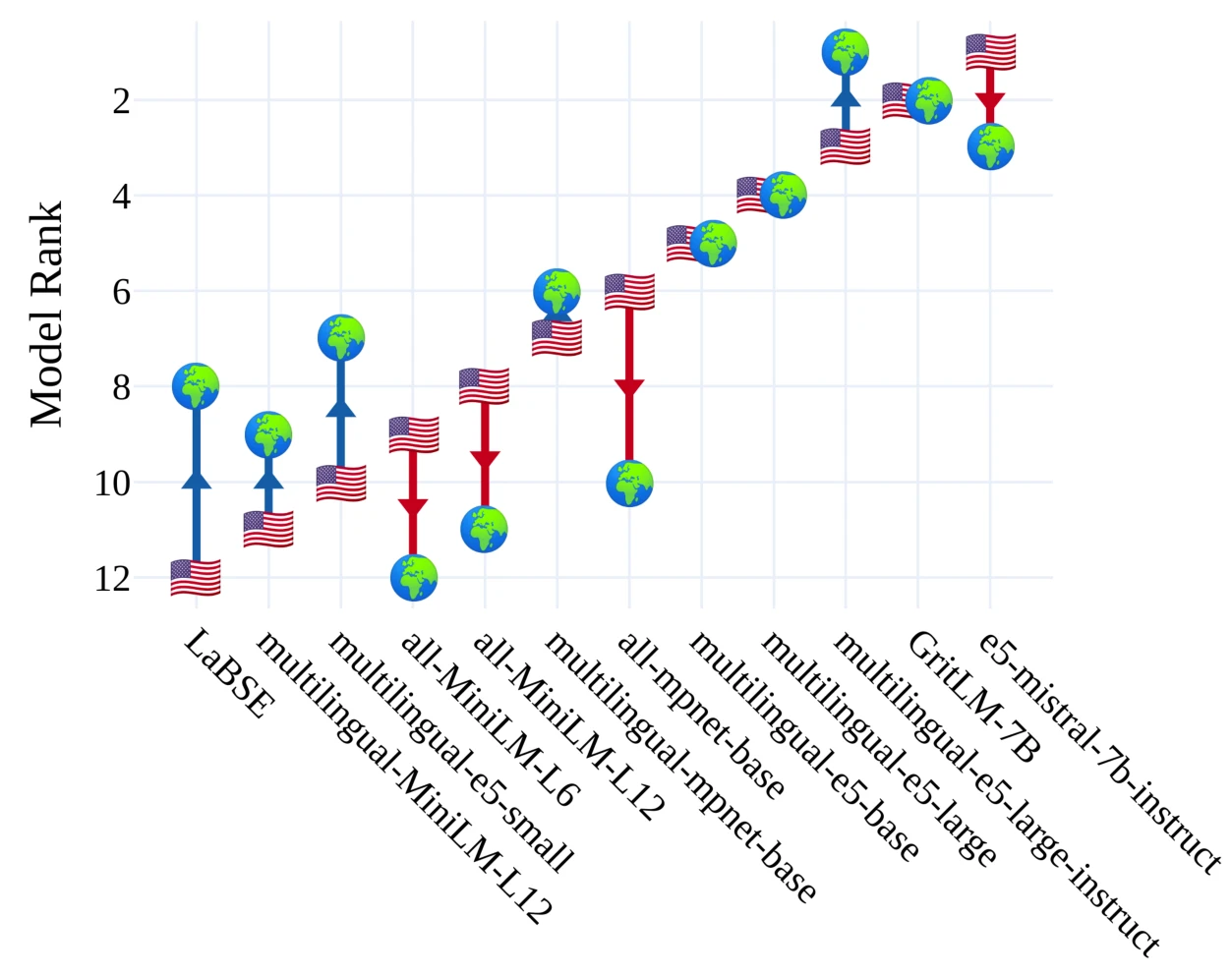
Besides these, we observe the expected detrimental performance of English models (all-MiniLM-L12, all-MiniLM-L6, all-mpnet-base) applied to non-English languages and a relatively high bitext performance of LaBSE (see Figure 4).
We compare the performance of MTEB(eng, v1) and MTEB(eng, v2) in Figure 5 obtaining a Spearman correlation of 0.90, (Pearson 0.96, ). For the precise scores, we refer to Subsection H.3. This includes a reduction from 56 to 40 tasks along with optimized task runtime speeding up the runtime on the benchmark (3.11 hours for GritLM-7B and 0.81 hours for all-MiniLM-L12 on an H100). We see that notably, the smaller English models (all-MiniLM-L12, all-MiniLM-L6, all-mpnet-base) perform worse on the new benchmark. This is likely because they were trained on MS MARCO and Natural questions, which were removed as part of the benchmark conversion to a zero-shot benchmark.
Related Work
BEIR (Thakur et al., 2021) pioneered the use of publicly available datasets from diverse information retrieval (IR) tasks and domains and evaluated 10 various retrieval systems. MTEB (Muennighoff et al., 2023b) introduced a comprehensive text embedding benchmark that spans not only IR but also 8 other task categories, including clustering and re-ranking. MTEB covers a total of 58 tasks and 112 languages, though this multilinguality is mainly derived from machine-translated tasks or bitext mining. Its leaderboard has grown in popularity and evolved into the de facto embedding model benchmark that supports over 300 models. MIRACL (Zhang et al., 2022) supports 18 languages from different language families for monolingual retrieval. MINERS (Winata et al., 2024b) is designed to evaluate the ability of multilingual LMs in semantic retrieval tasks including classification and bitext mining tasks in more than 200 languages, including code-switching. Our work extends the number of languages to over 1000 (250 excluding bitext-mining tasks), particularly to cover more low-resource languages. We also expand the MTEB’s 8 embedding tasks to 10 and the 58 datasets to over 400, significantly broadening the scope of multilingual benchmarking.
Open research initiatives and participatory approaches to science have been shown to stimulate innovation (Park et al., 2023), reduce negative biases (Gudowsky, 2021; Gomez et al., 2022), and increase the diversity of data sources (Hanley et al., 2020; Singh et al., 2024b; Winata et al., 2024a). By involving diverse stakeholders, these practices enhance ethical, robust, and reproducible research (Hagerty & Rubinov, 2019). Recently, the field of natural language processing has seen a growing number of community-driven collaborative projects. These can be grouped into several categories. (a) Model creation, such as BLOOM (BigScience Workshop et al., 2023; Muennighoff et al., 2023c), StarCoder (Li et al., 2023a; Lozhkov et al., 2024), Aya model (Üstün et al., 2024), and Cendol (Cahyawijaya et al., 2024); (b) Dataset creation, such as NusaX (Winata et al., 2023b), OpenAssistant (Köpf et al., 2023), NusaWrites (Cahyawijaya et al., 2023c), and Aya dataset (Singh et al., 2024b); (c) Benchmark creation, such as BIG-Bench (Srivastava et al., 2023), NusaCrowd (Cahyawijaya et al., 2023a), WorldCuisines (Winata et al., 2024a), HLE (Phan et al., 2025), SEACrowd (Lovenia et al., 2024), and Eval-Harnesses (Gao et al., 2021; Ben Allal et al., 2022; Biderman et al., 2024); and (d) Other artifacts, such as NL-Augmenter (Dhole et al., 2021), the Data Provenance Initiative (Longpre et al., 2023; Longpre et al., 2024a; Longpre et al., 2024b) or the Wikibench annotation tool (Kuo et al., 2024). MMTEB expands upon earlier work within the Benchmark creation category. Our effort significantly differs from prior collaborative benchmarks as we focus on text embeddings, use a custom point system to incentivize contributions, and handle all communication openly via GitHub.
Conclusion
This work introduced the Massive Multilingual Text Embedding Benchmark (MMTEB), a large-scale open collaboration resulting in a benchmark with more than 500 tasks covering more than 1000 languages. From these, we constructed three multilingual benchmarks: one fully multilingual (MTEB(Multilingual)) and two targeting Indic (MTEB(Indic)) and European languages (MTEB(Europe)) respectively. Acknowledging that multiple additional benchmarks can be constructed from the MMTEB additions, we propose a simple approach to constructing new benchmarks. To make these benchmarks accessible to low-resource communities, we introduced several optimizations by downsampling retrieval tasks using hard negative mining and bootstrapping clustering evaluation to re-use encoded documents across sets. This leads to a notable reduction in the number of text samples that need to be embedded.
Our findings indicate that while large (7B) LLM-based embedding models obtain state-of-the-art performance on the English benchmark, they are still outperformed in highly multilingual or low-resource settings by smaller models based on XLM-R Large, even when accounting for notable improvements like prompt-based embeddings.
Limitations
While MMTEB filters out machine-translated datasets, it permits (human) translations. This inclusion leads to tasks like SIB200ClusteringS2S, where labels from English samples are transferred to their translations, potentially introducing bias towards English or models trained on translated content. Consequently, the benchmark may inadvertently encourage model developers to favor English or translated content by increasing their proportion in pre-training data.
One of MMTEB’s goals was to highlight the benefits of collaboration. The managing group believes the point system successfully defined contribution terms but acknowledges it isn’t perfect. For instance, equal points were awarded for dataset submissions regardless of effort—some datasets were readily available, while others needed significant work like reformulation, HTML parsing, and multiple review rounds.
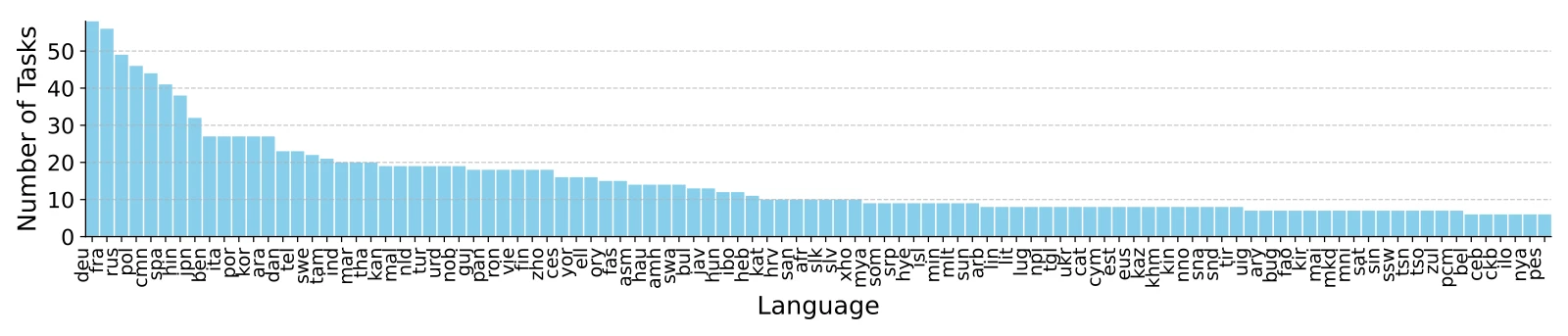
While the benchmark includes over 250 languages and 500 tasks, the distribution is skewed toward high-resource languages (see Figure 6), with low-resource languages being better represented in specific task categories like bitext-mining and classification. We encourage future collaborations to fill these gaps and enhance language diversity in the collection.
Next step
A problem worth researching?
Tell us what you are trying to solve, and we will put you in touch with the people who work on it.