Watch the conference replay in French:
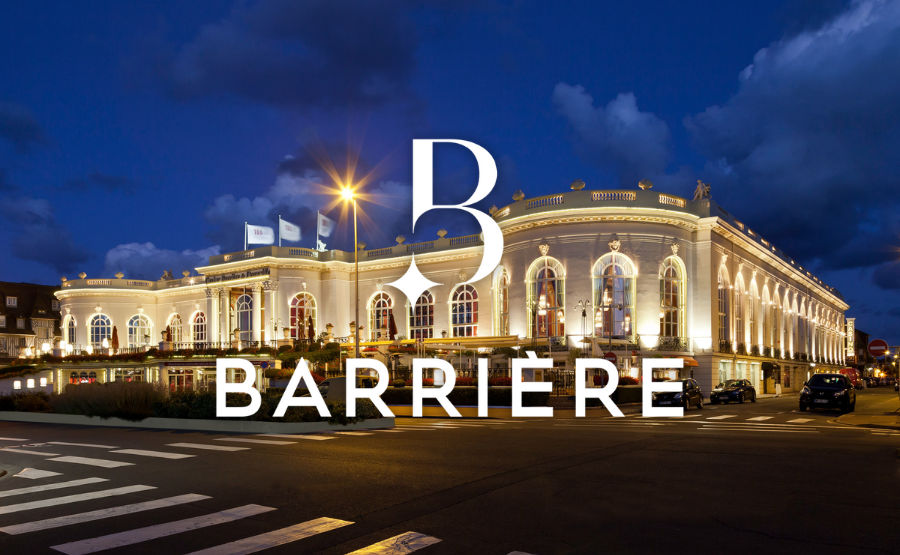
Joy and Alexandre Barrière took over the reins of the family business from their parents, Diane Barrière and Dominique Desseigne, breathing new life into the Barrière Group with a fresh approach to innovation. This century-old institution pioneered the concept of the “French-style resort,” combining hotels, casinos, restaurants, wellness facilities, and entertainment. In 2025, the Group has 33 gaming establishments, 20 luxury hotels, and nearly 7,000 employees worldwide.
It is against this backdrop of internationalization that the Group’s data and AI transformation began. Salomon Bentolila, Director of Data & Acquisition, is driving the initiative. With Artefact as its strategic and technological partner, the Barrière Group is launching its first customized AI agents.
Establishing an AI roadmap based on three objectives
To embrace AI, the Barrière Group has structured its approach around three areas:
- Improving productivity and operations: All employees have access to AI, regardless of their level of technological maturity. This applies across all business lines.
- Transform the customer and employee experience: Chatbots and AI support solutions improve operational efficiency without compromising service excellence.
- Create new services using generative AI: The Group is currently experimenting with new business models to differentiate itself.
Use cases: Three pilot AI agents for different business needs
In collaboration with Artefact, Groupe Barrière has developed a generative AI platform with three main agents. Each addresses specific business challenges. They are being rolled out gradually in a test-and-learn mode.
Agent 1 – Barrière GPT: AI for everyone
Based on Gemini, the Barrière GPT agent provides secure access to an advanced language model. The platform integrates libraries of prompts that teams can share and reuse. Deployed to about a hundred employees, the tool has already generated over 4,000 prompts. This pilot phase allows for the assessment of actual adoption and strategy adjustment.
“We learn and move forward very quickly by questioning things. Google includes many features in its Workspace. This raises the question: should we maintain Barrière GPT or rely on native tools? We remain agile.”– Salomon Bentolila, Director of Data & Acquisition, Groupe Barrière
This test-and-learn approach allows the Group to remain flexible in the face of rapid market changes. Rather than committing to a massive rollout, Salomon Bentolila’s teams assess in real-time whether the solution remains relevant or if native alternatives could better meet the needs.
Agent 2 – Call Center: Streamlining customer relations
The second agent targets call centers. Advisors had to consult multiple sources: procedures, product catalogs, etc. They wasted valuable time during customer interactions.
Salomon Bentolila’s team developed a call center agent based on RAG (Retrieval-Augmented Generation) architecture. This technology aggregates all business documentation. Advisors instantly get the answers they need; information processing time is reduced; agents can refocus on sales and support.
Result: more than 1,000 prompts generated by more than 60 active users with a satisfaction score of 3.64/4. Deployment is planned across all of the Group’s call centers.
Agent 3 – Barrière Play Support: Continuous assistance available
The Barrière Group developed Barrière Play, an application that allows customers to connect to slot machines using a rechargeable wallet. The application is constantly evolving through agile sprints. However, when technical problems arise, employees in the field do not always understand the technical aspects well enough to solve them. This led to the question: How can we ensure effective support at all times?
The decision was made to create a FAQ. The resulting document database was placed in a RAG. This system provides 24/7 AI support. Tested in three pilot casinos, it has more than 350 prompts, over 30 active users, and a satisfaction score of 3.77/4.
Business adoption is as important as technical performance
User adoption is as important as tool performance. Feedback from the field necessitated adjustments.
For call centers, the Data and Acquisition teams had to improve the quality of the document databases in the RAGs. Concrete evidence of added value was needed to convince the teams.
“Our call center employees already have access to around 32 tools. This meant one more tool for them to master. So it had to be genuinely worthwhile.” – Salomon Bentolila, Director of Data & Acquisition, Groupe Barrière
As for the Barrière Play agent, the initial interface via Google Chat was not suitable for mobile employees. The Group therefore integrated the agent directly into the back-office tools used on a daily basis, via an API.
Artefact supported these pivots by adapting the technical architecture and integration methods. Beyond that, they addressed two essential aspects:
- Employee adoption
- Change management support materials
LLM as a judge: Supervising the AI agent to guarantee quality
The sustainability of the system depends upon rigorous supervision. Artefact and Groupe Barrière implemented an LLM as a judge approach to continuously evaluate the relevance of responses.
This methodology is structured as follows:
- Information: Creation of reference data libraries with business lines including annotated question/answer pairs
- Response: Generation of responses to user questions via the RAG agent to be evaluated
- Evaluation: Automated scoring of the prediction on a scale of 1 to 4 by an LLM judge, based on the knowledge dataset. Each score is explicit and justified.
- Recalibration: reviewing the justifications for the scores and then modifying the agent’s context prompt/RAG (episodic human activity)
This continuous improvement loop reinforces user confidence and ensures the long-term reliability of AI agents.
2026: An agile approach to widespread AI adoption
With over 5,000 prompts generated, Groupe Barrière plans to deploy new use cases in 2026. Agility remains the priority.
“Rather than rigidly following a roadmap, we prefer to seize opportunities that may be of interest to our teams. We set a budget that we deploy in an agile manner according to needs.” -Salomon Bentolila, Director of Data & Acquisition, Groupe Barrière
This pragmatic and flexible methodology allows the Group to allocate its AI budget dynamically rather than following a fixed prioritization. With this transformation, the Barrière Group is showing how a century-old player in the luxury hotel industry can innovate without losing its identity. By placing user adoption at the heart of its strategy, it maintains high standards for the quality of its services thanks to robust monitoring systems.