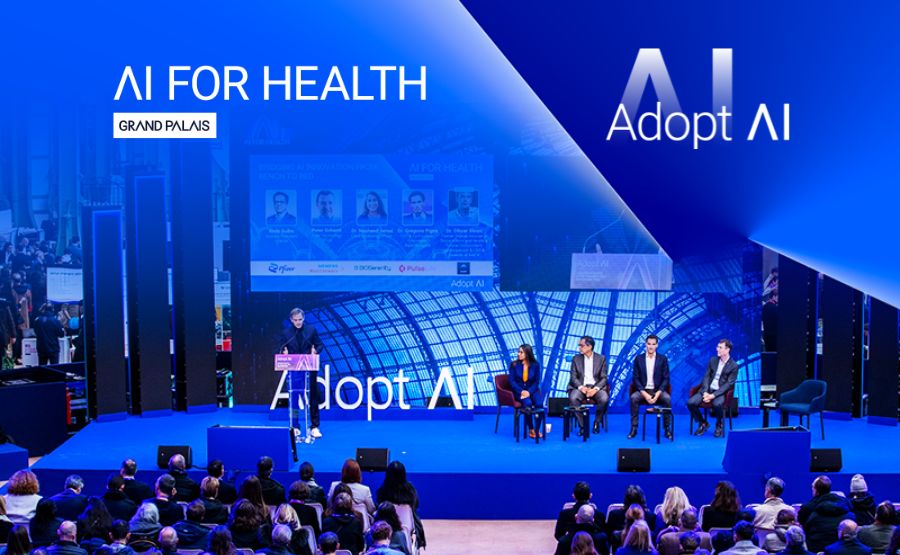
We are proud to share with you the replays of the AI for Health’ Speakers who took the stage at Adopt AI and delivered outstanding value to the summit. Their vision, strategic perspectives, and real-world experience have been invaluable in inspiring organizations to shape and accelerate their AI roadmaps.
The AI for Health discourse was unequivocal: a handful of powerful, AI-driven trends are no longer emerging, they are actively converging to create a new competitive and operational reality. Leaders who fail to grasp their implications will be strategically outmaneuvered.
- The Paradigm Shift to Proactive Health: Foundation models are enabling a fundamental move from treating established illnesses toward predicting and preventing chronic diseases, identifying the risk of conditions like Alzheimer’s and Parkinson’s up to seven years before clinical symptoms manifest.
- Accelerating the R&D Pipeline: AI is compressing timelines across the entire therapeutic value chain, with documented cases showing protocol development timelines cut by 75%, patient recruitment for clinical trials accelerated by 50%, and medical/legal review workflows shortened by up to 60%.
- Unlocking Novel Insights with Multimodal Models: Foundation models trained on diverse, integrated biological datasets (spanning genomics, medical imaging, proteomics, and clinical notes) are allowing researchers to “make connections that we haven’t been capable of making as a human race so far.”
- Decentralizing Diagnostics to the Consumer: AI-powered analysis of data from consumer wearables and other accessible home-based tools is shifting early disease detection from the exclusive domain of the clinic to the hands of the individual.
- Automating Complexity with Agentic AI: Sophisticated AI agents are now being deployed to autonomously orchestrate and execute complex operational, clinical, and commercial workflows, freeing up human capital for higher-value strategic activities.
- AI as the Clinical Co-pilot: Intelligent systems are being integrated directly into clinical workflows to absorb administrative burdens, giving physicians and nurses back “the part of the job they thought they had lost” and allowing them to reclaim invaluable time for direct patient care.
The strategic implications of these trends are vast and immediate. To translate these high-level insights into a tangible competitive advantage, we urge you and your leadership teams to delve into the full session replays. Understanding the depth and nuance of these shifts is the first step toward harnessing their power to drive innovation, efficiency, and ultimately, better patient outcomes within your organization.