
#AIRobotics #ChatGPTHealth #AGI #Energy-basedModels #AIinGaming #MetaSuperintelligenceLab #Midjourney
Dear readers, We’re finally back! Did you miss us as much as we missed you? You know how life is: it happens to you, and in the end you never have time for the things you love. If anyone has an AI solution for that, we’ll take it! This January edition of the GenAI Newsletter, the future is arriving so fast we’re barely seeing it! We’re starting off the year strong: from robots autonomously sorting packages and a startup claiming early signs of AGI (yes, that AGI), to whispers of a new generation of chips promising 10x lower inference costs to ads coming to your free ChatGPT. It’s a wild ride of innovation, regulation, and billion-dollar bets. Dive in to see who’s making money, who’s building “Superintelligence,” and why everyone is talking about a model named Kona.
GenAI News Podcast
Don’t have time to read this newsletter?
Top Highlights
#1. OpenAI is set to introduce clearly labeled ads within ChatGPT for its free and Go users in the U.S. These ads will be placed at the bottom of responses. However, users of the Plus, Pro, and Enterprise tiers will remain ad-free. The company, which has committed over $1.4 trillion to infrastructure and achieved a $20 billion revenue run rate, has made a commitment to user privacy, vowing not to sell user data and to block advertisements for minors and on sensitive subject matter.
#2. Anthropic Debuts Claude Cowork, a tool largely built by Claude AI itself in 10 days, which allows users to create bespoke AI assistants without coding. This signals a shift from “using” AI to “managing” AI agents that perform end-to-end workflows.
#3. Boston Dynamics’ electric Atlas robot began fully autonomous sorting tasks at a Hyundai plant in Georgia. Unlike previous pilots, this deployment uses “motion capture learning” to adapt to human-designed environments without teleoperation. The company’s factory has a production capacity of 30,000 units per year, with actual deployments at Hyundai and Google DeepMind scheduled for 2026. Goldman Sachs research estimates the humanoids market at $38 billion in the next 10 years.
Breaking News
1. AI chip startup Ricursive hits $4B valuation two months after launch 2. Anthropic launches interactive Claude apps, including Slack and other workplace tools
Business News & Market Insights
#4. A new AI startup, Humans&, co-founded by alumni from Anthropic, OpenAI, Google DeepMind, xAI, and Meta, argues that coordination – rather than pure question-answering – represents the next phase of AI development. Backed by a $480 M seed round at a ~$4.48 B valuation, the company plans to build models optimized for collaboration, multi-agent workflow orchestration, and long-term team alignment. Rather than just responding to queries, these AI systems are intended to enhance how humans and AI work together socially and organizationally.
#5. India’s President announced the “Skill the Nation” challenge, a massive government initiative to upskill the workforce for an AI-dominated economy. The program positions data science and AI engineering as core academic pillars to bridge the digital divide.
#6. Breakthrough AI Paradigm: Energy-Based Model Outperforms LLMs. Logical Intelligence unveiled its energy-based AI model, “Kona”, asserting it outperforms OpenAI’s GPT-5 and Google’s Gemini in key reasoning tasks with lower energy use. The company claims that Kona’s ‘reasoning’ is based on the model’s ability to recognise and correct its errors on one task and extrapolate that across other tasks. According to Eve Bodnia, the company’s founder: “we are seeing in Kona the first credible signs of AGI”. Yann LeCun joins as technical board chair, signaling academic and commercial credibility. Local Intelligence kicks off a funding round soon and targets a valuation of between $1bn and $2bn. Alternative AI architectures like Kona’s or world models, explored by LeCun and top AI minds at Google DeepMind and Nvidia, could challenge transformer dominance.
#7. AI video platform Synthesia closed a $200 M Series E funding round, doubling its valuation to $4 billion. The London-based startup, known for AI avatars that create interactive training and corporate videos, crossed $100 million in ARR in April 2025. Investors include Google Ventures, NVentures (NVIDIA’s VC arm), Accel, Kleiner Perkins, NEA, and others. Synthesia plans to invest in AI agents that enable interactive knowledge engagement and expanded enterprise use cases.
New Models & Innovations
#8. OpenAI introduced ChatGPT Health, a dedicated health and wellness experience within ChatGPT that securely integrates users’ health data from medical records and wellness apps. Designed with layered privacy protections and developed with physician input, it helps users interpret lab results, prepare for appointments, explore diet/exercise options, and navigate insurance decisions. It does not diagnose or treat conditions but aims to make medical information more actionable and personalized. The feature is initially available to a limited group with plans to expand access soon.
#9. NVIDIA Launches “Rubin” Platform to succeed Blackwell. The platform, comprising six new chips designed to deliver one incredible AI supercomputer, specifically targets the “agentic AI” era, promising to reduce inference token costs by up to 10x and model training requirements by 4x compared to its predecessor.
#10. Meta Platforms’ recently formed Meta Superintelligence Labs has produced its first significant AI models for internal use, reportedly a text model (Avocado) and a multimodal model (Mango), CTO Andrew Bosworth announced at the World Economic Forum. Bosworth called the early results “very good” but confirmed extensive work is still required before the models can be deployed.
#11. OpenAI has integrated GPT-5.2-Codex into the Responses API, mirroring the capabilities available directly in Codex. This model is designed to handle intricate and extended coding challenges, such as the development of new functionalities, code refactoring, and bug detection. Furthermore, GPT-5.2-Codex is highlighted as OpenAI’s most advanced model for cybersecurity, offering developers the ability to locate and analyze vulnerabilities across extensive codebases.
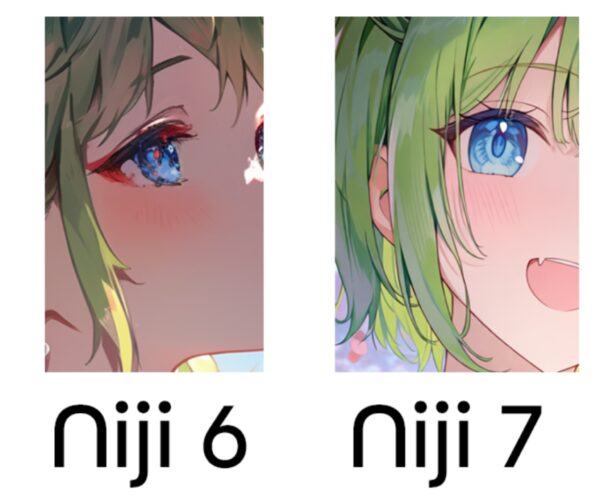
#12. Midjourney released Niji V7, an anime-focused model that solves the long-standing problem of character persistence. The update allows users to generate consistent facial features and details across multiple images, a critical requirement for graphic novels, storyboarding, and brand mascots.
Policy Updates & Ethical Debates
#13. Gamers have pressured studios to cancel or rethink titles over perceived AI-generated content, arguing it undermines creative quality and threatens human artistry in games. Examples include the cancellation of a Postal franchise title after AI allegations and rescinded awards due to suspected generative art use. In spite of this, Ubisoft is doubling down on generative AI features for players through dynamic in-game content and NPCs to enable emergent gameplay and personalized narratives.
#14. Wisconsin lawmakers introduced legislation establishing criminal penalties for the use of AI deepfakes in identity theft and financial fraud. This move reflects a growing trend of local jurisdictions intervening to curb synthetic media risks absent comprehensive federal guardrails.
#15. Following public controversy and regulatory pressure regarding non-consensual content, X imposed severe restrictions on Grok’s image generation capabilities. The move underscores the tension between open model access and the reputational/legal risks of misuse.