About Bpifrance
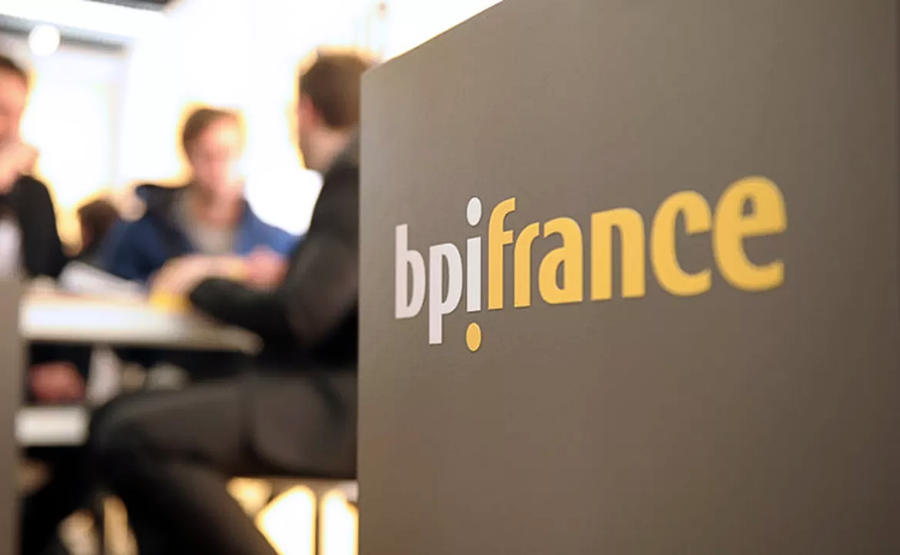
Bpifrance is France’s public investment bank, supporting over 90,000 companies each year through loans, guarantees, equity investment, and innovation funding. With approximately 4,500 employees and a presence across every French region, Bpifrance plays a central role in the country’s economic infrastructure.
From innovation bottleneck to AI at scale: Bpifrance’s three structural challenges
“Our goal is clear: make Bpifrance a model for responsible and high-performing AI adoption.”
Nicolas Dufourcq, CEO of Bpifrance
- An innovation bottleneck: Every use case needed individual review from technical, legal, compliance, and IT security teams, and those teams were already stretched thin.
- No framework for choosing a tool: The market offered a growing range of agentic AI platforms (no-code, low-code, full custom), but no established method to evaluate which one fit Bpifrance’s security, governance, and sovereignty requirements.
- A gap between pilot and production: Successful experiments rarely turned into real deployments. Building one agent is manageable. Governing, monitoring, and scaling hundreds of agents across business lines requires an operating model.
Bpifrance needed a partner, not just a platform
Artefact and Bpifrance built together three things that a technology platform does not provide on its own:
- A selection methodology to evaluate platforms against real business problems, not feature lists.
- A governance architecture to get coordinated sign-off across Legal, Compliance, IT Security, and Procurement, in under four weeks.
- An adoption engine to embed within business teams, co-build agents, and train people, so the deployment would hold without consultants.
This approach follows Artefact’s framework for agentic transformation, built around four pillars: Processes, People, Platform, and Position.
Phase 1: Choosing the platform by clarifying the needs
The first step was for Bpifrance to understand what its employees actually needed, based on real use cases.
Artefact designed and led a four-month experiment. A hundred Bpifrance employees from three business units (IT, Digital, and Transformation) tested agentic platforms against real use cases. Artefact built the scoring framework: security requirements, governance constraints, user profiles, and performance on actual business problems.
The exercise was not just a technical benchmark. The questions were practical: What are Bpifrance employees’ use cases? Are they individual, collective, simple, complex? Do they require specific integrations? What is the expected value?
The experiment produced over 60 use cases and enabled Bpifrance to identify two complementary needs:
- A transversal AI platform for everyone, for which the French bank chose Mistral Vibe, and
- A no-code agentic platform to accelerate innovation on complex use cases, for which four criteria proved decisive. It is on these four criteria that Dust, following a dedicated consultation process that put several players in competition, was selected:
- Sovereignty: Bpifrance required a European platform aligned with its data governance and hosting requirements. Dust, a French company with European hosting options, met this constraint.
- Business relevance: Dust delivered consistently strong results across use cases, supported by a wide model selection that let each team pick the right model for its workflows.
- User experience: The interface was intuitive enough for non-technical users to build and iterate on agents on their own. For a platform meant to go beyond the IT department, this mattered.
- Governance simplicity: Administration could be handled by a non-IT team, without engineering support.
Dust, a French no-code agentic AI platform that lets business users build, test, and deploy agents without engineering support, was selected as the first innovation platform deployed to Bpifrance’s 500 pioneer employees.
Phase 2: A full governance framework in under four weeks
- License attribution rules: Who gets access, under what criteria, through what process… In a 500-person deployment, ungoverned license management creates cost leakage and security gaps fast.
- Agent risk classification: A two-tier framework categorizing agents by risk profile. This lets Bpifrance move quickly on low-risk use cases while keeping tight control on more sensitive ones.
- Connector governance: Which data connectors were authorized at launch, under what conditions, and with which data classifications. Too restrictive and the platform becomes useless; too permissive and it becomes a compliance problem. Artefact helped find the right line.
- Monitoring infrastructure: Agents built to track workspace usage, flag inactive licences, and measure value creation across the agent portfolio.
What was delivered at launch: a code of conduct for AI agent usage, an authorized connector list, prompting assistance agents, an agent classification matrix, and a framework for moving agents from experimentation to production.
“Bpifrance needed a sovereign platform, but also a trust framework to deploy AI at scale. Artefact’s work on governance and business enablement was decisive. It’s when platform and methodology move forward together that you go from pilot to real impact.”
Thibault Martin, Head of Partnerships at Dust
Phase 3: Getting business teams to build
With the platform live and governed, Artefact embedded within business teams to kick off value creation. The 500 Dust licenses covered all of Bpifrance’s business lines.
Artefact’s engagement combined several activities:
- Use case detection and prioritization: identifying with business teams where agents would create the most value, and in what order,
- Agent co-construction: building agents with business users, but also connector testing, prompt refinement and community animation.
The Dust x Artefact partnership model
Dust provided the product: a no-code agentic AI platform where business users build, test, and deploy agents with security controls, native integrations, multi-model flexibility, and administration tools designed for non-technical teams.
Artefact provided the transformation: platform evaluation, governance design, regulatory coordination, organizational design, business enablement, and hands-on agent co-development with teams in the field. In close and direct collaboration with the internal team, the governance framework put in place is designed to address the specific challenges of all the company’s business lines.
“Our experience with Dust at Bpifrance marks the starting point of a partnership rich in opportunities. We believe in the platform’s potential and its ability to democratize agentic AI for our clients.”
Fabrice Henry, Group COO at Artefact
500 licenses, 1,500 agents, and a governance framework in under four weeks: what Bpifrance achieved in under 12 months
For Bpifrance, the partnership compressed a process that usually takes several quarters into a few months: a 100-person experiment, platform selection, a governance framework in under four weeks, and 500 Dust licences deployed across all business lines.
Industrialization, higher-complexity use cases and deeper connector integration: Bpifrance’s roadmap for the next phase
Bpifrance is now in the industrialization phase. Teams continue building and refining agents on Dust, with ongoing Artefact support focused on builder accompaniment and agent performance monitoring.
The roadmap includes development of higher-complexity agents, deeper connector integration into Bpifrance’s proprietary systems, and MCP-based extensions to connect Dust to internal infrastructure.
“The challenge is not to do AI for AI’s sake. With Dust, we enable bottom-up innovation: business teams themselves build their own agents, connected to their data and tools. More than 1,500 individual agents have already emerged in just a few months. Our role, with Artefact’s support, is to identify the most promising use cases among them, make them robust, and industrialize them.”
Pierre Jarrijon, Head of AI Acceleration at Bpifrance