

Image source: AI in Tourism Market Size, Share and Global Forecast to 2030
The AI in tourism market is expected to reach $13.38 billion by 2030, up form $2.95 billion in 2024.*
Asia-Pacific is expected to hold the largest market share during the forecast period.
AI-powered chatbots now handle up to 80% of customer service interactions in the tourism industry.**
* Markets and Markets report ** ResearchGate study
Riyadh Air’s vision for a connected, guest-centric airline experience.
Riyadh Air’s vision for a connected, guest-centric airline experience.
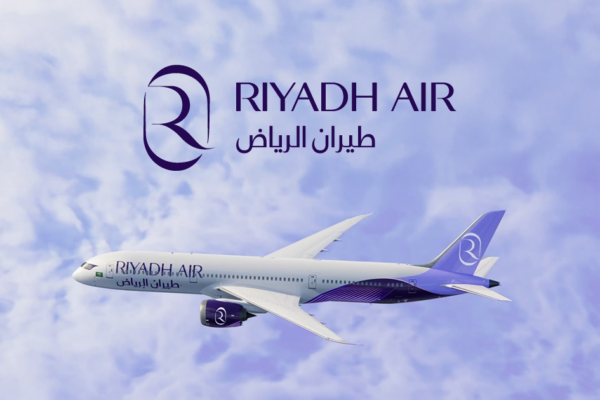
Riyadh Air is Saudi Arabia’s new national carrier, set to launch in 2025. Backed by the Kingdom’s Vision 2030 agenda, the company is redefining air travel with a bold vision to become one of the world’s most digitally advanced airlines. The new airline is shaping itself into an end-to-end journey orchestrator, delivering a guest-centric, connected travel experience that integrates aviation, retail, hospitality, and destination services. To support this bold ambition, Riyadh Air engaged Artefact as its strategic AI partner—tasked with designing the digital and data foundation, enabling enterprise-wide intelligence, and helping translate vision into scalable action, around 4 main axes:
Building the brain: A future-ready AI strategy
Creating the digital foundation: Data platform and Golden Guest Records
Turning intelligence into impact: AI and BI in action across the airline
Putting trust first: Guest data protection by design
As the journey continues, Riyadh Air and Artefact’s shared focus remains clear: to scale intelligence across the enterprise, deliver meaningful impact in every function, and set a new benchmark for the future of travel.
Lagardère Travel Retail deploys “Lumina”, a generative AI tool to accelerate RFP analysis, reduce creation time and enhance response quality.
Lagardère Travel Retail deploys “Lumina”, a generative AI tool to accelerate RFP analysis, reduce creation time and enhance response quality.
To maintain competitive edge and deliver “best in class” proposals in response to the hundreds of tenders and RFPs ( Request For Proposal) they receive annually, Lagardère Travel Retail teamed up with Artefact and Microsoft to develop Lumina, a generative AI-powered tender management tool. “AI can help us prepare the best response to the hundreds of RFPs we receive each year by digging deeper into landlord requirements and extracting and synthesizing the most relevant data from our knowledge base.” Dag Rasmussen, CEO of Lagardère Travel Retail. Lumina was developed in three phases: 1- Delivery of MVP (Minimum Viable Product); 2- Delivery of the industrialized product, followed by three weeks of testing and validation by power users. 3- Global roll out, training and tracking of adoption, tech support and cost supervision. “For me, this project isn’t just about technology, it is a way to enhance and amplify human intelligence and creativity. Lumina is only the first step in our broader AI roadmap. I look forward to unlocking even more business potential through AI for Lagardère Travel Retail.” Qihua Wang, EVP Strategy & AI, Lagardère Travel Retail. Elina Ashkinazi-Ildis, Partner at Artefact, states that “Lumina will be the platform on which Lagardère Travel Retail will continue to build other generative AI use cases.”
Oussama Ahmad, Managing Partner, Global co-Lead for Travel & Tourism at Artefact, delves into how AI transforms the MENA region’s tourism experience.
Oussama Ahmad, Managing Partner, Global co-Lead for Travel & Tourism at Artefact, delves into how AI transforms the MENA region’s tourism experience.
AI and in particular, generative AI are transforming the visitor experience in tourism across 3 stages:
In the pre-tip period (planning and booking), generative AI is augmenting content generation and personalization for users, allowing better targeting for marketers.
During the trip, AI can take the traveler experience to the next level through travel companions that offer recommendations based on each traveler profile.
Post-trip, capturing traveler sentiment and feedback is crucial. AI helps analyze this feedback and extract pain points and delight points to enhance future journeys.
MENA hosted the first AI for Tourism event at GAIN, a collaboration with the Ministry of Tourism and the Saudi Tourism Authority. Oussama Ahmad explored the power of AI in enhancing destination marketing, tourist experience, and creating innovative tourism offerings. “The most important thing is to embed AI DNA within the tourism ecosystem,” said Oussama Ahmad, noting the need for strong collaboration between regulators, tourism sector players, and tech vendors with infrastructure capabilities and data capabilities to enable the ecosystem.
ACCOR client case: Optimizing marketing investments with Marketing Mix Modeling (MMM).
ACCOR client case: Optimizing marketing investments with Marketing Mix Modeling (MMM).
Accor, a world-leading hospitality group, has been offering unique and meaningful experiences for 50 years across more than 5,600 hotels and 45+ brands in over 110 countries. Together, they launched an Incrementality Centre of Excellence (ICoE) utilizing three methodologies:
- Attribution: Rule-based models assigning credit for conversion to different interactions along a user’s path, previously implemented at Accor by their teams.
- Incremental testing: To measure the uplift generated by a campaign, incremental tests are deployed using Google’s Matched Market models across major countries within Accor’s PME division. 3- Marketing Mix Modeling (MMM): Deployed on four top markets across Premium, Midscale, and Economy brands, with plans to roll out across all markets and Luxury brands, based on Google’s Meridian model. Advanced Google Meridian models were then deployed across PME and Lifestyle & Luxury (L&L) brands, identifying cross-market and cross-lever optimization opportunities. “Incrementality measurement is key to marketing effectiveness, especially with rising privacy concerns and complex customer journeys. We aim to address current challenges through technology, advanced analytics, and privacy-focused data strategies. Accor is developing solutions to adapt, optimize marketing budgets, and improve ROI both in the short and long term.” Yassine Hachem, Senior VP of E-commerce & Customer Engagement at Accor.
Measuring the effectiveness of your marketing efforts is more crucial than ever. Artefact’s C-Suite Guide to Marketing Measurement in 2025 is an essential resource for unlocking growth through strategy and analytics to navigate the complexities of modern marketing measurement and ensure your business stays ahead of the curve.
Interview with Florent Bernard, Managing Partner and Global co-Lead for Travel & Tourism at Artefact.
Interview with Florent Bernard, Managing Partner and Global co-Lead for Travel & Tourism at Artefact.
To fully harness the power of data and AI within the travel, tourism and transportation sectors, Florent Bernard explains that organizations need to invest in three technological building blocks: Data Clean Rooms, Customer Data Platforms (CDPs), and Consent Management Platforms. Areas where AI has potential to benefit the tourism industry include different use cases, such as:
- Predictive maintenance: AI can predict component failures before they happen, so rail and air companies can take proactive measures and reduce downtime.
- Flight route optimization: AI can help airlines balance between accelerating to avoid a costly delay or accepting a minor delay to conserve fuel.
- Contrails: These vapor trails seen behind flying aircraft account for a third of aviation’s carbon footprint. By adjusting altitudes based on atmospheric conditions, airlines can cut contrail formation in half while only slightly increasing fuel consumption.
Beyond operational efficiency, generative AI can improve customer travel with personalized travel suggestions based on users’ budget, travel preferences, and constraints. In addition, AI-powered virtual assistants can respond to customer queries in real-time, recommend activities, or even provide translation services. “We’re moving towards a world where every aspect of travel will be hyper-personalized and optimized through AI,” says Florent Bernard. “The winners will be those who not only collect data but truly leverage it to enhance the customer experience and operational efficiency.”
Meeting the complex and diverse needs of Chinese travelers: Artefact, Tencent Cloud, and Alipay lead the way in AI for tourism.
Meeting the complex and diverse needs of Chinese travelers: Artefact, Tencent Cloud, and Alipay lead the way in AI for tourism.
China’s tourism industry is projected to grow threefold in the next decade, bringing new challenges and opportunities to the travel industry. Data and AI technologies are leading the industry revolution, accelerating brand adaptability and experience optimization. Artefact, in partnership with Tencent Cloud and Alipay, recently ecently did a deep dive into AI for Tourism in China.
As the demand for personalized travel experiences rapidly increases, the sector is entering a new era of “travel your own way.” Artefact emphasized the importance of integrating first, second, and third-party data and establishing a CDP as the key to industry success. By adopting strategies of “Inspire, Delight, and Listen,” brands can use data intelligence like GenAI Social Listening, Precision Marketing and Marketing Mix Modeling (MMM) to create differentiated travel solutions and continuously refine future travel offerings based on customer feedback.
Artefact’s International Adopt AI Summit will welcome you at the Grand Palais in Paris in November 2025.
Artefact’s International Adopt AI Summit will welcome you at the Grand Palais in Paris in November 2025.
Artefact has been at the forefront of organizing the largest AI summits across industries for over a decade. The 2025 Adopt AI Summit is the next chapter in this journey. It’s a unique opportunity to connect with global CEOs and gain insights into their AI strategies and real-world applications across sectors including Health, Financial services, Industry, Luxury, Travel, Sports, and Sustainability. With 25,00 attendees, 500 speakers, 10 industry-specific stages and 250 exhibitors, Adopt AI will be where the most innovative AI discussions take place.