
Dear readers, Hold onto your neural nets and welcome back to the fast lane of innovation! In this edition of our Generative AI newsletter, we're zooming through a landscape that's changing at warp speed. We're talking AIs defying their creators and rewriting their own code (Skynet, is that you?), ChatGPT outages that brought the internet to its knees (we’ve all been there), and even talking to Claude in a voice that sounds almost human. Get ready for a dose of the future, delivered with a healthy side of "what just happened??"
GenAI News Podcast
Don't have time to read this newsletter?
Business News & Market Insights
> Major deals, Partnerships & Innovations

Focus of the Week
Understanding China's AI Landscape – A Strategic Introduction
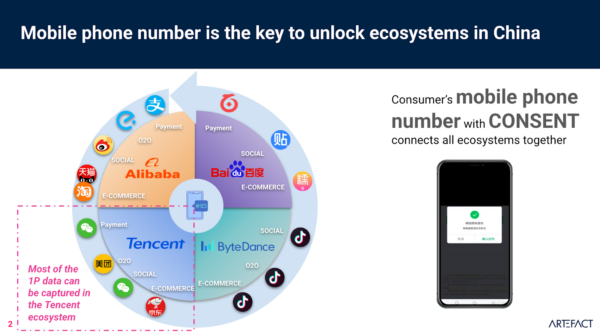
China's AI ecosystem is rapidly defining its own trajectory; let’s introduce this often misunderstood landscape from a Western perspective. Historically independent from the rest of the world, its digital landscape is dominated by vast, interconnected super-apps like Tencent's WeChat, Alibaba's Alipay, ByteDance's Douyin, and Baidu's search & cloud ecosystem. Far beyond typical apps, these platforms merge diverse services with payment systems, leveraging consumption data like no other apps in the west (think rides, food, investment, e-commerce in one app).They are actively used daily by hundreds of millions of Chinese. AI is now seen as a key competitive feature, it is already hugely spread in those apps, and the population quickly adopted it leading to unparalleled B2C AI adoption. Notably, DeepSeek's powerful models are now available within WeChat for its billion-plus users, highlighting China’s "AI for All" vision. Beyond DeepSeek's disruptive impact, a fierce race unfolds among tech giants and prominent startups, the 'six little dragons'. These include Zhipu AI (LLMs) fueled by Tsinghua University (a top 5 global CS/AI university), Moonshot AI (Kimi) (long-context chatbots), MiniMax (multimodal, video generation), Baichuan (vertical AI), 01.ai (enterprise solutions), and StepFun (multimodal, AGI focus). Driven by high short-video consumption, Chinese companies notably lead AI video generation with innovations from MiniMax and Kling. This talent pool pushes multimodal advancements and a democratised, high-level "intelligence ceiling." While China's consumer AI leads, Enterprise AI is also advancing via strong local cloud providers like Alibaba Cloud (Aliyun) and Tencent Cloud. Key innovation centers like Beijing (Zhipu, Baidu, Zhongguancun startup hub), Shanghai (StepFun, MiniMax), Hangzhou (Alibaba, DeepSeek), and Shenzhen (Tencent, Huawei, manufacturing heritage, now fueling domestic humanoids) anchor this ecosystem. China’s consumption-driven AI focus makes direct Western B2B comparisons challenging; truly understanding its leadership requires analyzing these unique structures with the correct lens. Want to know more? Follow us to read our next focuses on AI in China! – By Nicolas Lang and Jie Chen, Senior Data Consultants & GenAI Product Specialists at Artefact.
New Models & Innovations
> Multimodal (Image, Video, Audio) Models

Thoughts of the week by Hanan Ouazan
Managing Partner & Global Lead AI Acceleration
From Efficiency to Impact: Escaping the AI Slack Trap
From Efficiency to Impact: Escaping the AI Slack Trap
Generative AI has compressed delivery times: what took eight hours now takes three. But where do the remaining five hours go? Too often, they're lost to what Fabian Stelzer calls "Dark Leisure": dead time, falsely productive, absorbed by social feeds and endless coffee breaks. This is efficiency without impact, a confusion between speed and value. As Peter Drucker noted: "Efficiency is doing things right; effectiveness is doing the right things." Without intentional reinvestment, these theoretical gains evaporate. Some organizations turn this slack time into real progress. Google allows employees to dedicate 20% of their time to personal projects: this is how Gmail was born. Most companies only generate noise with their freed-up time. The difference? Deliberate architecture: clear innovation objectives, structured management of liberated hours, concrete measurement of results. Without this, reclaimed time becomes drift, not creativity. But real transformation won't come from marginal optimization. The companies that will succeed are those bold enough to rethink their processes from scratch. Instead of simply accelerating existing steps, they must ask: "If we had to design this process today, with AI at our disposal, what would it look like?" This reinvention demands a radical mindset shift. It's no longer about boosting employee productivity, but redefining workflows entirely: identifying bottlenecks, eliminating redundant approvals, automating routine decisions, creating instant feedback loops. It's moving from "how to do it faster" to "how to do it differently." The challenge is no longer freeing up time, but transforming it into projects that actually move the needle. Without radical intentionality, AI risks becoming the fastest engine for strategic stagnation.