
Introduction: Why Do CDPs Matter More Than Ever?
In today’s fast-evolving digital landscape, marketers face a fundamental challenge: reconciling the demand for hyper-personalization with rising consumer privacy expectations and regulatory scrutiny. While the future of third-party cookies remains uncertain, the imperative for brands to responsibly centralize and activate their customer data is stronger than ever. Customer Data Platforms have emerged as the foundational technology for this new paradigm, empowering brands to unify fragmented data, orchestrate omnichannel experiences, and build resilient, privacy-by-design strategies.
This white paper, a collaborative vision from Artefact and Treasure Data, explores the next leap in this evolution: the AI-augmented CDP. The integration of generative AI and intelligent agents is a paradigm shift that supercharges the CDP’s capabilities, transforming it from a passive data repository into an active, intelligent ecosystem.
Executive summary
By Florian Thiebaut and Amit Erande
The AI-augmented CDP is redefining the customer data lifecycle, moving beyond traditional functions to unlock unparalleled value for businesses. We have identified key shifts across this transformation:
- From Data Centralization to Distributed Intelligence: Generative AI turns the CDP into an intelligent decision-support system, democratizing access to business intelligence and allowing non-technical teams to derive insights, build audiences, and automate tasks through natural language.
- From Static to Dynamic Segmentation: AI-powered CDPs enable marketers to move from rigid, rule-based segments to adaptive, predictive, and persona-driven strategies. By analyzing a wider range of data signals, including unstructured data, AI helps create real-time micro-segments for more authentic and impactful customer journeys.
- From Manual to Autonomous Operations: Intelligent AI agents automate a broad spectrum of tasks, from generating content and optimizing campaign journeys to accelerating complex technical implementations. This frees up marketing and IT teams to focus on high-value, strategic work.
- From Data Silos to Trusted Collaboration: As third-party data becomes less reliable, CDPs, when paired with technologies like data clean rooms, provide the essential foundation of clean, consented, and unified data (the “Diamond Record”) to enable secure and scalable data-sharing partnerships.
This vision, shared by Artefact and Treasure Data, positions the Intelligent CDP as the central nervous system of the modern enterprise, empowering teams to achieve a higher level of performance (efficiency gains of up to 50%), resilience, and agility.
Our partnership is designed to guide businesses through this transformation, ensuring that every AI initiative is rooted in real-world business outcomes and a foundation of trusted, high-quality data.
1. From steam to electricity: powering CDPs with generative AI
1.1 Increased productivity: from on-demand BI to task automation
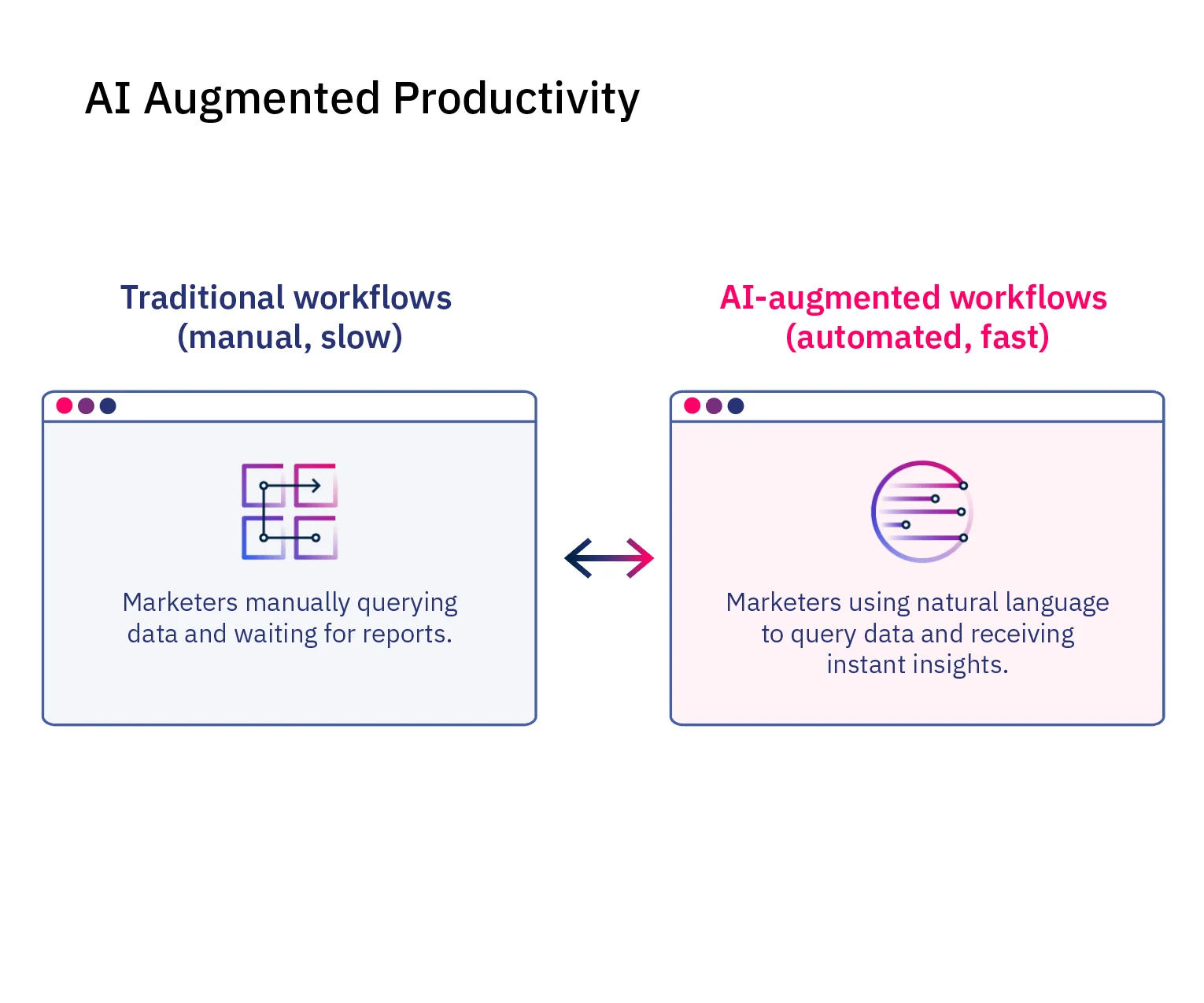
Generative AI is transforming the workplace at a remarkable pace, empowering marketers to operate with less dependency on technical teams. Over the past few years, customer data platforms have steadily become more marketer-friendly, evolving from complex technical tools into intuitive platforms with no-code but powerful interfaces. Generative AI amplifies this evolution by making sophisticated business intelligence capabilities accessible via natural language, democratizing data insights and operational intelligence beyond specialized analysts or data scientists. To better understand the opportunities, we can distinguish three degrees of automation:
- On-demand business intelligence (BI): enabling intuitive, self-service insights via natural language interactions (“Talk to my data”).
- Prescriptive intelligence and action suggestions: where the CDP proactively recommends the best actions to take.
- Autonomous execution and task automation: where agents move from recommending to independently executing tasks, improving efficiency and agility across the organization.
Rather than being an add-on feature, Generative AI fundamentally redefines how marketers and business users engage with data, turning CDPs into intelligent, conversational decision support systems.
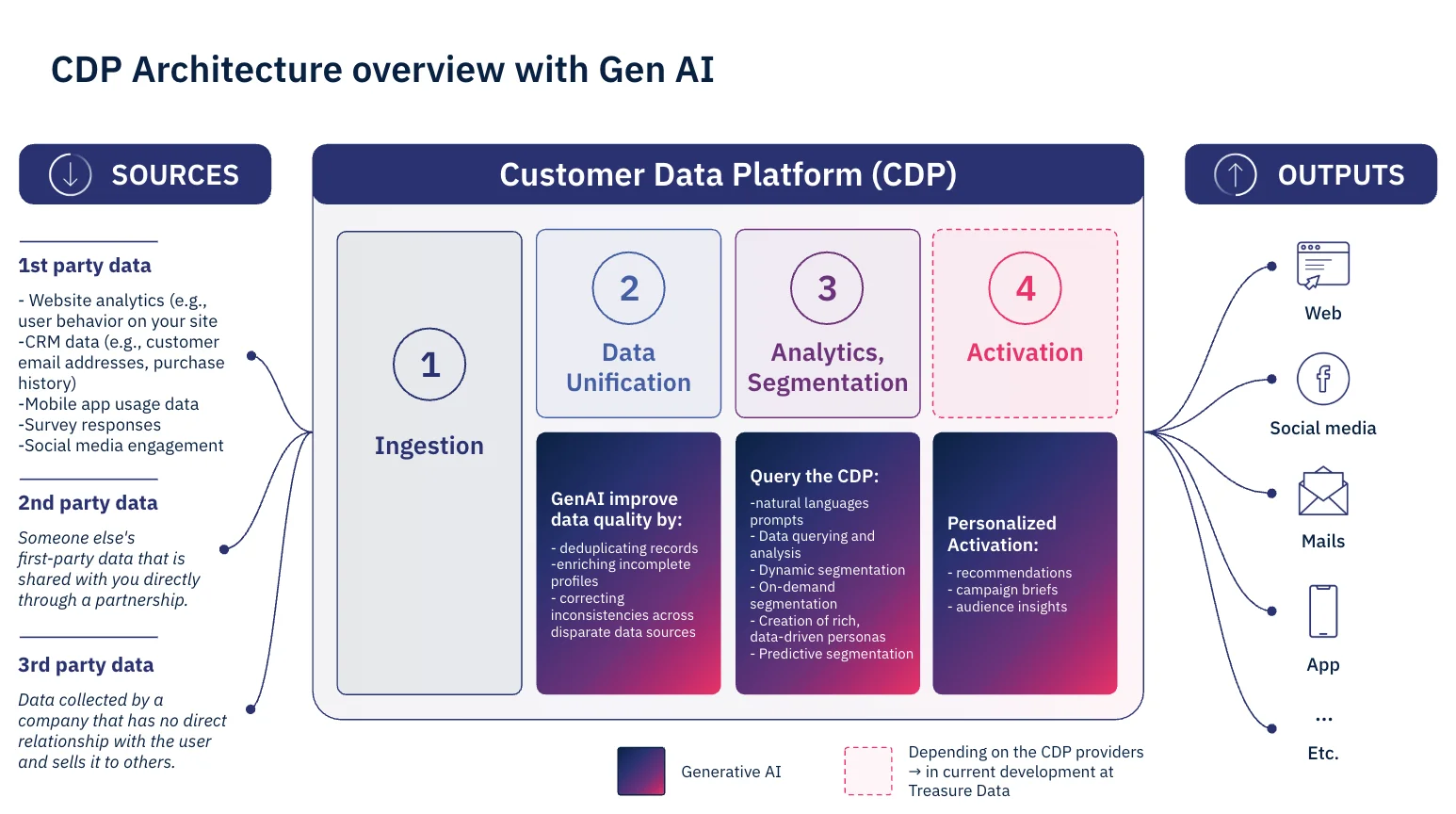
A GenAI-powered CDP integrates large language models and task-specific agents into its core interface, enabling natural language interactions, automated analyses, and proactive recommendations. Marketers can query the CDP using simple language prompts, for example, “Which customers are most likely to churn in the next quarter?”, without needing to write SQL queries or even interact with low-code interfaces. While modern CDPs have already made it easier for non-technical users to explore data through intuitive, low-code tools, Generative AI makes a leap forward by automatically translating natural language prompts into the necessary analyses and visualizations, eliminating the manual effort of building queries or dashboards. This empowers non-technical teams to independently build and refine audience segments, run exploratory analyses (such as purchase trends, churn patterns, or engagement by cohort), understand campaign performance, and quickly generate executive-ready reports.
Solutions like the Deep Research Agent from Treasure Data illustrate the transformative power of GenAI in CDPs. By combining internal customer data with external signals, this agent automates competitive analysis and deep audience understanding. It identifies high-performing segments, uncovers emerging trends, and suggests new campaign opportunities. With natural language interfaces and autonomous agents, marketers can generate insights in a matter of minutes and launch campaigns in hours. These agents not only recommend the best actions to follow but also automatically execute tasks such as segment updates, campaign triggers, and performance analyses, dramatically accelerating workflow and freeing teams to focus on strategy and creativity.
The value of GenAI-powered CDPs goes far beyond marketing alone. Since CDPs aggregate structured data from diverse sources, including sales, supply chain, support, and digital channels, they naturally have the potential to address use cases across the entire organization. The emergence of GenAI functionalities, particularly on-demand business intelligence via natural language, helps to overcome these barriers by democratizing data insights and making them accessible to all business functions.
By fueling CDP with agentic workflows, sales teams can now identify up-sell and cross-sell opportunities by analyzing behavioral data and lifecycle stages. Supply chain teams can forecast demand fluctuations based on emerging customer trends or seasonal behaviors. Category managers can analyze segment performance, detect underperforming product lines, and recommend inventory optimizations. In this way, GenAI facilitates the CDP’s broader adoption across departments, empowering each team with self-service intelligence and transforming CDPs into organization-wide decision-support systems, not just marketing platforms.
Alexy Avril, Data Consulting Director, Artefact
Generative AI also enhances content creation within CDPs. Beyond data querying and analysis, GenAI can automate tasks such as generating segment names, drafting campaign briefs, or suggesting personalized messaging variants. This reduces manual work, speeds up campaign cycles, and improves content relevance and consistency across channels.
Despite the transformative benefits, the main challenge when integrating GenAI into CDPs lies in data quality. CDPs often face issues such as missing or incomplete customer attributes, duplicated profiles, and inconsistencies across various data sources. Since GenAI systems are only as powerful as the data they ingest, unified, clean, and well-permissioned data is essential to ensure reliable outputs. To address this, CDPs can leverage GenAI to automatically deduplicate records, enrich incomplete profiles, and correct discrepancies across disparate systems. For example, GenAI can infer missing demographic details, harmonize product or channel identifiers, and predict likely values for incomplete fields, significantly improving overall data integrity.
Regulatory compliance adds another layer of complexity; AI-generated outputs must still remain auditable, explainable, and align with privacy and consent requirements. CDPs help mitigate these risks through integrated consent management, purpose limitation, and human-in-the-loop workflows to maintain oversight and accountability. To address these challenges, CDPs can integrate GenAI-powered capabilities directly into their core architecture, becoming part of the solution rather than an added risk. GenAI can improve data quality by deduplicating records, enriching incomplete profiles, and correcting inconsistencies. It can also automate data mapping across systems, ensuring accurate updates without heavy manual effort.
For governance, GenAI can strengthen compliance and security by detecting anomalies, flagging suspicious activities, and automating checks against privacy and consent requirements. These safeguards reduce risk while increasing trust in how customer data is managed.
Looking ahead, the future of CDPs will increasingly center on agentic AI capabilities, where autonomous AI agents move beyond data orchestration to fully autonomous intelligence. Rather than merely assisting with insights, these agents will dynamically perform tasks such as segment enrichment, A/B testing, and hyper-personalized campaign launches, continuously learning and refining in real time. Conversational interfaces will replace static dashboards, enabling marketers to interact with data intuitively, while multimodal inputs (text, images, voice, behavioral signals) will enrich customer understanding and unlock deeper insights. Ultimately, CDPs are on a trajectory to become AI-native business intelligence platforms that proactively generate strategies, recommend optimizations, and execute at scale, transforming them into strategic hubs of intelligence that empower organizations to focus on higher-level strategy and deliver true autonomous marketing and customer experience management.
The outdated term of “hyper-personalization” will become fashionable again. In general activities will be centered around individual experiences, making it easy to do business with a company.
Jens Wortmann, Head of My Danfoss & MarTech, Danfoss
In this new era, the CDP will become a living, adaptive system that continuously learns and evolves with the organization, empowering every team to move faster, work smarter, and drive greater business impact.
Besides the obvious of improving audience building and better targeting, there is immense potential in the predictive. Evaluating leads in terms of their potential and suggesting the “next best action” for nurturing, will make a huge difference in the CDP landscape.
Jens Wortmann, Head of My Danfoss & MarTech, Danfoss
1.2 Intelligent segmentation and persona modeling in the age of generative AI
Building on the transformative potential of generative AI for productivity and self-service intelligence, one of its most strategic applications in Customer Data Platforms is advancing segmentation. Historically, segmentation has been a cornerstone of marketing, but its traditional approach is no longer sufficient in an era defined by dynamic customer expectations and real-time digital interactions. Generative AI fundamentally reshapes this landscape, enabling marketers to move from static, one-size-fits-all groups to highly adaptive, predictive, and persona-driven strategies.
Traditionally, segmentation relied on predefined clusters using demographic, geographic, or transactional data. While effective in a broad sense, these segments were rigid and slow to adapt to changing customer behaviors. Generative AI dramatically expands the segmentation toolkit by analyzing a much wider range of data signals, including qualitative insights from unstructured data such as text, browsing patterns, social sentiment, and contextual engagement. This allows marketers to identify subtle behavioral patterns and create micro-segments that are constantly evolving in near real time.
Many CDPs segments we see are basically translations of old, quite static CRM segments. AI-features will be instrumental to depart from this man-made segments… and ensure internal CDP segments embed as much intelligence as media platform algorithms.
Alexis Poujade, Partner Data Consulting, Artefact
Dynamic segmentation is one of the most powerful outcomes of this shift. Unlike static segments that are updated quarterly or yearly, dynamic segments adapt continuously as new data flows in. As customers interact with content, make purchases, or engage with different channels, the segments automatically update to reflect these new behaviors. For example, a customer browsing high-end electronics late at night on mobile might be shifted into a segment for immediate promotional offers, while the same customer could be moved to a premium loyalty segment after repeated purchases. This flexibility enables brands to deliver hyper-relevant experiences at every interaction point, increasing conversion rates, driving engagement, and strengthening loyalty.
Generative AI also significantly empowers marketers through on-demand segmentation capabilities. Instead of submitting requests to data analysts, marketers can now define and refine audiences directly through natural language interfaces. A marketer could simply ask, “Which customers purchased both product A and product B in the last 60 days and also interacted with our support team?” and receive an immediate, actionable segment ready for activation. This removes bottlenecks, accelerates campaign cycles, and fosters a culture of continuous experimentation and learning across marketing teams.
Beyond classic audience definitions, generative AI introduces the creation of rich, data-driven personas. Traditional personas often relied on simplified archetypes and qualitative assumptions. With generative AI, CDPs can synthesize large volumes of behavioral, psychographic, and transactional data to create highly detailed, dynamic personas that evolve alongside customer behaviors. Marketers can even engage in simulated conversations with these AI-generated personas, “interviewing” them to understand motivations, preferences, pain points, and likely responses to new products or messaging. This level of granular understanding helps design more authentic and impactful customer journeys.
Furthermore, AI-generated personas are not static documents. They can be continuously updated as new data comes in, allowing marketers to test and refine them based on emerging patterns. For instance, if an unexpected segment starts responding to a luxury line of products, the persona representing that segment can be rapidly enriched and adapted, guiding immediate adjustments in messaging and offer strategies. By reducing human bias and manual effort, AI personas ensure consistency, detail, and scalability across segmentation and campaign design.
Predictive segmentation takes this one step further by using AI models to anticipate future behaviors. CDPs augmented with generative AI can calculate propensity scores that estimate a customer’s likelihood to perform a specific action, such as making a high-value purchase, renewing a subscription, or churning. Marketers can then proactively design offers, loyalty incentives, or educational content targeted at these predictive segments. For example, they might launch a retention campaign for customers flagged as high churn risk or introduce upsell recommendations to customers with high purchase propensity. This future-oriented approach helps organizations maximize lifetime value while reducing acquisition and retention costs.
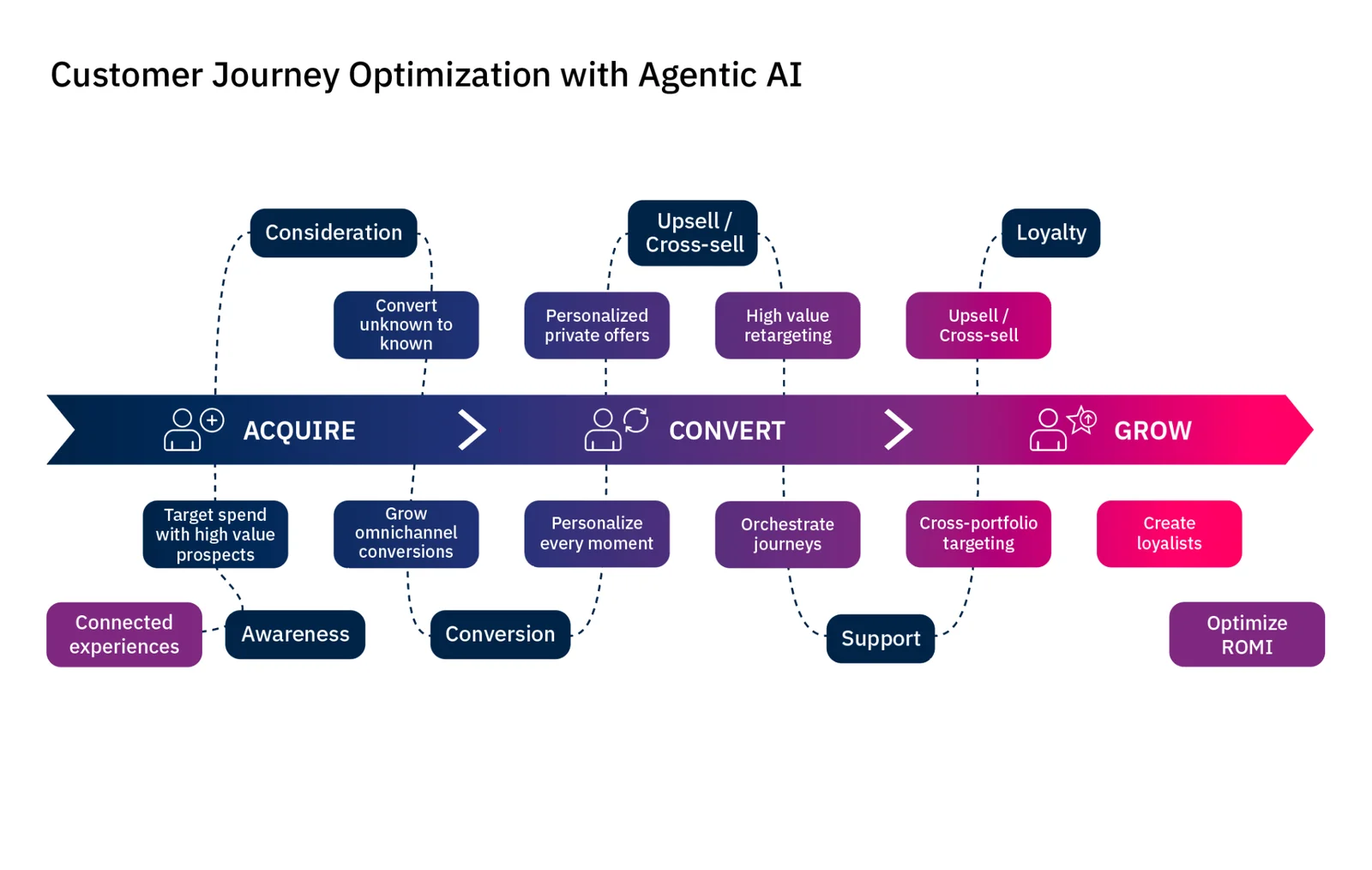
Generative AI is inherently “hyper-personalized.” By using it for customer journey optimization, marketers can deliver experiences that deeply resonate with individual needs and preferences, going beyond just “conversions”.
Smarter, AI-powered segmentation is transforming every stage of the marketing journey. At the top of the funnel, it enhances prospecting and lead qualification by uncovering nuanced intent signals and behavioral patterns. During sales and conversion phases, it supports more precise, persuasive messaging and tailored offers that align with individual preferences and decision journeys. Post-purchase, it enables proactive retention strategies such as personalized lifecycle communications, loyalty offers, and targeted win-back initiatives.
As the industry shifted from rule-based segmentation to AI-driven approaches (propensity models, persona clustering, affinity models, next-best-action), the key to driving scalable business impact was building custom ML models. This required a mix of talents, robust data lake architectures, and strong translation of business needs into the models. Today, the rise of AI-powered CDPs like Treasure Data, offering both off-the-shelf machine learning and genAI capabilities, has drastically reduced time-to-market for deploying and optimizing predictive segments.
Cédric Ly, Data Consulting Director, Artefact
1.3 Faster CDP implementation with AI-powered migration
AI’s transformative potential in Customer Data Platforms (CDPs) extends deeply into technical and IT operations, fundamentally reshaping implementation processes. One of the biggest obstacles to CDP adoption has been the migration from legacy systems, an endeavor often plagued by manual labor, specialized coding, and prolonged timelines.
Treasure Data’s Migration Agent provides an intelligent bridge between old and new environments. It automatically extracts existing assets, such as segments, queries, and workflows, then interprets and translates them into Treasure Data’s architecture. The agent converts SQL logic, rebuilds data pipelines, and orchestrates workflows so they remain functional post-migration. This is not a superficial conversion, it reconstructs core logic programmatically, preserving business rules and data relationships.
By automating these steps, the Migration Agent significantly reduces reliance on engineering resources. Teams avoid weeks or months of manual rebuilding; instead, the agent automates much of the heavy lifting, allowing technical teams to focus on optimization and innovation.
Implementation challenges: Implementing a CDP isn’t just a tech project, it’s a deep internal transformation of our whole value chain. We often run into a ‘disappointment in use’ because of long integration cycles and high development costs. Transforming our internal and technical processes is key to fixing this, and GenAI should give us the agility to test, learn, and speed up our time-to-value/time-to-market.
Alice Moutier, Head of Data Program “Multi-Equipment and Acquisition”, AXA
According to Treasure Data experience, most organizations experience up to a 60% reduction in migration time, enabling marketers and data owners to begin activation, and realize ROI, much sooner. Other industry evaluations of AI-powered migration platforms report similar acceleration in data-driven onboarding.
Beyond speed, the Migration Agent enforces best practices and validates translated logic automatically, reducing errors common in manual migrations and enhancing data environment maintainability.
This trend reflects a broader shift: AI isn’t just augmenting marketing tasks, it’s increasingly empowering IT and data engineering functions. Automating migration reduces risk, accelerates implementations, and frees up technical talent to focus on strategic improvements, not repetitive or error-prone migrations.
2. Artefact x Treasure Data vision: the AI-augmented CDP
2.1 Ushering in the bold new vision of an “Intelligent CDP”
The landscape of customer data management is undergoing a significant transformation, driven by the escalating demand for hyper-personalized customer experiences at enterprise scale. The new era of Customer Data signals a profound strategic reorientation harnessing artificial intelligence grounded in trusted data, without compromising agility or trust.
The core of this new vision lies in a fundamental shift from the traditional CDP’s “data centralization” model to a paradigm of “distributed intelligence”. Historically, CDPs primarily focused on pulling together customer information, enriching it, and then passing it to other tools for activation. This often resulted in a constant handoff between systems and personnel, creating dependency loops that led to slow time-to-value and limited agility. The Intelligent CDP, in contrast, aims to become an “operating system for intelligent coordination across the enterprise,” democratizing access to insights beyond just technical teams.
The distinctions between these two approaches are significant:
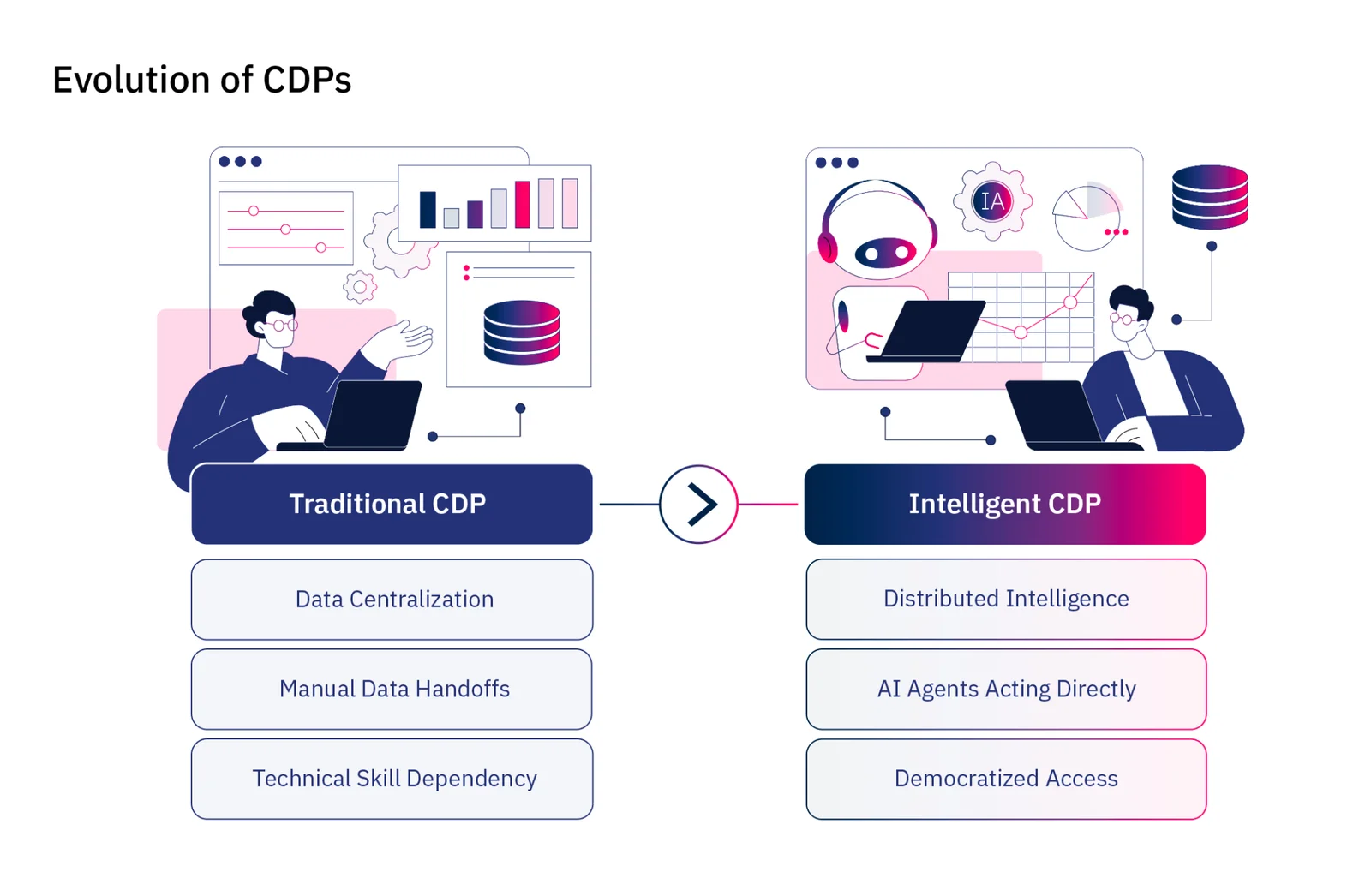
At its core, we believe that a future-forward Customer Data Platform serves as the intelligence layer powering exceptional customer experiences. AI agents embedded in the platform can create an ecosystem of intelligent assistants ready to revolutionize your business operations.
2.2 Treasure Data’s “Diamond Record” as the foundation of trusted customer data
Treasure Data’s platform allows customers to build robust, cleansed, enriched, and unified customer datasets. At the very core of the Intelligent CDP lies the “Diamond Record,” heralded as the “new ‘diamond standard’ for customer data quality, trust, and activation”. This foundational element is described as a persistent, real-time customer ID that seamlessly connects every tool, channel, and data stream. It unifies all historical and real-time data from every digital and physical touchpoint, bringing together first, second, and third-party data to ensure accuracy and eliminate fragmented identity.
The Diamond Record improves AI performance by providing it with “smarter data.” It creates a single, reliable customer profile by using advanced methods to connect and clean all available information. This complete and accurate data grounds the AI, which prevents it from generating false or misleading outputs (hallucinations).
By emphasizing trust, privacy, and strong governance, this approach directly addresses key industry concerns around data regulations (like GDPR) and the ethical use of AI. Ultimately, it allows companies to confidently leverage powerful AI without compromising data integrity, regulatory compliance, or their brand’s reputation.
This foundation can fuel your AI agents with comprehensive, unified customer data, enabling hyper-personalized interactions and deeper insights. It empowers various teams across the organization: marketers use decisioning agents to optimize outcomes, tech teams accelerate data onboarding to a matter of weeks, ensuring marketers have timely access to actionable insights; and so on.
2.3 AI Agent Foundry empowering Superhuman Teams
The AI Agent Foundry serves as the platform for building and deploying intelligent agents, which are designed to transform teams into “superhuman growth engines”. These agents democratize access to intelligence and automate tasks that previously demanded specialized technical skills. The focus on enabling “non-technical teams” to “ask plain-language questions and get instant answers” and to “automate manual work and accelerate productivity” represents a strategic move to alleviate the persistent bottleneck of data science and analytics resource scarcity within enterprises. By providing natural language interfaces and purpose-built agents, Treasure Data is effectively productizing data science and AI capabilities, making them accessible to a much broader spectrum of business users. This shifts the paradigm from a centralized data team being the sole orchestrator of insights to empowering operational teams to directly act upon them, leading to faster campaign execution, more agile customer journey optimization, and a higher return on investment from data initiatives.
Treasure Data offers several pre-built agents, each designed for specific functions:
| AI Agent | Primary Function | Empowered Persona(s) |
|---|---|---|
| Audience Agent | Discover and create high-value segments from behavioral signals | Digital Marketers, Product Managers |
| Deep Research Agent | Analyze internal/external data for campaign planning and new opportunities | Marketing Strategists, CX Leads |
| Journey Optimizer Agent | Recommend and implement customer journey changes and A/B tests | CX Leads, Product Managers |
| Content Gen + Brand Compliance Agents | Automate creation, review, and QA of marketing content at scale | Digital Marketers, Content Teams |
| AI Decisioning Agent | Determine best channel, time, and message for real-time personalization | Marketers, CX Leads |
| Taxonomy Agent | Convert unstructured data into structured personalization tags | Data Teams, Personalization Specialists |
These agents offer unique advantages, being purpose-built for CDP tasks, designed for enterprise-readiness with robust permissions and auditability, offering composability, and crucially, being grounded in the Diamond Record to prevent AI hallucinations. Additional custom built agents can be developed by Treasure Data working closely with Artefact to serve a variety of different tasks and use cases.
2.4 Power of partnership driving customers towards an agentic future
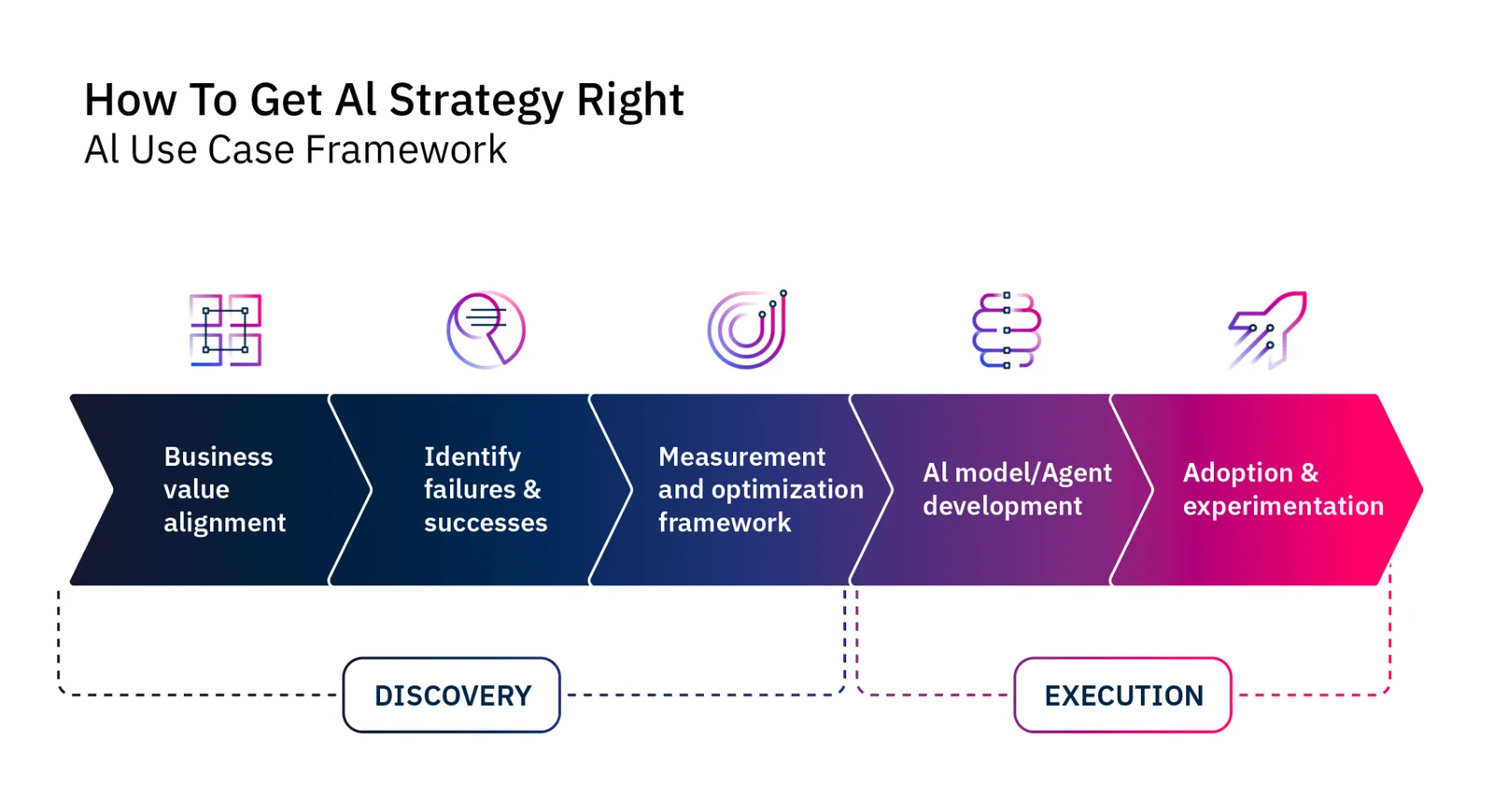
Over the years, as we’ve partnered with Artefact to help brands maximize the value of their customer data, we’ve developed a comprehensive AI use case framework. This framework guides our customers in identifying, prioritizing, and executing real-world AI use cases that create tangible business impact.
While AI offers limitless possibilities, the key question is: What’s genuinely valuable to your organization and how will it drive measurable outcomes? How can you bring it to life and continuously optimize its value?
Applying AI simply for the sake of innovation is not the goal. The starting point should always be aligning with your business teams on the expected value of the use case. This alignment typically stems from a specific problem they’ve identified. For example, they might ask: “Our website’s conversion rate is low, how can we improve it?” At this stage, it’s equally important to define success metrics as well as failure metrics. While success metrics set targets, failure metrics provide the framework for improving and optimizing your AI models. In a perfect scenario, the AI model might predict exactly who is at risk of churn and when, these insights can be used to set specific, actionable goals.
A significant emphasis should be placed on the discovery and design phase, even before execution. Spending time in this phase ensures the identified use cases are aligned closely with business needs and designed effectively to drive impact.
When it comes to execution, one of the most critical lessons we’ve learned is that no AI model delivers value instantly. Achieving meaningful outcomes requires ongoing fine-tuning and optimization of your models. By continuously iterating, you can steadily evolve your AI use cases to deliver the business value you desire.
To chart Treasure Data’s agentic future working closely with Artefact, we have established key principles that shape our vision:
- A Comprehensive AI Agent Ecosystem: Instead of designing agents for isolated use cases, we aim to develop a business-friendly, yet powerful, AI Agent platform, an ecosystem of agents spanning the entire marketing value chain.
- Empowering Marketers, Not Replacing Them: Our goal isn’t to replace the humans behind marketing, but to supercharge them. By automating repetitive, mundane tasks, marketers can focus on high-value strategic work, driving 10X productivity gains. We offer a range of AI Suites to help marketers, CX and sales teams become superhumans.
- Business-Driven Outcomes: As a business-focused platform, every AI initiative we undertake is rooted in delivering real-world ROI and supporting brands in achieving measurable business success.
- Flexibility and Customization: Staying true to our open-source DNA, we built an ecosystem of customizable AI agents that customers can tailor to meet their unique needs across the marketing value chain.
- Leveraging CDP’s Strength and Security: The CDP offers the unparalleled advantage of a comprehensive Diamond Record. Through AI agents, brands can harness this data to deliver exceptional customer experiences. All permissions and policies at the data level as well as agent level apply, so no new security maintenance needed. You can trust your data and AI.
- From Short-Term to Long-Term Memory: Generative AI systems lack long-term memory. By leveraging Treasure Data’s platform to continuously gather feedback, signals, and measurements, we’re creating AI that evolves dynamically, driving decisions based on deep context and historical knowledge, not just fleeting memory.
This vision ensures that Treasure Data together with Artefact enables smarter marketing, better customer experiences, and transformative productivity gains powered by AI.
3. Food for thought: additional impactful CDP trends
The Customer Data Platform has solidified its position not just as a marketing tool, but as a core component of modern business strategy. As the digital ecosystem adapts to a privacy-first, cookieless future, the role and structure of the CDP are evolving on multiple fronts. This transformation touches every aspect of its function, from its core architecture to its application in proving business value and enabling collaboration.
3.1 The great unbundling: integrated vs. composable CDP
As enterprises equipped with CDP solutions have grown more mature, a significant architectural evolution is underway. While the traditional, integrated CDP model remains dominant, the Composable CDP is rapidly gaining traction, challenging assumptions about customer data management. Interest in composable architectures has surged; in 2025, their growth rate hit nearly 13%, far outpacing the broader CDP market. Though accounting for just 5% of market share, this momentum signals a notable change for organizations with strong data capabilities.
To understand the composable approach, one must first recall the core functions of a traditional CDP. These platforms are typically integrated, all-in-one solutions designed to handle four primary tasks:
- Data Ingestion: Collecting customer data from various sources (e.g., websites, mobile apps, CRM systems, point-of-sale).
- Data Unification: Stitching together disparate data points to create a single, coherent customer profile through identity resolution.
- Analytics & Segmentation: Analyzing customer data to build audience segments for targeted campaigns.
- Activation: Pushing these segments and data to downstream marketing, sales, and service tools.
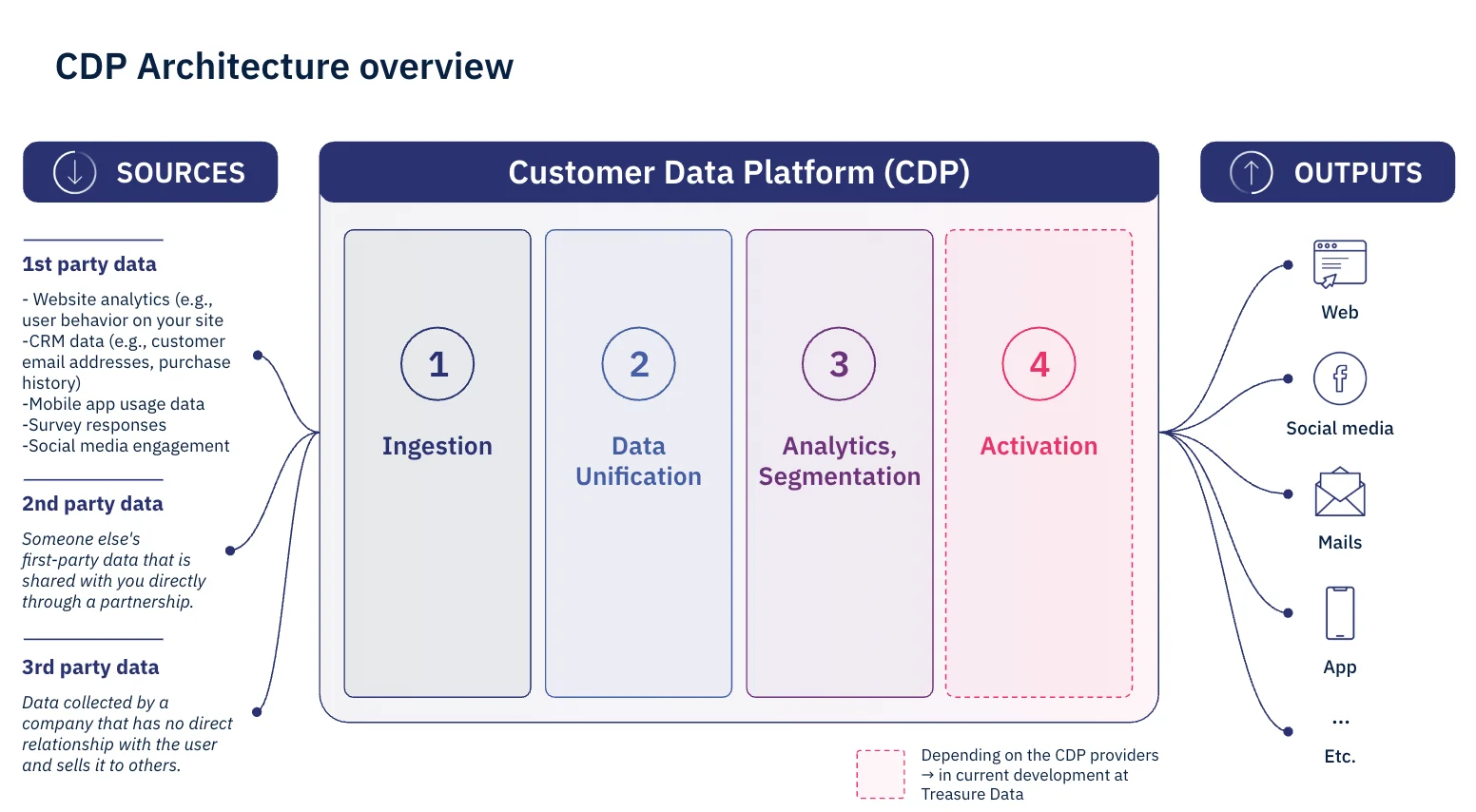
A traditional CDP bundles these functions into a single, pre-packaged software solution from one vendor. The value proposition is simplicity and end-to-end integration; all the necessary tools are designed to work together seamlessly out of the box. A Composable CDP, by contrast, unbundles them. The core idea is to treat these functions not as a fixed package, but as interchangeable building blocks. This architecture leverages an organization’s existing data warehouse (like Snowflake, BigQuery, or Databricks) as the central foundation for customer data. Specialized, best-in-class tools for ingestion, identity resolution, segmentation, and activation are then “composed” or connected directly to the warehouse. The CDP is no longer a separate box where data is copied and stored, but a flexible, modular framework that sits on top of the company’s central data asset.
CDP usage & value: The real value of a CDP is how it lets us make a fundamental strategic shift: moving our marketing from a ‘one-to-many’ to a ‘one-to-one’ approach. We’re using it to unify all our customer data and build a centralized recommendation engine. This lets us generate personalized offers every single day, completely transforming how we connect with our clients.
Alice Moutier, Head of Data Program “Multi-Equipment and Acquisition”, AXA
The move toward composable architectures is a strategic response to concerns about agility, cost, and data ownership. Vendor lock-in, where dependency on a single vendor makes switching prohibitively expensive and disruptive, has become a growing concern among CTOs. This dependency is now widely seen as a major operational risk that stifles innovation and inflates costs. The Composable CDP directly answers this challenge by offering an ecosystem of specialized tools rather than a single suite.
In 2025, composable CDPs grew nearly three times faster than the overall CDP market, signaling a decisive move among data-savvy leaders. Composable CDPs are no longer a niche experiment, they represent a viable option for companies that have invested in centralized data warehouses and skilled data teams.
Beyond mitigating risk, the composable approach offers key advantages. It enables selecting best-in-class tools for each job, like a leading reverse-ETL tool for activation and a specialized vendor for identity resolution, avoiding the compromises of a bundled suite. This model is more cost-efficient, as organizations only pay for needed capabilities, avoiding to pay for modules that they already own internally and master. These platforms also scale more efficiently; new modules can be integrated as needs grow without replacing the entire system.
In a composable model, data never leaves the organization’s secure data warehouse. This “zero-copy” architecture simplifies governance and compliance with regulations like GDPR and CCPA, while eliminating the costs and security risks of data duplication. Built directly on the live data warehouse, composable CDPs also enable seamless, real-time activation, turning insights into action almost instantaneously.
While composable CDPs offer undeniable advantages, the traditional integrated CDP remains the preferred option for many organizations, particularly those that have not yet invested in a centralized data warehouse. Integrated solutions provide an all-in-one environment where ingestion, unification, segmentation, and activation are already pre-built and tightly connected. This bundled approach minimizes complexity and accelerates time-to-value, sparing companies the need for significant upfront infrastructure or specialist data teams.
For marketing-led organizations, traditional CDPs also stand out for their usability. Their intuitive interfaces democratize access to customer data, enabling marketers to design and launch campaigns with minimal IT involvement. Vendor management is also simpler: one provider ensures cohesive support, clear accountability, and an integrated roadmap of features.
In short, for businesses at earlier stages of data maturity, the traditional CDP offers a pragmatic, reliable path to building a unified customer view and activating data-driven experiences, without requiring the advanced technical foundations that a composable approach demands.
3.2 Measuring ROI in a privacy-driven landscape
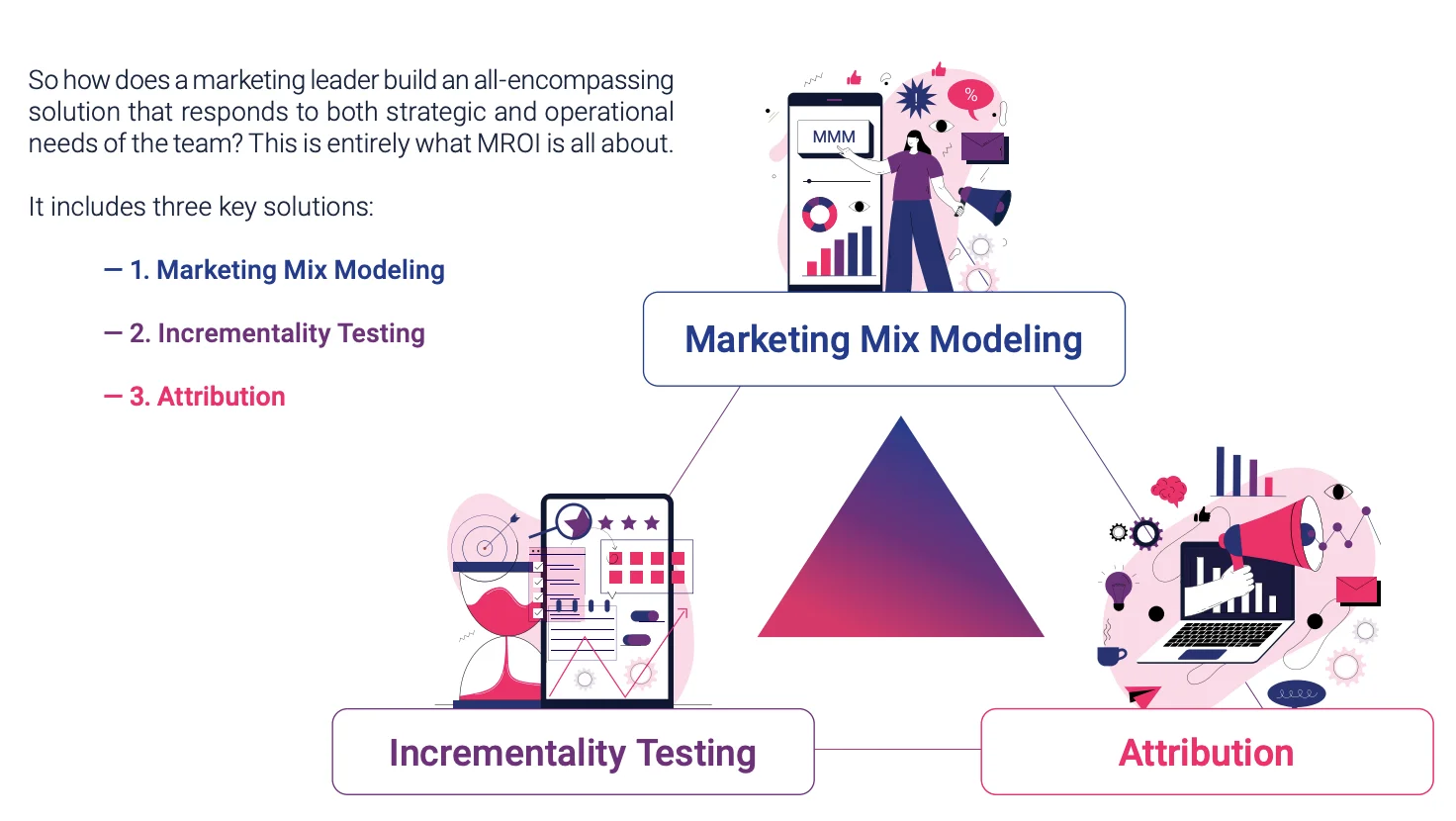
Measuring marketing performance has become increasingly complex as third-party cookies lose support across browsers and face growing incompatibility with global privacy regulations. Organizations now rely on three main measurement approaches to navigate this landscape: attribution (e.g., last-click attribution, cookie-based Multi-Touch Attribution), Marketing Mix Modeling (MMM, which analyzes aggregated metrics like media spend and impressions), and incrementality testing (e.g., A/B testing, uplift modeling, and geo-based experiments). Each method addresses different aspects of performance measurement, with CDPs providing the foundational infrastructure for privacy-compliant data unification, governance, and actionable insights.
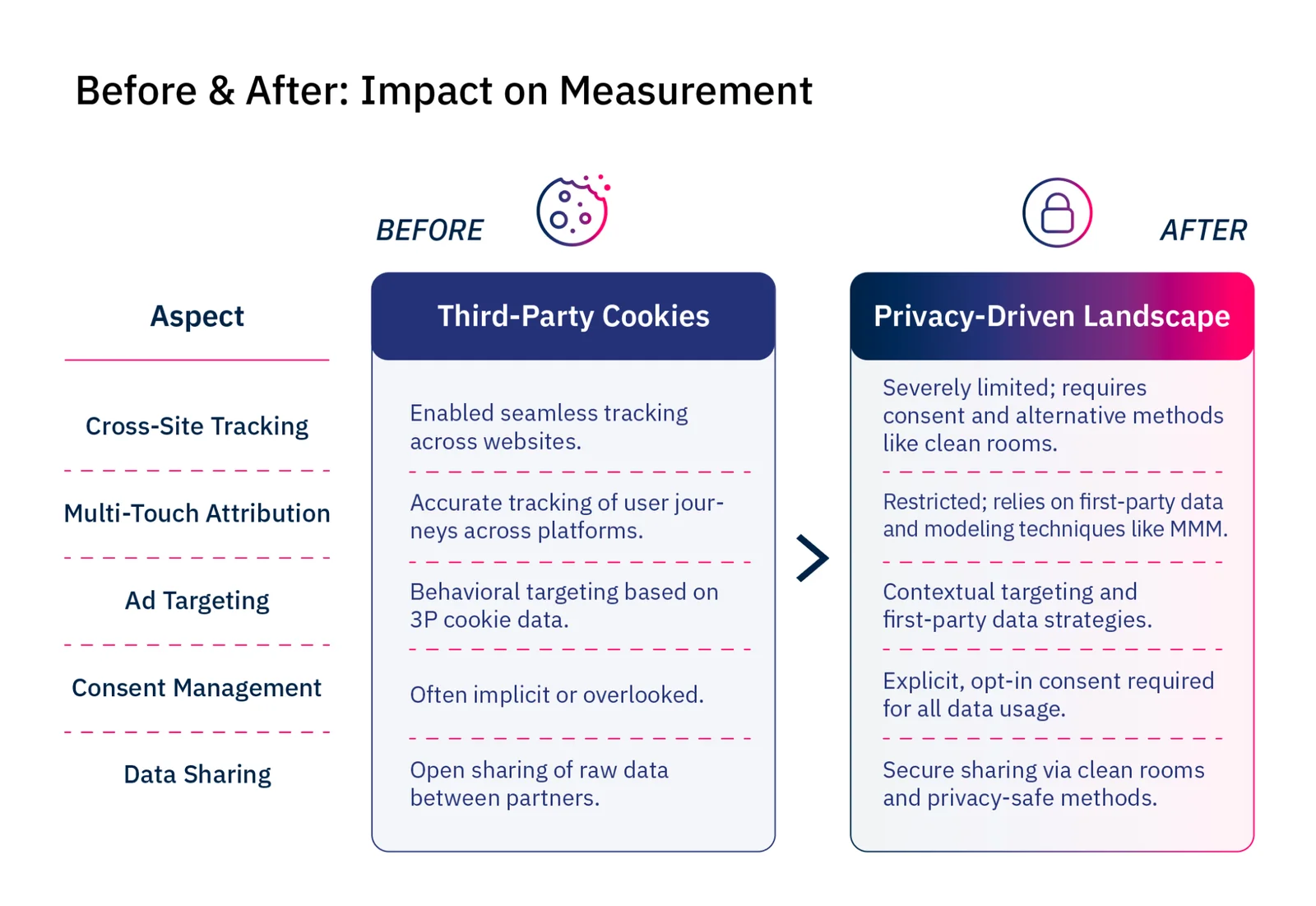
To maintain effectiveness and accountability, organizations must adopt new approaches built on first-party data and privacy-compliant infrastructures.
Multi-touch attribution (MTA) remains valuable for understanding how different touchpoints influence customer behavior. However, the loss of third-party cookies challenges traditional MTA models by limiting cross-channel tracking. A Customer Data Platform (CDP) addresses this by using first-party data and advanced identity resolution to connect touchpoints in a privacy-compliant way. By consolidating interactions across channels and relying on consent-based identifiers, CDP-enabled MTA can deliver more accurate and complete insights even without third-party cookies. Nevertheless, MTA is still most effective in digital journeys involving identifiable users and must now operate under stricter data governance standards.
To complement this, marketing mix modeling (MMM) offers macro-level insights by analyzing aggregated metrics such as media spend, impressions, and outcomes. It is especially valuable in cookieless or offline-heavy environments, where user-level tracking is sparse. MMM helps inform budget decisions and guide long-term strategy without relying on personally identifiable information.
When presenting Marketing Mix Modeling (MMM) results, marketers often express hesitation. They are accustomed to the granular, user-level data provided by digital attribution and perceive MMM as a “black box” lacking in detail. Combining MMM with incrementality testing and attribution modeling helps build trust. This hybrid approach leverages attribution to illustrate the customer journey, while incrementality scientifically validates easy-to-grasp findings of campaign’s true impact. By cross-referencing these methodologies, we can confirm MMM outcomes and offer marketers a comprehensive, transparent framework, giving them the confidence to make more informed business decisions.
Causality modeling brings a different layer of insight by measuring true business impact through experimental design. A/B testing, uplift modeling, and geo-based experiments allow marketers to isolate effects by comparing exposed and unexposed groups. These methods are increasingly important where deterministic tracking is limited, offering a way to validate which campaigns drive actual lift.
As platforms restrict the availability of user-level data, machine learning is used to fill attribution gaps. Conversion modeling and predictive analytics deduce the likely customer outcomes, even when direct signals are unavailable. These models, often integrated into ad platforms, require strong data foundations to be effective and trustworthy. CDPs play a crucial role here by providing the quality, structured input these models depend on.
Underlying all of these methods is the need for reliable consent and compliance tracking. As regulations tighten, organizations must ensure that the data used for measurement has been collected lawfully and is used in accordance with user permissions. By centralizing consent data within a unified platform, CDPs provide a single source of truth for user permissions, ensuring that all systems accessing customer data adhere to the same rules. Additionally, CDPs can automate consent enforcement across channels and applications, reducing human error and ensuring real-time compliance with evolving regulatory requirements.
ROI measurement: We measure ROI by evaluating incremental business, but we also integrate customer engagement and distributor adoption to refine our feedback loop, which is key to improving our targeting and making sure our strategy is not just effective but also aligned with our whole business ecosystem.
Alice Moutier, Head of Data Program “Multi-Equipment and Acquisition”, AXA
These tools are only as good as the data they receive. CDPs unify first-party data from across systems and channels, resolving identity so that modeling and attribution can reflect real, complete journeys. They manage governance requirements and allow teams to segment audiences, track exposures, and run experiments, even in server-side or clean room environments.1 They are also built to operate in a cookieless ecosystem, offering resilience against future browser and platform policy shifts.
There is no universal measurement method that fits every situation. A hybrid approach, combining MTA, MMM, and causality-based models, is now required to understand ROI accurately. The CDP acts as the foundation for this strategic measurement stack, enabling accuracy, compliance, and adaptability as the digital ecosystem continues to evolve.
3.3 CDPs as gateway for robust data-sharing partnerships
As customer data becomes increasingly fragmented across platforms and channels, organizations are turning toward data-sharing partnerships to sustain their ability to generate insights and maintain marketing effectiveness. In industries like Fast-Moving Consumer Goods, Retail, or those relying on third-party distribution models, brands often do not own the direct customer relationship and depend on intermediaries, such as retailers, platforms, or media partners, to reach and understand end users.
This reality makes access to customer data collected by partners not just a convenience but a strategic imperative. Brands must be able to retrieve, unify, and activate this data to power personalization, segment discovery, and accurate performance measurement. In a digital ecosystem where privacy expectations are rising and identifiers are fragmenting, data collaboration is emerging as a core lever for customer intelligence and business competitiveness.
However, such collaboration must be established within legal and privacy-respecting frameworks. Regulatory requirements now demand not only that data be used transparently, but also that its collection and sharing are governed by clear, consent-based policies. This makes secure data-sharing infrastructures more critical than ever.
Data clean rooms have emerged as one of the primary technologies enabling safe collaboration across organizational boundaries. A clean room is a secure, privacy-compliant environment in which two or more parties can analyze or model data without directly exposing raw, user-level information. This approach protects personal data while enabling joint business activities.
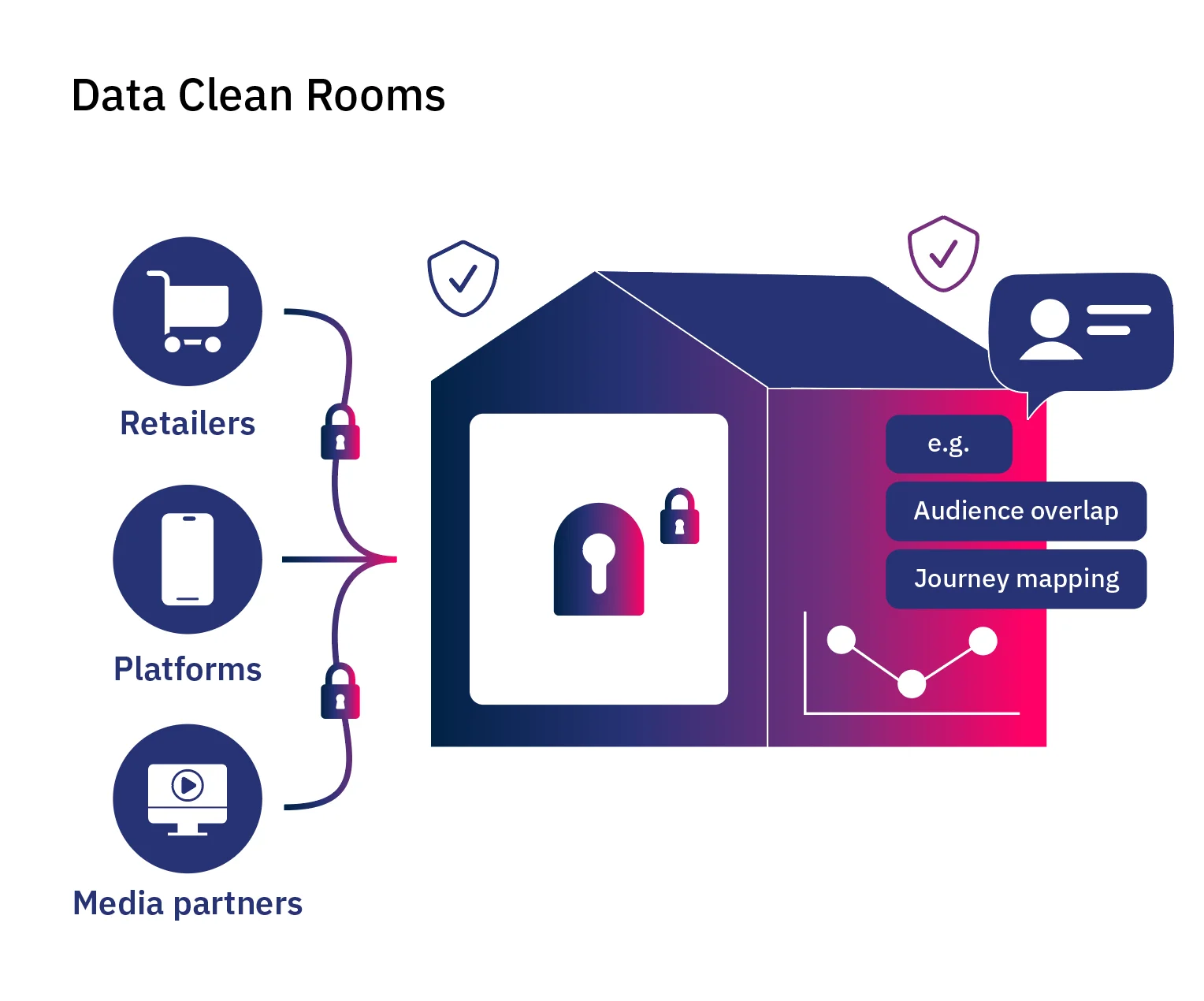
In this context, the adoption of clean rooms directly incentivizes organizations to formalize data-sharing partnerships and establish robust contractual agreements. By creating a technical foundation where data can be combined and analyzed securely, clean rooms make it both feasible and strategically necessary for brands to engage with partners, exchange insights and co-develop customer strategies.
Within a clean room, companies can perform audience overlap analysis, cross-platform customer journey mapping, media performance measurement and attribution modeling, all while complying with data minimization principles and avoiding unauthorized data exposure. This functionality is especially valuable for retail media partnerships, co-branded campaigns or performance marketing strategies that span multiple platforms or ecosystems.
By design, clean rooms prevent direct data leakage. They ensure compliance with privacy regulations like the GDPR or CCPA and offer a safe environment where data can be activated collaboratively while remaining under control. Once partnerships are in place, clean rooms provide the technical foundation to operationalize those agreements securely.
While clean rooms are essential, they do not function effectively in isolation. A clean room is only as useful as the data it receives. For data-sharing to be secure, scalable and compliant, companies must start with structured, unified and consented data. This is where the Customer Data Platform becomes indispensable.
Thanks to out-of-the-box connectors or native features, clean rooms have become the natural extensions of the CDPs, alleviating most of the tech challenges linked to 2P partnerships.
Alexis Poujade, Partner Data Consulting, Artefact
With a CDP feeding the clean room, organizations benefit from auditable, policy-driven data governance. The CDP ensures that all shared data is based on user consent, is fit for purpose and does not exceed legal boundaries. It enables controlled, real-time transfers to clean rooms without requiring manual intervention or complex technical pipelines.
Importantly, while a clean room can technically exist without a CDP, doing so introduces significant operational and compliance risks. Manual data preparation, inconsistent identifiers and disjointed governance all lead to inefficiencies and potential legal exposure. Experience shows this type of approach never really goes beyond the proof of concept.
Ultimately, a well-structured CDP is more than just a tech or data advantage, it is an asset that strengthens your position when negotiating 2P partnerships. In the face of aggressive audience monetization models, having clean, shareable data becomes the key currency that allows indirect brands to reduce the otherwise steep costs of purchasing and activating another company’s 1P data.
Conclusion: the Intelligent CDP as the core of a resilient enterprise
The evolution of the Customer Data Platform is no longer just about centralizing data; it’s about transforming that data into a resilient, intelligent engine for the entire enterprise. In a landscape defined by rapid technological change and evolving privacy demands, the AI-augmented CDP is becoming the core of a future-proof business. It represents a fundamental shift from static infrastructure to a dynamic, distributed intelligence system.
This transformation is built on two key pillars: the “Diamond Record” and the “AI Agent Foundry.” The Diamond Record provides a unified and trusted source of truth for customer data, essential for grounding AI models and ensuring compliant, accurate personalization. On top of this foundation, the AI Agent Foundry empowers teams by democratizing access to sophisticated insights and automating repetitive tasks. This enables marketing, IT, and analytics professionals to move beyond manual operations and focus on high-value, strategic work.
The future of customer experience isn’t about replacing human expertise with machines but about augmenting it with a powerful layer of artificial intelligence. By embracing this vision, organizations can stay ahead of regulatory shifts, anticipate customer needs, and build a competitive advantage rooted in trust.
Our partnership is designed to guide businesses through this strategic shift. We believe true value is unlocked when AI initiatives are tied to measurable business outcomes, transforming how companies operate and interact with their customers. We invite you to partner with us to unlock unprecedented growth, one intelligent interaction at a time.
Contributors and acknowledgements
Experts
- Jens Wortmann, Head of My Danfoss & MarTech, Danfoss
- Alice Moutier, Head of Data Program “Multi-Equipment and Acquisition”, AXA
Artefact team members
- Andrew Ash, Consulting Director
- Alexy Avril, Consulting Director
- Astrid Calippe, Senior Marketing Manager
- Thibaut Corallo, Consulting Manager
- Cédric Ly, Consulting Director
- Alexis Poujade, Partner Data Consulting
- Florian Thiebaut, Managing Partner & Data & AI Marketing Global Lead
- Juliette Rapin, Junior Data Consultant
Treasure Data team members
- Kerrel Brown, Content Marketing
- Nick Davis, Head of Content
- Kazuta Ota, CEO, Treasure Data
- Shekhar Somanath, Marketing, Business Development & Strategic Partnerships