




The digital landscape is undergoing a fundamental transformation where traditional SEO tactics, once centered purely on rankings and traffic, are no longer enough to guarantee success. In this article, we explore how brands can navigate this disruption by moving beyond vanity metrics and focusing on what truly drives competitiveness: topical authority, brand distinctiveness, and technical readiness for AI agents. You will discover why “brand fame” is becoming the ultimate SEO strategy, how to restructure your content for machine-centric reading, and why integrating PR is now essential for cementing trust in a zero-click environment. Whether you are adjusting your technical framework or rethinking your measurement KPIs, this guide provides the roadmap for staying relevant in an ecosystem where being “chosen” by AI is just as important as being found by users.
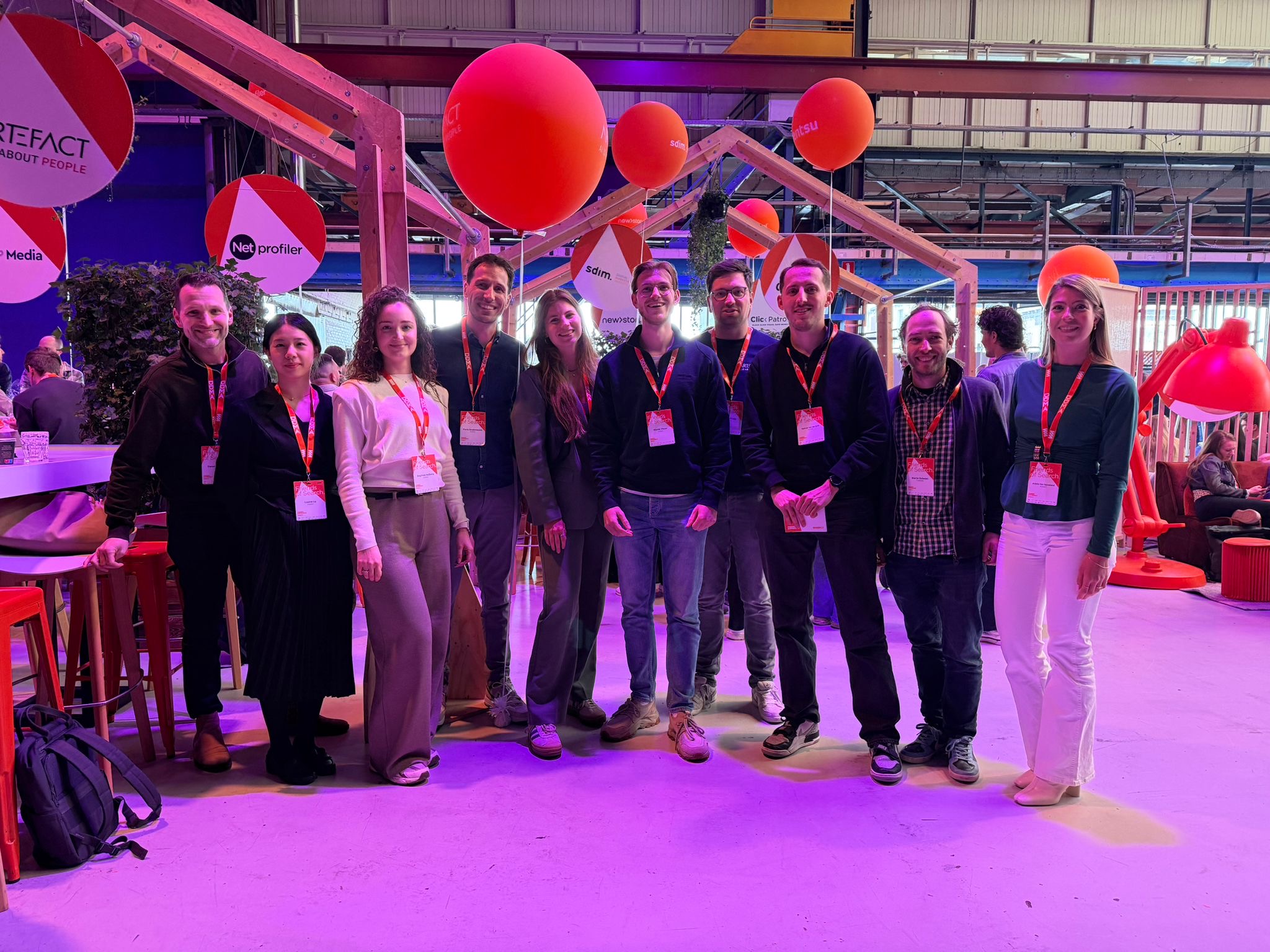
To illustrate these shifts, we highlight our top five keynotes from Friends of Search 2026 and break down the most important insights and actionable takeaways shared during the event.
What AI means for brands: How to stay visible, relevant, and chosen
With Aleyda Solis, International SEO Consultant & Founder at Orainti
The landscape of search engine optimization (SEO) is undergoing a massive transformation. With the rise of AI-driven search experiences, marketers and decision-makers are facing an unprecedented shift in how users find information and interact with brands. However, rather than signaling the end of SEO, this shift simply redefines how we measure success and build authority in a multi-platform digital world.
The search industry is facing a profound disruption as Artificial Intelligence (AI) reshapes user behavior and search engine mechanics. Users increasingly rely on AI overviews, conversational LLMs, and visual search tools like Google Lens to find information and make purchasing decisions without ever leaving the search platform. Because platforms are integrating features like direct e-commerce checkouts and multi-turn conversational answers, traditional metrics like website traffic and click-through rates are rapidly losing their value as reliable key performance indicators (KPIs). Furthermore, current AI systems lack proper attribution, making it incredibly difficult for businesses to trace conversions back to their exact sources. To survive this paradigm shift, organizations must pivot from outdated SEO tactics, such as rigid keyword mapping and an over-reliance on traffic data, toward building deep topical authority, fostering strong brand sentiment, and aligning SEO efforts closely with digital PR. This requires a comprehensive approach to content creation, particularly investing in informational resources like FAQs and detailed guides, alongside technical adaptations to ensure AI bots can properly read, render, and cite web pages.
Main takeaways:
- Move beyond traffic as your primary KPI: Because users can now get full answers, interact with multi-turn conversations, and even make purchasing decisions without leaving the search platform, traditional traffic is becoming a less important indicator of success. Marketers must shift their focus toward measuring brand visibility, sentiment, and user actions across the entire customer journey rather than just tracking clicks.
- Establish deep topical authority: The old method of matching specific content to exact keywords is outdated due to AI’s ability to break down complex, multi-turn queries. Instead, brands need to build comprehensive, structured content that establishes them as a topical authority. Informational content, such as detailed guides, FAQs, and help centers, is crucial because these are the exact sources AI platforms frequently cite to generate their answers.
- Brand mentions and digital PR are critical: Backlinks are no longer the only currency; pure brand mentions and citations from valuable, authoritative third-party sources are now heavily factored into AI search interfaces. Aligning SEO with digital PR and community management is essential to ensure that your brand is recognized, trusted, and spoken about with positive sentiment across the web.
- Technical SEO must adjust for AI bots: Relying heavily on client-side rendering to display important content, such as product reviews, can be a major disadvantage. If the information does not exist in the initial HTML, AI platforms might not “see” or render it. Prioritizing proper HTML rendering and utilizing schema markup is vital to ensure your content is easily readable and indexable by AI systems.
- SEO is evolving, NOT dying: Despite these massive challenges, AI still requires factual, high-quality information to function properly. The core of SEO remains the exact same, optimizing for where your audience is.
Our take on this
We are already focusing on this with a lot of clients. We are actively helping them navigate this transition by shifting away from outdated traffic metrics, building robust topical authority, and integrating digital PR to ensure their brands remain visible and trusted in AI search interfaces. This is based on the audience of the customer to align with the overall strategy and adapt to this.
Forget EEAT! The long and short of SEO is fame
With Jes Scholz, Marketing Consultant at Jes Scholz Consulting
AI assistants and conversational models are becoming the new gatekeepers of digital visibility. At the same time, traditional seo tactics are creating a flood of content that looks and sounds the same. To grow in this environment, marketers need to move beyond short-term vanity metrics and purely rational messaging. The real opportunity lies in building brand fame that influences people long before they ever type a query into a search engine.
Therefore, we need to focus on the following:
Out of market majority (the 60/40 rule)
Most people are not actively looking to buy right now. Yet this group represents the biggest opportunity for future growth.
Instead of focusing only on capturing existing demand, brands should invest in building mental availability so they are remembered when a buying moment appears.
A commonly recommended balance is:
- 60% brand building
- 40% activation and demand capture
This approach ensures brands stay visible today while also creating future demand. Stand out with showmanship, distinctiveness, and distribution. If everyone uses AI to generate similar content, differentiation becomes critical. Strong brands focus on three things.
- Showmanship: Content should spark curiosity, emotion, or a story. Purely rational feature lists rarely stand out and are easy for competitors to copy.
- Distinctiveness: Recognition comes from more than a logo. Strong brands use recognizable colors, sounds, visual styles, characters, and tone of voice.
- Distribution: Great content only works if people can find it. Brands need to make their content available across search, social platforms, and discovery environments. AI can help by adapting one idea into many formats and channels.
Measure share of voice, not just clicks
Clicks, impressions, sessions, and rankings are useful metrics, but they rarely tell a full strategic story.
A stronger indicator of long-term growth is the share of voice. This measures how visible a brand is compared with competitors across different channels.
When a brand’s share of voice exceeds its market share, it often signals future growth.
Tracking this helps marketers:
- Show long-term impact
- Predict brand growth
- Argue for investment in brand building
Our take on this
If brands keep producing the same type of content as everyone else, they will blend into a sea of generic information. To succeed in an AI driven landscape, marketers need to shift the conversation. The goal is no longer just search engine compliance, but building real brand preference and category leadership. Brands that invest in visibility, distinctiveness, and long term memory will create an advantage that algorithms and AI systems cannot easily erase. That’s why it is even more important that brands work on their Brand Building. Brands should work on their organic presence to elevate growth, but the base should be made by the brands themselves.
From SEO to AI Search optimization
With Jan-Willen Bobbink, Freelance SEO consultant
At this year’s Friends of Search, Jan-Willem Bobbink delivered a thought-provoking session on how search is evolving in the age of AI. His presentation explored a fundamental shift: traditional search engines are no longer the only “reader” of our websites. Large Language Models (LLMs) and AI agents are rapidly becoming a new gateway to information.
For nearly three decades, SEO professionals have optimized for one dominant gatekeeper: Google. Today, however, AI assistants, generative search experiences, and LLM-powered tools are reshaping how users access information online.
Bobbink’s talk introduced a practical framework for adapting to this shift, highlighting how technical SEO, structured information, and AI-readable content will become essential for future visibility.
Main takeaways:
1. We are entering a new search paradigm
One of the core ideas presented was that search is becoming a “retro game” again. In the early days of search, websites were optimized primarily for machines that parsed raw content. Over time, websites became richer with design, JavaScript frameworks, and complex UX layers. AI agents are now bringing us back to a more machine-centric reading model. If you strip away the CSS, images, and JavaScript from a website, what remains is essentially what an AI agent sees. This means the underlying structure and clarity of the content matter more than ever.
2. From search engines to AI readers
Bobbink illustrated the difference between traditional search engines and AI systems.
Search engines:
- Crawl and index pages
- Match keywords to queries
- Return links and snippets
- Let the user decide which result to click
AI systems and LLMs:
- Read and interpret the full content
- Evaluate meaning and context
- Synthesize answers
- Deliver a direct response without requiring a click
This is the foundation of the zero-click answer trend, where users receive answers directly in AI-generated responses rather than visiting a website. The question is therefore no longer just “Do we rank?”, but increasingly:
“Do AI systems understand us, trust us, and choose our content as the source?”
3. AI accesses websites through three pathways
Bobbink described three main ways AI systems interact with web content:
- Training data
- Content used to train models
- Static and periodically updated
- Harder to influence directly
- Retrieval (RAG: Retrieval Augmented Generation)
- AI retrieves live web content
- Structured data and accessible information improve visibility
- Agent browsing
- AI agents actively navigate websites
- They perform actions like reading pages, extracting information, and evaluating sources
For SEO professionals, this means content must be accessible, structured, and understandable for all three pathways.
4. Introducing BAISOM: Bobbink’s AI Search Optimization Model
To operationalize this new reality, Bobbink introduced the BAISOM framework (Bobbink’s Basic AI Search Optimization Model).
The model outlines seven layers that influence whether AI systems will use your content:
- Crawlability & access
- Performance & renderability
- Accessibility & machine overlap
- Content architecture
- Structured data & schema
- Clear, source-level content
- Authority & trust signals
Together, these layers represent the foundations for AI Search Optimization (AISO), a discipline that extends beyond traditional SEO.
Our take on this
At Artefact, we see Bobbink’s framework as a strong confirmation of a broader industry shift: search optimization is evolving into knowledge optimization.The goal is no longer just to rank pages, but to become the most reliable source of information for AI systems.
Several implications stand out:
- Structured content will become critical
Clear entities, schema markup, and structured information help AI systems understand relationships between concepts. - Technical SEO is becoming even more strategic
Performance, crawlability, and clean content architecture directly impact whether AI agents can interpret a site. - Brand authority matters more than ever
LLMs tend to synthesize information from trusted sources. Strong digital authority increases the likelihood of being referenced. - Content must be designed for machines and humans
The best-performing websites will combine strong storytelling for users with machine-readable clarity for AI systems.
In short, the future of SEO is not disappearing, it is expanding into AI Search Optimization. Organizations that start preparing their content ecosystems now will be best positioned to remain visible in the next generation of search experiences. Artefact is already working on this trend with their current customers.
The Power of PR in Search: Building authority, links and visibility
With Luke Cope, Creative Strategy Director & Co Founder of Bottled Imagination
Integrating PR strategies directly into organic search has become the modern blueprint for building sustainable topical authority. By leveraging category-focused PR and data-driven storytelling, brands can move beyond traditional link-building to secure earned media that points directly to high-value revenue pages, reinforcing expertise within their specific niche. This approach is increasingly critical as earned media evolves alongside Large Language Models (LLMs), which prioritize authoritative mentions as core signals of trust. Ultimately, by synchronizing PR and SEO, brands do more than just improve visibility; they cement their authority within a shifting information ecosystem where third-party validation is the primary currency for both search engines and AI.
Main takeaways:
- Building authority is becoming increasingly important, not only for traditional search engines but also as input for LLMs.
- PR-worthy content is an effective way to build authority and earn high-quality links, although it requires significant time and effort.
- Creating this type of content often requires original research, data analysis, and creativity from the team.
- Most industries contain interesting trends and insights that can be turned into PR stories, but uncovering them requires digging deeper into data and topics.
- Earned media and editorial coverage remain a sustainable way to acquire external links, which are still an important signal for search engines.
- PR-driven visibility also strengthens brand awareness, which indirectly supports rankings and visibility for non-branded keywords.
Our take on this
Overall, the session highlights that investing in high-quality, PR-driven content is a super valuable way to build authority and visibility in organic search. Although it requires more effort than traditional link-building tactics, the combination of research-based storytelling, earned media coverage, and strategic PR can generate both strong backlinks and increased brand exposure. This not only benefits search rankings today, but also helps position brands as trusted sources in the evolving search landscape where LLMs increasingly rely on authoritative content.
Measuring what matters: why clicks don’t count
With Jono Alderson, Award-winning technical SEO consultant
SEO teams have long measured success through rankings, traffic, and clicks. But as search evolves and AI-driven interfaces reshape how information is discovered, these metrics are becoming less reliable indicators of real impact. During his talk at Friends of Search, Jono Alderson challenged the industry to rethink what we measure and why.
Measuring what actually drives competitiveness
Alderson argues that many SEO metrics measure artefacts of the search interface rather than real market influence. Dashboards focus on rankings, traffic, and attribution because those are the signals we can easily observe. However, they often fail to capture why users actually choose one brand over another.
AI-driven search is exposing this gap. Where SEO traditionally focused on optimizing pages and documents, modern systems increasingly evaluate entities and reputation signals across the wider ecosystem. In that context, a website becomes supporting evidence rather than the full representation of a brand.
The real battleground is a brand’s reputation surface over time. Many of the metrics we track describe moments that happen after a user has already formed a preference. According to research from the Ehrenberg-Bass Institute, growth comes from availability. Brands need to be easy to remember and easy to choose.
Our take on this
This perspective reinforces a broader shift. SEO is moving closer to marketing again. Instead of focusing only on clicks and rankings, teams should prioritize brand reputation, distinctiveness, user experience, and overall competitiveness. In an ecosystem influenced by AI systems and entity understanding, long-term visibility will increasingly depend on how strongly a brand is recognized and trusted.
Ready to put these insights into action? Click the ‘contact us’ button below, and a member of our team will get in touch to help make it happen.