
About a year ago, in April 2025, ChatGPT started surfacing product recommendations in chats, including direct links to advertiser shops. Just a few weeks later, Google launched the first betas testing the integration of paid ads into AI Overviews, AI Mode and Gemini. The question of how brands and offers can be placed organically in AI chats has become another hot topic under the label GEO back then.
At the time, Artefact published an overview of the available opportunities and offerings from the different market players on our website: https://www.artefact.com/blog/shopping-in-the-age-of-chatbots-and-generative-engine-optimization/
One year later, at least from a German and European perspective, surprisingly little seems to have changed at first glance when it comes to paid ads. Betas are still running, but still only in the US and a few other markets. In Germany, paid advertising in chatbots is still not happening.
And yet, a great deal has happened. It is now becoming much clearer what strategies the major AI and advertising players are pursuing and where the market is heading. Time, then, for an update: Shopping in the age of chatbots: where do we stand in spring 2026?
This update looks at five developments: the deliberate move away from advertising by some providers, OpenAI’s turnaround, Google’s cautious advertising strategy, the rise of agentic shopping, and what all of this means for advertisers in Germany and Europe.
Chapter 1: A partial move away from the advertising model
While little is still happening in Germany and Europe when it comes to paid ads in LLMs, there have been several interesting developments in the US since the beginning of the year.
One of them is this: not every AI player sees its future in advertising.
Anthropic (Claude) and Perplexity have both publicly stated that they do not intend to enter the ad business and will continue to rely exclusively on revenue from paid subscriptions. Their focus is on an undisturbed user experience, where users can trust that chat content is not influenced in any way by an interest in optimizing ad placement.
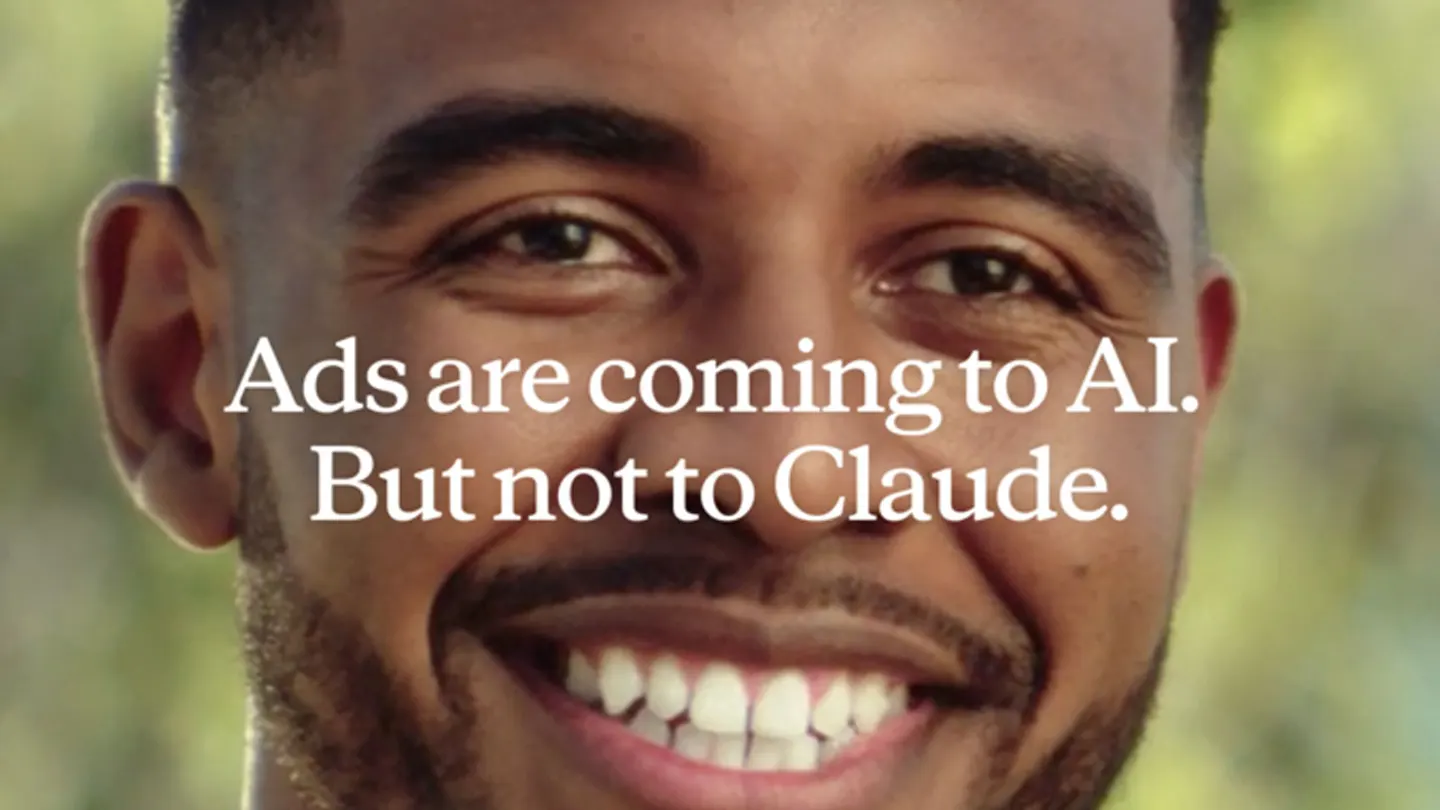
Claude ran adverts during the Super Bowl and other events, in which chat threads were interrupted by absurd ad breaks – a clear dig at ChatGPT
The decision is clearly communicated as strategic and long-term. Anthropic deliberately positions itself as a productive, ad-free and therefore trustworthy, private and protected space to think.
Perplexity’s rejection of advertising is particularly interesting because the provider was one of the first to experiment with ads. As early as 2024, Perplexity had its ad product “Sponsored Follow-Ups” in beta. The CPM-based placement complemented the chatbot’s organic content suggestions by offering users relevant follow-up questions based on the previous chat. Perplexity also justifies its step by pointing to the risk of compromising the credibility of chats through perceived conflicts of interest..
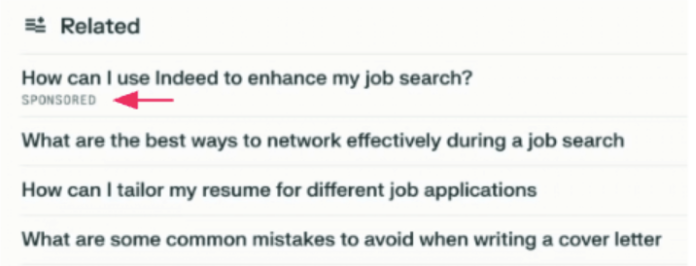
Organic and “Sponsored” follow-up questions below a chat about job search during Perplexity’s beta test.
Chapter 2: OpenAI’s turnaround
The high-profile and very public move away from advertising by Anthropic and Perplexity came shortly after a wave of negative user reactions to the then-recent rollout of ads in ChatGPT.
In February, OpenAI introduced ads for US users of the free version and the lowest-priced paid tier. This was a long-awaited and very interesting step, but from a performance marketer’s perspective, the initial ad product was not particularly attractive for three reasons.
Firstly: as mentioned, users reacted very negatively to the initial rankings. OpenAI had announced the upcoming ads as “helpful and entertaining” additions to chat conversations that would not be disruptive. In the first days after launch, however, reports accumulated about intrusive large pop-ups and generally poorly matched placements. Many users felt that the ChatGPT user experience had been significantly disrupted.
For most advertisers, however, the main issue was likely the billing model, which was CPM-based and therefore completely independent of performance. With an initial CPM of $60 and a six-figure minimum investment, placements were extremely expensive at launch.
Combined with the absence of meaningful insights and performance measurement ChatGPT ads were, until recently, at best an experimental playground for very large brands with plenty of marketing budget to play around with.
Now, in May 2026, however, a decisive improvement appears to be underway: the first US beta testers are currently gaining access to a comprehensive Ad Center.
This is where campaigns and budgets are to be managed and controlled, and where targeting options are to be configured. The performance of active campaigns can be measured using KPIs such as impressions and clicks.
Only a few days ago, a tracking pixel was also announced, which should make CPO-based analysis possible as well.
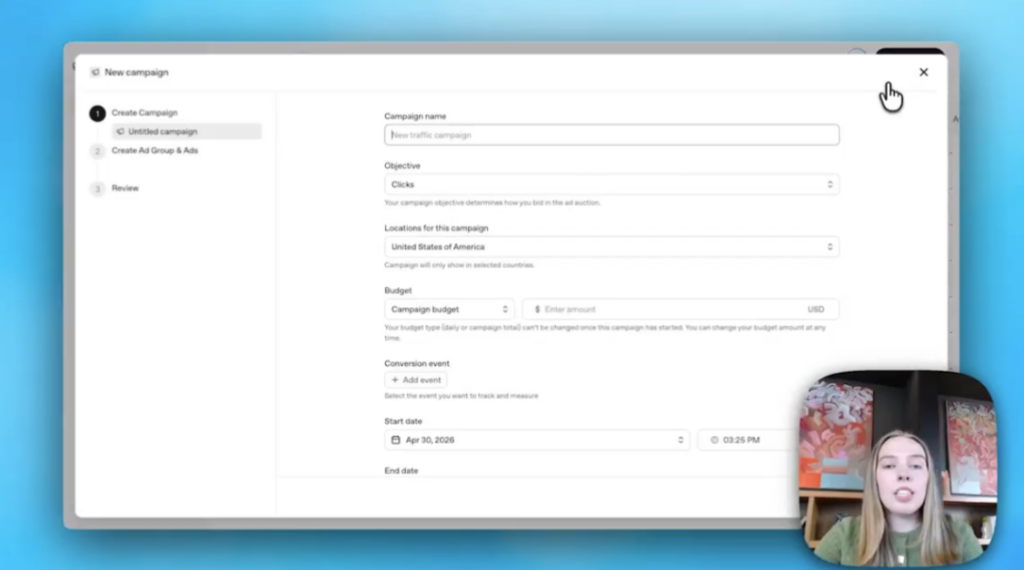
OpenAI walkthrough video for the newly launched Ads Manager beta
On top of this comes what is probably the biggest change: billing is no longer expected to be limited to CPM only (which had reportedly already fallen significantly), but will also be available on a CPC basis.
Within just a few days, OpenAI has therefore adapted its advertising offering to the requirements of modern digital advertising and laid the foundations for performance-oriented ad campaigns in ChatGPT: self-management, CPC bidding and conversion tracking.
The comparison with Google Ads is obvious, and there is speculation about a “redistribution of search budgets”. OpenAI, however, emphasizes the significant differences from Google campaigns. Campaigns in ChatGPT are seen as sitting much further up the funnel. User behavior, targeting and the type of messaging are not considered comparable to the search scenario that underpins classic SEA campaigns.
It is precisely these differences from the keyword-based approach that make placements in chatbots so exciting, at least from an advertiser’s perspective and for us as an agency. The platform promise is context-based placement: ideally, customer needs can be identified much earlier than before, allowing ads to be placed more efficiently high up in the funnel than with previous mechanisms. “Often, the best answer to a question is an ad,” Karen Stolberg, VP Customer Solutions at Google, said during her presentation at the Google Partner Summit in autumn 2025, referring to the much greater volume and density of information in a chat compared with a simple search query, which should make it possible to recognize user intentions much earlier.
In the new ChatGPT Ad Center, targeting is therefore not based on keywords or similar mechanics, but on so-called “Context Hints”, hints from the advertiser to the system indicating which chat content is most likely to characterize potential customers..
Of course, it is hardly to be expected that advertisers will now have to take granular control of their campaigns by writing pages of Context Hints. As with Meta’s Andromeda and more recent Google campaign types such as PMax, targeting and optimization will remain heavily algorithmic. How well this works in ChatGPT is one of the most exciting questions, and thanks to the newly created measurability, we should get a lot more insight over the coming weeks.
Chapter 3: Google’s priorities
PMax and AI Max (and other existing options with Google Ads) are intended to form the basis for serving ad campaigns in Google’s chat environments; i.e. within AI Overviews (AIO), AI Mode (AIM) and Gemini. This has been clear for some time and can also be observed in beta operation in the US..
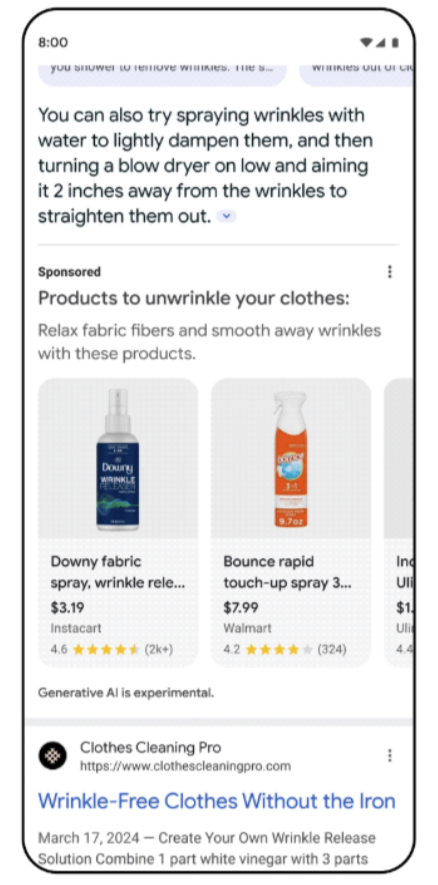
Contextually relevant product ads below a Google AI Overview, autumn 2025.
Interestingly, there has been less development here over the past 12 months than many people — the author included, would have expected in early summer last year. First and foremost, of course: even the beta has still not started in the EU. We see ads above and below AI content, but still not inside it, as is the case in the test markets.
But even within Google Ads, little has changed, including in the beta markets. Yes, AI ads are very unlikely to become their own campaign type or otherwise a freely selectable option. They will probably remain part of existing automated campaign types in the long term. What all of these campaign types have in common is that they prioritize the most “undisturbed” possible work of Google’s algorithms. Google clearly wants to move in this direction — away from the highly specific granular targeting instructions of advertisers that shaped the original keyword-based search. Observers are more likely to expect the existing algorithm-driven campaign types to be merged by Google one day. It would run counter to this direction to now offer detailed, separate placement options around AI integrations.
At the very least, however, more transparency within reporting has long been expected and demanded by many. And although AI Max has received new control options and reporting details in recent months, it is still not possible to separately evaluate how many ads were actually served in AI Overviews or AI Mode. The corresponding KPIs continue to be largely absorbed into existing Search, Shopping or Performance Max campaigns. This means it remains unclear what role these placements already play in reach, clicks, costs and conversions — and whether the above-mentioned promise of higher upper-funnel efficiency is already being delivered.
There are some indications that Google has recently focused more strongly on the adjacent topic of agentic shopping than on ads. Perhaps that is not surprising — after all, Google already has a multi-billion-dollar ads business.
Chapter 4: What about agentic shopping?
As advertisers, under the broader heading of conversational commerce we are dealing with three overlapping topics. The first is the focus of this article and of the text so far: paid ads. The second is organic mentions in chatbots; i.e. Generative Engine Optimization (GEO) as a new field within SEO. And the third is agentic commerce, which this section will cover very briefly.
ChatGPT made the first move here and, in late summer 2025, launched a partnership with Etsy: in the US, orders from Etsy could be triggered directly via ChatGPT’s “Instant Checkout”. Together with Stripe, OpenAI announced the “Agentic Commerce Protocol” (ACP) as a standard for connecting shops to Instant Checkout.
Recently, however, OpenAI announced that it was deprioritizing Instant Checkout. Shortly afterwards came the advertising push described above.
Whether the trade-off between a “4% fee on tracked sales” and CPC on every click played a decisive role here — or whether Google’s significantly increased activity in this area was a factor, will remain speculation.
Google, meanwhile, introduced UCP, the Universal Commerce Protocol, as its own open standard for agentic commerce in the summer, bringing on board important ACP pioneers such as Etsy and Shopify. UCP is designed very broadly and is not only aimed at checkout in chatbots. It is intended to standardize and simplify shopping outside the boundaries of the shop itself, including searching products and retrieving product descriptions. As a result, the Buy button is finding its way into Google’s Gemini and, for example, back into Google Shopping (where a non-UCP-based Buy button had already existed until 2023.).
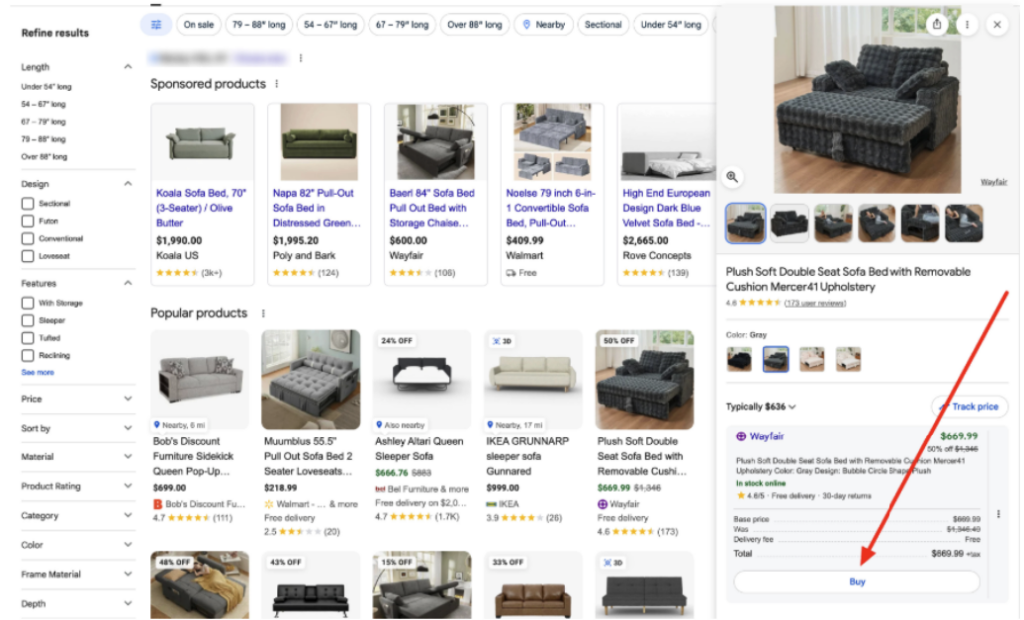
Screenshot by Brodie Clark17
Microsoft, Amazon and others are active here as well. Microsoft is increasingly connecting Copilot, Merchant Center and Copilot Checkout with existing commerce and advertising structures. Amazon, in turn, is building its own agentic shopping experience within the Amazon ecosystem through Rufus and “Buy for Me”. The result is not a single unified market, but several competing commerce ecosystems: Google/UCP, OpenAI/ACP, Microsoft/Copilot and Amazon/Rufus.
For advertisers, agentic commerce is likely to be less of an ad-media topic than a shop-system and distribution-partner topic. The first step will be to check which standards the selected shop system supports, or which standard the company’s own system should be adapted to. The next step will be to allow external partners to use the interfaces and to agree on compensation models.
Chapter 5: The situation in the EU and what to do now
So a lot is happening in the US, both in paid ads and in agentic commerce. In Germany and Europe, the pace is different. The formats and standards will of course also apply to the EU, but as we know, a wide range of additional rules must be taken into account: data protection / GDPR, consent, price indication rules, withdrawal rights, platform regulation and much more.
Observers report that OpenAI is adapting its consent management system, including tracking opt-out mechanisms – mechanisms that would not be necessary for a purely US-based operation. This suggests that there is now considerable momentum on this front as well. It could even mean that we will be working with ChatGPT CPC ads in Germany before we can analyze the performance of Google AIO placements. Only a few months ago, very few people would have expected that.
From today’s perspective, it therefore makes sense to start thinking about the “Context Hints” that should be entered for your own brand in the ChatGPT Ads Manager once the time comes. And it may also be worth opening a ticket with your in-house IT team early on so that the tracking pixel can be implemented when needed.
But for now, especially in the EU, the biggest impact on chatbot visibility still comes from SEO and GEO. Being mentioned organically in the chat for the decisive prompts is crucial and currently only possible by optimizing your own shop and third-party content. Our colleagues at Artefact Netherlands have just compiled the latest state of play including practical tips on this topic: artefact.com.
At Artefact, we are already supporting clients in making sense of the changes around AI Search, GEO, agentic commerce and new advertising formats, and in turning them into concrete action. This spans SEA, SEO and GEO, feed management, shopping, affiliate marketing, paid social and retail media, as well as data and AI consulting. Through our close cooperation with the major platforms, we stay very close to the latest developments and can quickly translate new requirements into practical strategies.