
Artefact Research Center
Bridging the gap between academia and industry applications.


Our Research Ecosystem in a few figures
The Artefact Research Center in numbers.
Peer-reviewed venues we published at Conferences and journals where our research is published.


















Affiliations we work with Academic and industrial partners that co-author our research.

























The Artefact Research Center’s mission.
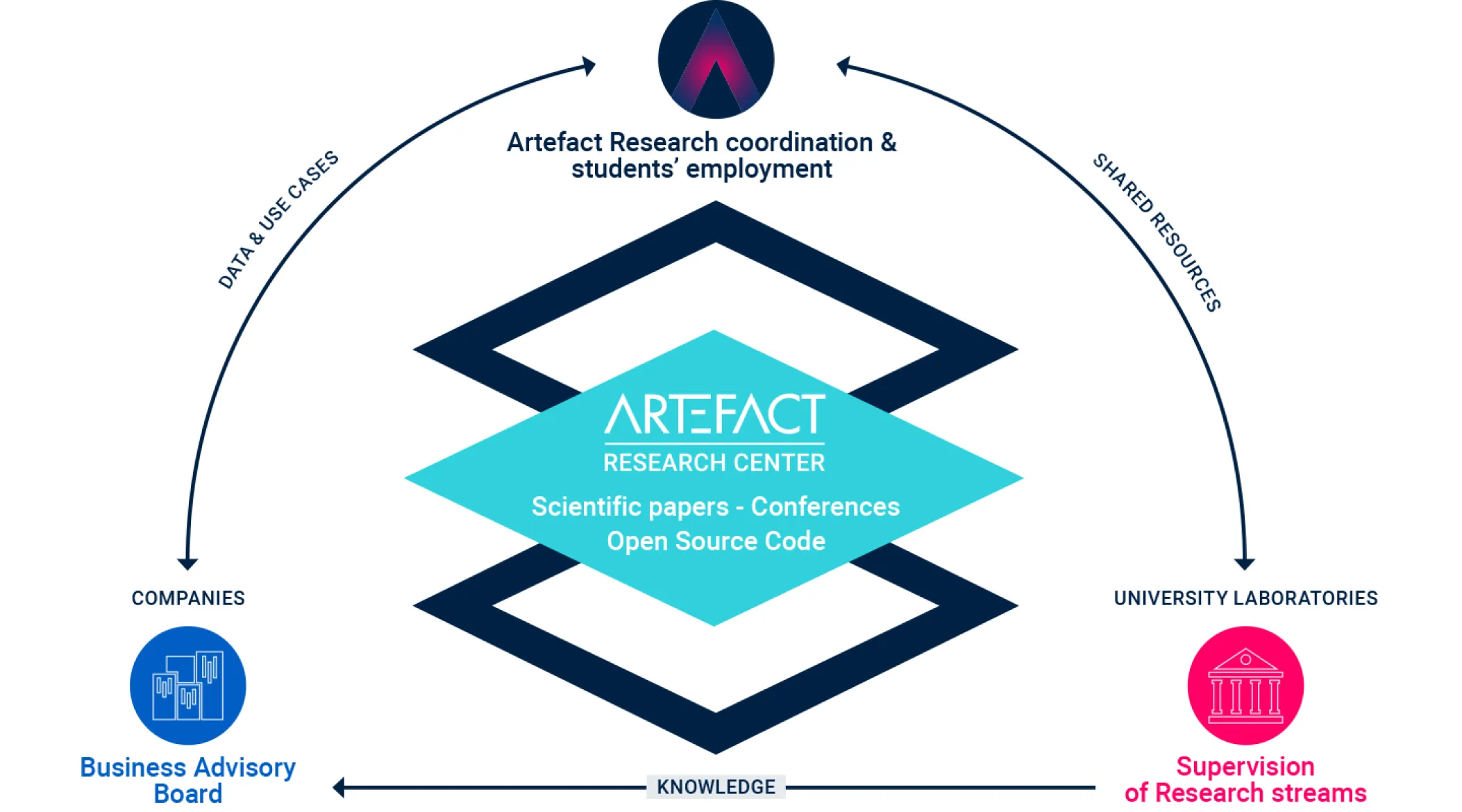
A complete ecosystem that bridges the gap between fundamental research and tangible industrial applications.
Research on more transparent and ethical models to nurture AI business adoption.

Examples of AI biases
- AppleCard grants mortgages based on racist criteria
- Lensa AI sexualizes selfies of women
- Racist Facebook Image Classification With afro-american as monkeys
- Microsoft Twitter chatbot becoming nazi, sexist and aggressive
- ChatGPT that writes a code stating good scientist are white males


Current challenge
AI models are accurate and easy to deploy in many use cases, but remain uncontrollable due to black boxes & ethical issues.
Read our latest Artefact Research Center News

Research Center Newsletter #17 | BERT-as-a-judge presented @COLM with BidirLM, Bias in 3D Face models presented @ECCV, Artefactual new release

Research Center Newsletter #16 | Our work on bias in 3D face models at ECCV and VivaTech, Report on Knowledge Graphs, AOM Sustainability Workshop

Research Center Newsletter #15 | Releasing Finance Corpus for LLM benchmark, Our Work on Food Labels & DocID for Generative Retrieval at Seminars

Research Center Newsletter #14 | Woodtapper package for explainable tree-based models published at JOSS, our works at AISTATS & ICLR Conferences

Research Center Newsletter #13 – BERT-as-a-Judge for LLM & RAG evaluation, ESWC Paper on Knowledge Graph for Consulting, ECIR double presentation

Transversal Research Fields
With our unique positioning, we aim at addressing general challenges of AI, would it be on statistical modelling or management research.
Those questions are transversal to all our subjects and nurture our research.

Control &
accountability
- Controllable Models with guarantees on predictions
- Interface with Demand planners
- Category Managers
- Decision by best model input: enforce reliable prediction even out of train set
- E.g.: Enforce monotony on input variables

Explainability
& transparency
- Interpretation of predictions
- Interface and visualization for non-technical users
- Adapt the models modules and components to métiers
- Visualization on understandable inputs, before feature engineering

Bias &
uncertainty
- Enrich prediction for better decisions
- Non-symmetric uncertainty (vs Gaussian) needed by clients
- Adapted to time-series and assortment optimization

Obstacles & accelerators of AI in business
- Study of Organisations
- Top CAC 40 stakeholders and decision takers interviews
- Impact of AI ethics, fairness, interpretability
- Governance, standards and regulations for AI applications
A full ecosystem bridging the gap between fundamental research and industry tangible applications.
A selection of our peer-reviewed papers, presented at top-tier AI conferences.
Can AI help with peer review in transplantation research?

Journal of Medical Artificial Intelligence
— August 2026

Can AI help with peer review in transplantation research?
Journal of Medical Artificial Intelligence
— August 2026
Alexandre Loupy, Charles Brunet, Marc Raynaud
Description
This editorial commentary analyzes the potential for deploying AI to evaluate transplantation research. Drawing on a recent validation study by Shen et al., we examine how large language models (LLMs) might mitigate human reviewer fatigue, inconsistency, and systemic bias. Encouragingly, open-weight AI architectures appear to exhibit no inherent affiliation bias. However, we highlight several limitations of the study, noting that benchmarking models against indirect metrics, such as journal impact quartiles, using fixed hyperparameters, and granting full-text access solely to RAG-based setups leave critical questions about their true editorial utility and generalizability unanswered. Finally, we propose a prospective framework in which AI serves as a supportive co-pilot for peer review of transplantation articles.
Bringing Domain Intelligence into Business Modeling: Executable Function Discovery via LLM-Guided Symbolic Search
iAIMS2026
— November 2026
Co-authored with


Bringing Domain Intelligence into Business Modeling: Executable Function Discovery via LLM-Guided Symbolic Search
iAIMS2026
— November 2026
Jialiang Lu, Pengfei Zhang, Tianyu Cui, Yaohui Jin, Yi Lu
Affiliations
Description
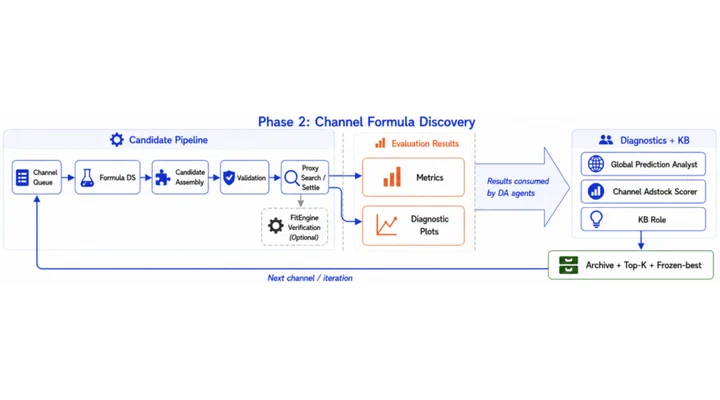
In this work, we introduce a dual-agent Large Language Model (LLM) framework designed to break through the rigid function-specification bottlenecks inherent in modern business modeling. Evaluated on Marketing Mix Modeling (MMM) Adstock discovery, the system moves beyond fixed parametric templates by enabling LLM agents to generate executable, parameterized structural hypotheses while system services handle deterministic parameter optimization and execution. The architecture deploys a staged calibration pipeline—isolating shared temporal baseline effects before discovering channel-specific lag-response formulas—to prevent global trend confounding and overcome cold-start issues.
Post-discovery qualitative analysis confirms that the newly uncovered Search and Print Adstock curves align seamlessly with established advertising literature, offering highly interpretable, channel-specific modeling assets without sacrificing computational rigor.
LEDGER: A Long-Context Benchmark of Corporate Annual Reports for Grounded Financial Retrieval and Extraction
CIKM
— November 2026
Co-authored with




LEDGER: A Long-Context Benchmark of Corporate Annual Reports for Grounded Financial Retrieval and Extraction
CIKM
— November 2026
Authors
Amaury de Vitry, Arthur Garnier, Charles Moslonka, Emmanuel Malherbe, Hicham Randrianarivo
Affiliations
Description
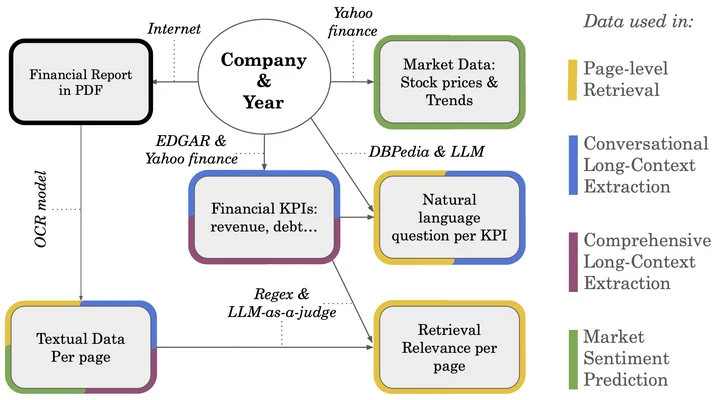
This massive open-source corpus features 4,999 fully digitized, visually dense corporate annual reports, labeled with over 118,000 consolidated financial KPIs and is now fully available in open source for both academics and practitioners.
Financial reporting is a natural testbed for large language models, but until now, most public resources have reduced this complex challenge to short, plain-text SEC filings. To reflect the true reality of financial analysis, we partnered with Ardian to build LEDGER, a research project bridging the gap between academic innovation and practical financial industry needs. By providing full documents with figures, tables, and narratives – totaling over 630 million tokens – LEDGER empowers the community to rigorously evaluate the very-long-context extraction and retrieval capabilities of modern LLMs on realistic, high-stakes data.
LEDGER introduces three benchmark tasks spanning the difficulty spectrum: pure page-level KPI retrieval, conversational "needle-in-a-haystack" single-value lookup in a full 100 pages report, and comprehensive multi-KPI extraction. Beyond benchmarking, we also demonstrate the dataset's broader research utility by successfully linking CEO-letter rhetoric to post-publication market impact and earnings surprises. This release includes a complete extraction, validation, and scoring toolchain for the community to use. In particular, the automated data-set labeling and extraction can be easily extended to reports in other languages.
When does reasonning matter? A controlled study of reasining’s contribution to model performance.
EMNLP
— October 2026
Co-authored with


When does reasonning matter? A controlled study of reasining’s contribution to model performance.
EMNLP
— October 2026
Authors
Céline Hudelot, Hippolyte Gisserot-Boukhlef, Kevin El-Haddad, Nicolas Boizard, Pierre Colombo
Affiliations
Description
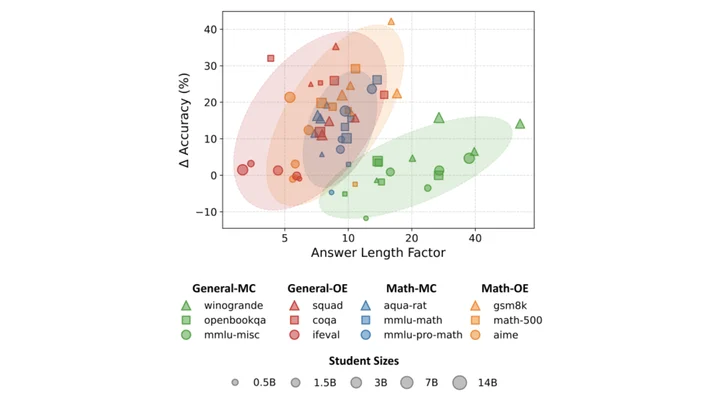
The emergence of reasoning models, capable of generating extended reasoning traces before producing a final answer, has reshaped our understanding of how to improve language model performance. With the success of inference-time scaling, it has become clear that increasing the amount of computation at inference can yield substantial gains, leading some to question whether scaling model parameters remains the most effective path forward.
In this paper, we revisit this question through a carefully controlled, compute-equivalent experimental study. We compare models ranging from 0.5B to 14B parameters, systematically varying both model scale and inference budget while keeping the overall computational cost constant. Our results show that, although reasoning-enabled models consistently produce higher-quality outputs than standard models of the same size, increasing model scale remains Pareto-optimal across both training and inference budgets. In other words, under an equivalent compute budget, scaling model parameters continues to be the most effective and efficient way to improve performance, despite the impressive capabilities unlocked by reasoning.
BidirLM: From Text to Omnimodal Bidirectional Encoders by Adapting and Composing Causal LLMs
COLM
— October 2026
Co-authored with
BidirLM: From Text to Omnimodal Bidirectional Encoders by Adapting and Composing Causal LLMs
COLM
— October 2026
Authors
Céline Hudelot, Hippolyte Gisserot-Boukhlef, Nicolas Boizard, Pierre Colombo, Théo Deschamps-Berger
Affiliations
Description
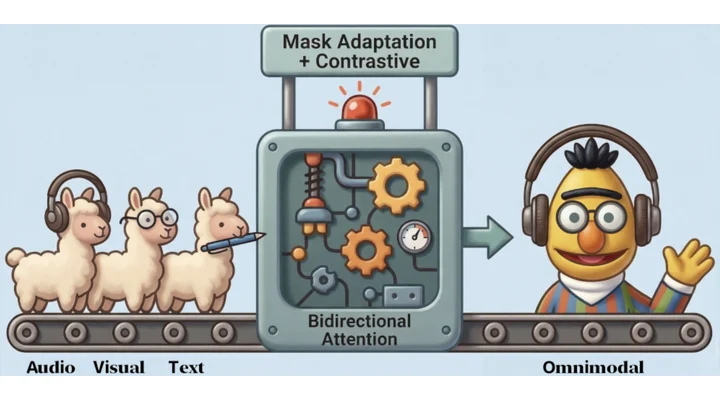
This work introduces an effective framework for transforming causal language models into high-performing omnimodal encoders through bidirectional adaptation and model merging. The approach unlocks the representational power of the vast ecosystem of decoder-only models, enabling strong bidirectional embeddings that remain essential for a wide range of applications, including Retrieval-Augmented Generation (RAG).
BERT-as-a-Judge: A Robust Alternative to Lexical Methods for Efficient Reference-Based LLM Evaluation
COLM
— October 2026
Co-authored with
BERT-as-a-Judge: A Robust Alternative to Lexical Methods for Efficient Reference-Based LLM Evaluation
COLM
— October 2026
Authors
Céline Hudelot, Emmanuel Malherbe, Hippolyte Gisserot-Boukhlef, Nicolas Boizard, Pierre Colombo
Affiliations
Description
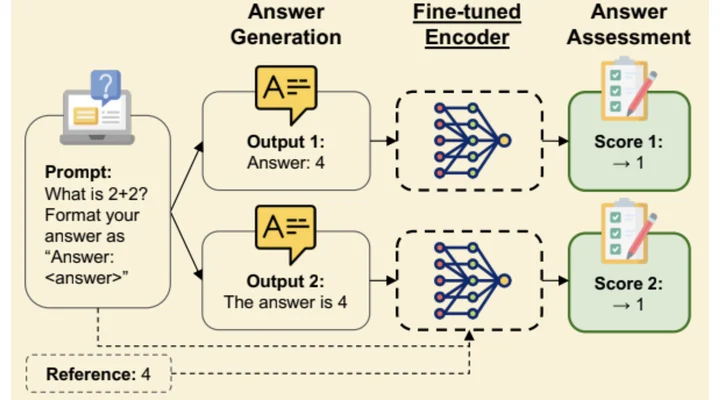
Evaluating generative outputs has long been challenging, traditionally relying on rigid lexical methods to extract and assess answers. While recent LLM-as-a-Judge approaches overcome this limitation by emphasizing semantic correctness, they introduce significant computational overhead, making evaluation increasingly costly.
In this work, we conduct a large-scale empirical study spanning 36 models and 15 downstream tasks, systematically exposing the limitations of lexical evaluation methods. We show that these heuristics correlate poorly with human judgments and can significantly distort model rankings, in part because they conflate true problem-solving ability with superficial formatting constraints.
To address these issues, we introduce BERT-as-a-Judge, an encoder-driven approach for evaluating answer correctness in reference-based generative settings, such as standalone LLMs, RAG systems, or agentic frameworks. Our method is robust to variations in phrasing, consistently outperforms lexical baselines, and achieves performance comparable to much larger LLM-based judges, while being significantly more efficient. To encourage adoption, we provide a package that allows practitioners to train custom evaluators on their own data.
Discovering Geometric Biases in 3D Face Reconstruction: A Curvature-Aware Spectral Framework for Fairness Evaluation
ECCV
— September 2026
Co-authored with




Discovering Geometric Biases in 3D Face Reconstruction: A Curvature-Aware Spectral Framework for Fairness Evaluation
ECCV
— September 2026
Authors
Emmanuel Malherbe, Giovanni Palma, Jean-Michel Loubes, Laurent Risser, Panagiotis-Alexandros Bokaris, Veronika Shilova
Affiliations
Description
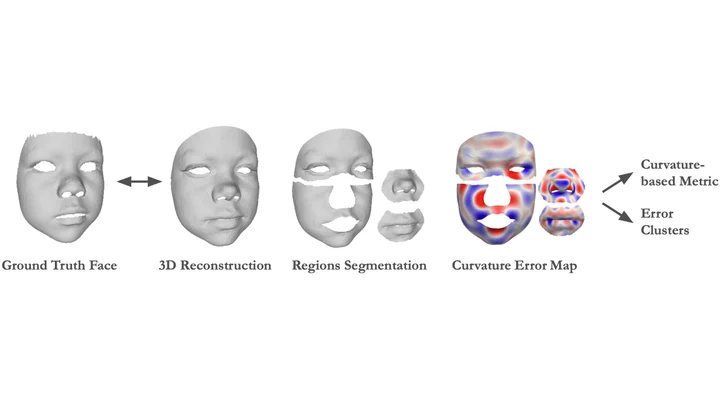
The core question this paper address is: Can we really trust a 3D face-reconstruction model to treat everyone equally? This matters because 3D face reconstruction models are classified as high-risk under the EU AI Act, yet they have never undergone a comprehensive fairness evaluation — until now. Beyond fairness diagnosis, our metric points toward a concrete path for building models whose reconstructions are perceived as more accurate, thereby achieving better alignment with human perception than conventional measures.
We presented new 3D reconstruction error metric based on surface curvature and discussed its implications with fellow researchers. We integrated this metric into a novel spectral framework that analyzes the curvature of the reconstructed surface and produces fine-grained localized error maps that reveal exactly where a model underperforms. Applied to widely used 3D Morphable Models, it uncovers systematic age-related biases, along with preliminary evidence of gender- and ethnicity-related disparities. The framework opens the way to more accurate and fairer face reconstruction models by leveraging our metric during the training.
EuroLLM-22B: Technical Report
arxiv
— February 2026

Duarte M. Alves, Hippolyte Gisserot-Boukhlef, Miguel Moura Ramos
Affiliations


Description
EuroLLM-22B is fully open source and specialized in European languages, supporting all 24 official EU languages. Built by Europeans and tailored for European use cases, it represents a major step forward for open, multilingual AI developed within Europe.
The model achieves state-of-the-art performance on multilingual tasks in the open-source category and comes close to strong, similarly sized open-weight models developed in industry. Its results are particularly impressive in machine translation, where it sets a new bar for open models.
Représentations sociales de l’IA chez les professionnels du secteur des services
Revue française de gestion
— January 2026
Co-authored with


Représentations sociales de l’IA chez les professionnels du secteur des services
Revue française de gestion
— January 2026
Authors
Cécile Chamaret, Lara Abdel Halim
Affiliations
Description
In the private sector, successful AI integration depends less on overcoming employee "resistance" and far more on reconciling contrasting social representations of technology across different levels of personal involvement. Grounded in central core theory and a survey of 150 service professionals in France, this research reveals a sharp divergence in how employees perceive and project AI into their daily work. Highly involved professionals deploy an instrumental rationality centered on technical capabilities (e.g., machine learning, LLMs, predictive models) and long-term strategic transformation. In contrast, less involved workers exhibit a social rationality focused on immediate productivity gains and reactive efficiency, while harboring normative fears over job displacement, algorithmic dominance, and human replacement.
This cognitive rift reframes the managerial challenge from simply enforcing adoption to establishing a collective, sovereign deliberation over where AI truly adds organizational value. Rather than treating less involved employees' skepticism as irrational pushback, leadership must leverage their social concerns as vital sensors for human, ethical, and operational risks. By moving away from purely techno-economic hype and establishing cross-functional governance alongside reversible, social-impact pilot programs, organizations can transition from passive technology absorption to a co-constructed "re-humanized employee" model that balances algorithmic efficiency with core human expertise.
A Knowledge Graph–Driven Enterprise Search System for Consulting Activities
ESCW
— May 2026
A Knowledge Graph–Driven Enterprise Search System for Consulting Activities
ESCW
— May 2026

Authors
Armita Khajeh Nassiri, Emmanuel Malherbe, Florence Benezit, Michael Völske, Orel Mazor
Description
This work has focused on a practical use case of ontology and knowledge graphs: making an enterprise knowledge easily discoverable and accessible, although the data originates from various sources and is natively not structured. This challenge is particularly salient at Artefact. Preparing commercial proposals often requires navigating large volumes of information embedded in lengthy presentations and documents that are difficult to search, yet critical to reuse. At the same time, efficiently mobilizing this knowledge is essential to respond to new client needs with speed and precision.
Our approach combines business expertise with the capabilities of LLMs. We first formalize key business concepts such as tools, teams, and sectors in a consulting context then leverage LLMs to extract this information from raw documents written in natural language, often enriched with visual content.This process enables us to index documents into a knowledge graph that can be easily queried by users. With this initial implementation, we are already observing clear improvements in information retrieval and reuse.
WoodTapper: a Python package for explaining decision tree ensembles
JOSS
— May 2026
Co-authored with



WoodTapper: a Python package for explaining decision tree ensembles
JOSS
— May 2026

Authors
Abdoulaye Sakho, Carl-Erik Gauthier, Emmanuel Malherbe, Erwan Scornet, J. Aouad
Affiliations
Description
WoodTapper is an open-source Python toolbox that helps researchers and data scientists bring transparency and explainability to tree ensemble models: random forests or boosting models. These ensemble models are complex models that often yield strong accuracy, but their opacity can pose challenges for accountability, trust and compliance. While they can be used in high-stakes settings such as healthcare, marketing or even finance which is a highly regulated sector, they remain black box models. WoodTapper makes it easier to understand, analyze, and communicate how models like Random Forests, Gradient Boosted Trees, and ExtraTrees make decisions.
What WoodTapper offers:
Rule extraction from tree ensembles: Transform complex models into a concise sequence of human-readable rules based on features and thresholds.
Example-based explanations: Link predictions to a small set of similar, representative samples,returned with their target values for context.
Full compatibility with scikit-learn tree ensemble models.
A Systematic Analysis of Chunking Strategies for Reliable Agentic Question Answering
ECIR
— March 2026
Co-authored with
A Systematic Analysis of Chunking Strategies for Reliable Agentic Question Answering
ECIR
— March 2026
Authors
Charles Moslonka, Sofia Bennani
Affiliations
Description
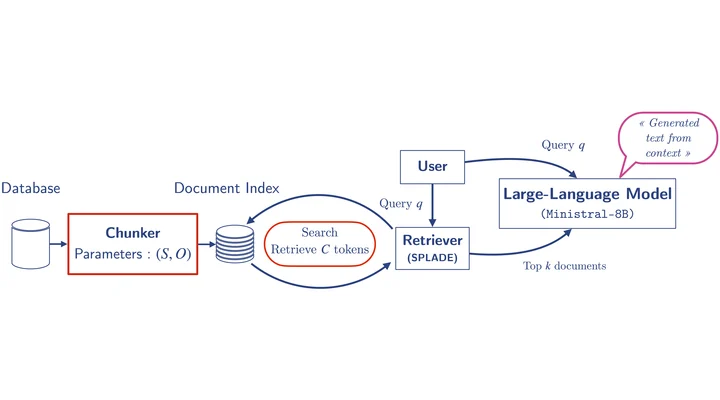
Retrieval-Augmented Generation (RAG) has become a standard in the industry. It enables an LLM to answer domain-specific questions using a corpus of private, potentially confidential, documents. A foundational step when implementing it is document segmentation, necessary to insert the chunks into the LLM context window. In practice, this chunking is often left to heuristics. Our work challenges these “rules of thumb” by conducting a rigorous, end-to-end evaluation of chunking methods, sizes, and context lengths using a standard production setup (SPLADE retrieval + Ministral-8B).
Our findings provide actionable, cost-saving defaults for deploying reliable agents. Contrary to popular belief, we find that chunk overlap offers no measurable benefit while inflating indexing costs. We also demonstrate that simple sentence chunking is often the most cost-effective method, matching the performance of semantic chunking in most scenarios.
Learned Hallucination Detection in Black-Box LLMs using Token-level Entropy Production Rate
ECIR
— March 2026
Co-authored with
Learned Hallucination Detection in Black-Box LLMs using Token-level Entropy Production Rate
ECIR
— March 2026
Authors
Arthur Garnier, Charles Moslonka, Emmanuel Malherbe, Hicham Randrianarivo
Affiliations
Description
This work tackles one of the biggest challenges in LLM deployment: their tendency to hallucinate. The core problem being that many detection methods are impractical, requiring deep model access or numerous (and expensive) API calls. Our solution: a lightweight, single-pass and real-time applicable method that works with the constraints of real-world APIs.
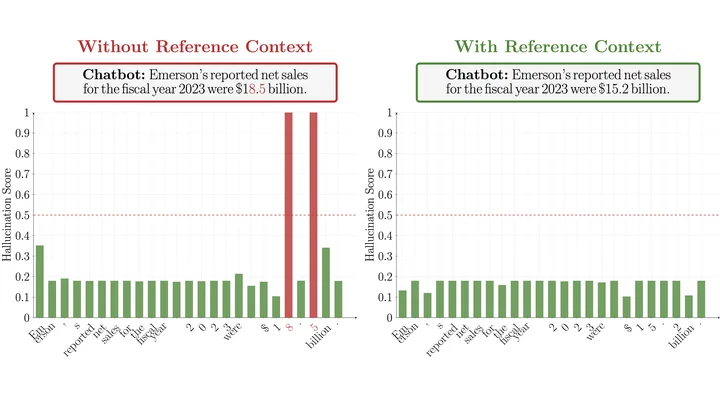
Building on a concept of Entropy Production Rate backed by information theory to measure the model's uncertainty from the top token probabilities available, we derived a supervised indicator: the Weighted Entropy Production Rate (WEPR), which learns to weigh the uncertainty signals associated with each potential next word.
Our experiments show that WEPR outperforms existing methods on several QA datasets. Even more remarkable, it provides a token-level score, allowing us to highlight the exact words in a sentence that are most likely to be hallucinated.
This has direct applications for improving the reliability of our RAG systems, as demonstrated in our experiments on a finance agent designed in collaboration with Ardian.
We have simultaneously released the method as an open-source Python package: artefactual. This library provides a lightweight, "out-of-the-box" solution for measuring hallucination risk using our entropy-based metrics. By including precomputed calibrations for popular models, artefactual allows data scientists to implement robust, instantaneous, token-level uncertainty quantification in their agentic or RAG pipelines immediately—without the need for complex training or extensive computation.
Should We Still Pretrain Encoders with Masked Language Modeling?
ICLR
— April 2026
Co-authored with
Should We Still Pretrain Encoders with Masked Language Modeling?
ICLR
— April 2026
Authors
Andre F. T. Martins, Céline Hudelot, Duarte M. Alves, Emmanuel Malherbe, Hippolyte Gisserot-Boukhlef, Manuel Faysse, Nicolas Boizard, Pierre Colombo
Affiliations
Description
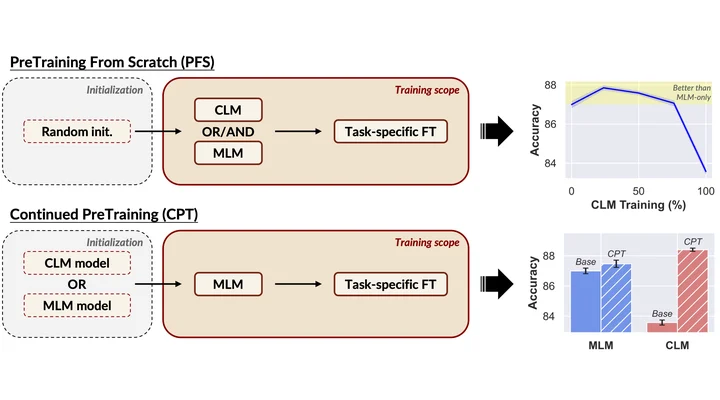
Encoder models lie at the heart of modern natural language processing systems. They are widely used for text representation tasks such as sentiment analysis, named entity recognition, information retrieval and retrieval-augmented generation (RAG). These models are pretrained using a masked language modeling (MLM) objective, leveraging bidirectional attention to incorporate both left and right context around each token. In contrast, decoder-only generative models, powering high-performing chatbots such as Mistral, ChatGTP or Claude, are trained with a causal language modeling (CLM) objective to predict the next token in a sequence. This success challenges the long-standing dominance of MLM and raises a fundamental question: is MLM truly the best objective for training encoder models?
In this paper, we conduct a large-scale study that isolates the impact of the pretraining objective on the quality of downstream text representations. Our results show that pretraining encoders solely with MLM does not make optimal use of data, and suggest instead using a sequential combination of CLM and MLM to obtain significantly stronger representations and models. This finding is a fundamental paradigmatic shift, and is particularly exciting given the growing number of high-quality open-source generative models, which provide a strong foundation for building next-generation, state-of-the-art encoders.
Do we need rebalancing strategies? A theoretical and empirical study around SMOTE and its variants
AISTATS
— May 2026
Co-authored with
Do we need rebalancing strategies? A theoretical and empirical study around SMOTE and its variants
AISTATS
— May 2026
Authors
Abdoulaye Sakho, Emmanuel Malherbe, Erwan Scornet
Affiliations
Description
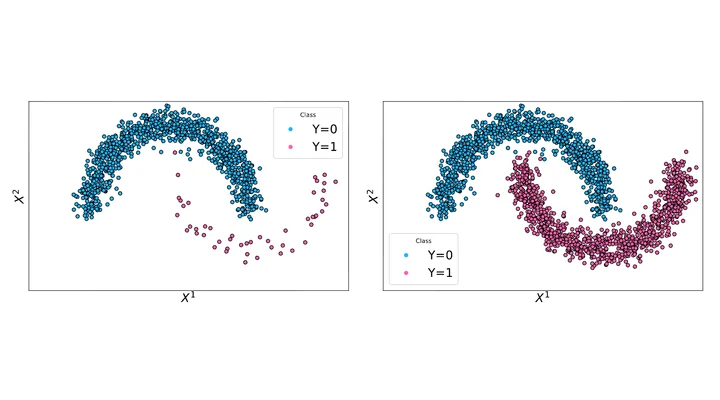
Many real-world AI systems rely on statistical models built on tabular data. This is the case for client scoring in the banking sector. In these settings, a recurring difficulty is class imbalance where the event of interest is often rare, which makes learning reliable predictors significantly harder (including for widely used methods such as XGBoost). One of the most popular approaches to handle imbalance is SMOTE and its variants.
In this work, we study these rebalancing strategies from both a theoretical and empirical perspective. Our theoretical study shows that SMOTE struggles to reproduce the minority-class distribution, which was a default well-known by the practitioners. Building on these findings, we introduce MGS asan alternative specifically designed to overcome key limitations of SMOTE, and obtain very promising experimental results.
Fairness-Aware Grouping for Continuous Sensitive Variables: Application for Debiasing Face Analysis with respect to Skin Tone
ECAI
— October 2025
Co-authored with
Fairness-Aware Grouping for Continuous Sensitive Variables: Application for Debiasing Face Analysis with respect to Skin Tone
ECAI
— October 2025
Authors
Emmanuel Malherbe, Giovanni Palma, Jean-Michel Loubes, Laurent Risser, Veronika Shilova
Affiliations
Description
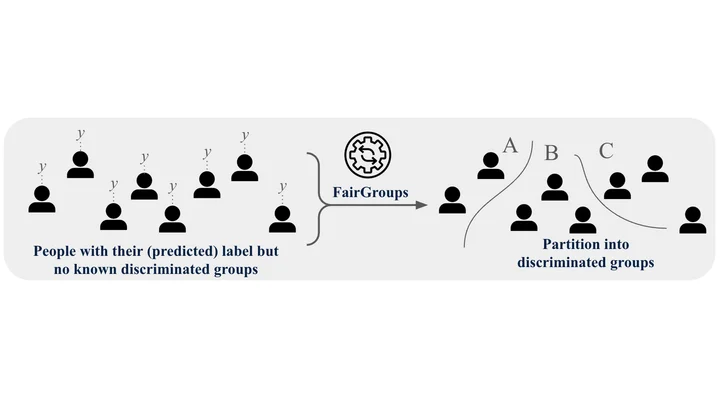
With recent AI regulations such as the EU AI Act, developing reliable fairness measures has never been more important. Within the legal framework, fairness in AI systems is assessed by dividing people into groups based on protected attributes such as gender, marital status, or ethnicity, and then measuring how differently these groups are treated. However, many sensitive variables, like skin tone, vary continuously along the spectrum. Forcing them into just a few categories risks overlooking subtle yet significant forms of discrimination. However, when considering discrimination towards skin tone, which can be consideredas a form of racism, the existing approaches are not working. Indeed, the discriminated groups are not known a priori, so we propose an algorithm to automatically detect which skin tones are discriminated against.
In this paper, we introduce FairGroups, a new method to split the continuous sensitive attribute into the partition where unfair treatment is most pronounced, for a given treatment or task. This algorithm is data-driven, and the code is available in open source. We experimented and validated FairGroups on a data-set shared by our research partner l’Oréal, with skin tones measured with their state-of-the-art model on large-scale datasets. Beyond bias detection, our framework also helps to mitigate unfairness. By adjusting outcomes group by group, our framework reduces disparities while maintaining overall models’ accuracy. This optimal trade-off between fairness and predictive performance makes it a practical step toward building AI systems that both meet regulatory requirements and promote equitable treatment in real-world applications.
Identification de plusieurs fonctions de valeurs additives à partir de préférences exprimées anonymement
JIAF-JFPDA
— July 2025
Co-authored with
Identification de plusieurs fonctions de valeurs additives à partir de préférences exprimées anonymement
JIAF-JFPDA
— July 2025
Emmanuel Malherbe, Khaled Belahcène, Marc Pirlot, Vincent Auriau, Vincent Mousseau
Affiliations
Description
Customer segmentation plays a central role in marketing and decision science: it allows organizations to group individuals with similar behaviors or preferences, in order to better tailor products, services, or recommendations. Classical approaches typically rely on descriptive features, such as socio-demographic attributes or past purchasing behavior. Clustering or latent class models are trained on these data to derive segments of customers. While widely used, these methods do not always reflect the individual’s preferences and behaviour, and their ability to recover the underlying decision processes remains limited. This is particularly the case for offline retail contexts where data is sparse or collected without individual identifiers.
Our latest work introduces a theoretical framework for market segmentation when preferences are expressed anonymously, based on the identification of multiple additive value functions. The central idea is to represent heterogeneity in a population through several utility functions, each capturing a distinct mode of behavior. By relying on additive value models, the proposed approach remains interpretable while extending classical preference elicitation methods to the multi-segment case. This work establishes conditions for identifiability and proposes active elicitation strategies. This research establishes a foundation for new segmentation models grounded in preference theory, and extends our earlier work, in which we introduced learning procedures to estimate such models.
Better Capturing Interactions between products in Retail: Revisited Negative Sampling for Basket Choice Modeling
ECML-PKDD
— September 2025
Co-authored with

Better Capturing Interactions between products in Retail: Revisited Negative Sampling for Basket Choice Modeling
ECML-PKDD
— September 2025
Authors
Emmanuel Malherbe, Jules Désir, Martin Mozina, Vincent Auriau
Affiliations
Description
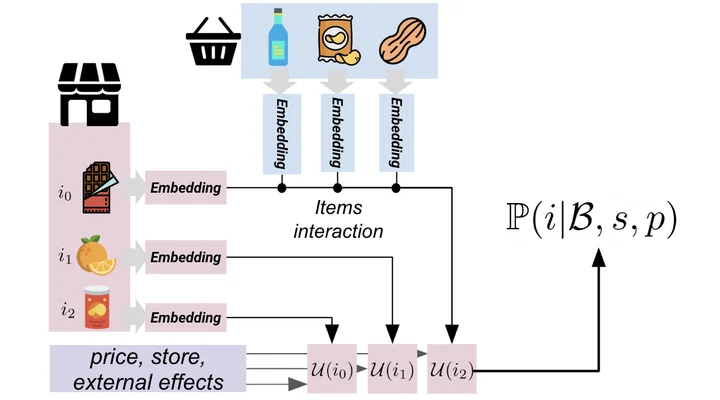
This paper presents a deep learning model that has been developed in order to detect and learn how the different products impact each other’s sales in a retail environment. In other terms, it captures the cannibalization effect - when two products are eroding each other’s sales - and the complementarity effect, thanks to product embeddings learned by the neural network. We experimented and validated our approach on a large-scale dataset comprising millions of purchase records, made available through an industrial partnership with Fortenova. These results reveal meaningful patterns in consumer behavior and exciting applications perspectives.
EuroBERT: Scaling Multilingual Encoders for European Languages
COLM
— October 2025
Co-authored with


EuroBERT: Scaling Multilingual Encoders for European Languages
COLM
— October 2025
Authors
Andre F. T. Martins, Caio Corro, Céline Hudelot, Duarte M. Alves, Emmanuel Malherbe, Etienne Malaboeuf, Fanny Jourdan, Gabriel Hautreux, Hippolyte Gisserot-Boukhlef, Joao Alves, Kevin El-Haddad, Manuel Faysse, Maxime Peyrard, Nicolas Boizard, Nuno M. Guerreiro, Patrick Fernandes, Pierre Colombo, Ricardo Rei
Affiliations
Description
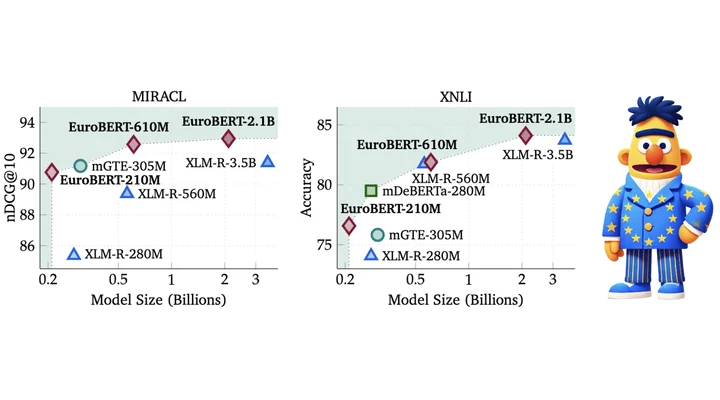
Large generative models come with significant challenges—high computational costs, lack of data specialization, and robustness concerns. To address these, Artefact is proud to be a core contributor to EuroBERT, a fully open-source family of encoder models designed for efficiency and adaptability. Available in three model sizes, EuroBERT provides flexible solutions to accommodate different computational constraints. As a foundation model, it can be fine-tuned for a wide range of tasks with minimal data, making it a powerful tool for real-world applications.
With European AI sovereignty in mind, EuroBERT supports 15 languages, covering the most spoken in Europe as well as widely used extra-European languages. Trained on 5 trillion tokens using AMD GPUs, it delivers state-of-the-art performance in retrieval and classification tasks while demonstrating strong reasoning capabilities, particularly in mathematics and code understanding.
Harnessing Mixed Features for Imbalance Data Oversampling: Application to Bank Customers Scoring
ECML-PKDD
— September 2025
Co-authored with
Harnessing Mixed Features for Imbalance Data Oversampling: Application to Bank Customers Scoring
ECML-PKDD
— September 2025
Authors
Abdoulaye Sakho, Carl-Erik Gauthier, Emmanuel Malherbe, Erwan Scornet
Affiliations
Description
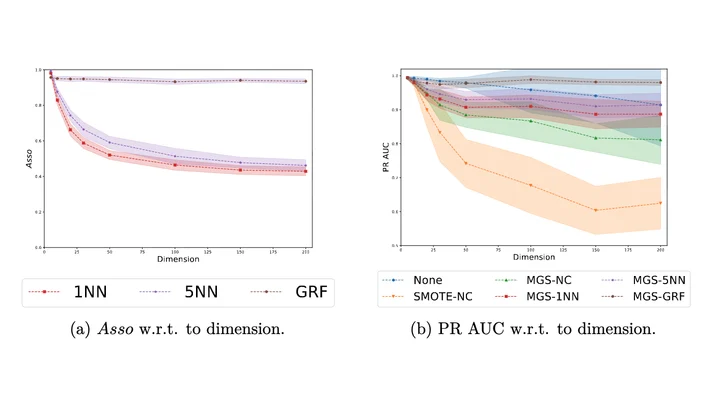
Many AI applications today rely on statistical models applied on tabular data, typically for client scoring, such as in the banking sector. A key challenge in these applications is that data is imbalanced, meaning the category of interest, to be predicted, is generally very rare. This is a statistical challenge that makes models’ learning more challenging (typically XGBoost). We propose a model agnostic rebalancing strategy to address this issue, that showed positive improvements in predictive performances across several datasets, including the large-scale one provided by our banking partner.
One key practical aspect when rebalancing is handling datasets that include both continuous variables (e.g., salary, height…) and categorical variables (e.g., gender, country). To our knowledge, few existing methods are specifically designed to handle such mixed data. To fill this gap, we introduce MGS-GRF which is based on a kernel density estimator and a generalized random forest, tailored for handling mixed data. Our MGS-GRF implementation is open source, scalable and follows the ease-of-use of imbalance-learn package.
MMTEB: Massive Multilingual Text Embedding Benchmark (paper with Hugging Face)
ICLR
— April 2025
Co-authored with

MMTEB: Massive Multilingual Text Embedding Benchmark (paper with Hugging Face)
ICLR
— April 2025
Authors
Kenneth Enevoldsen
Affiliations
Description
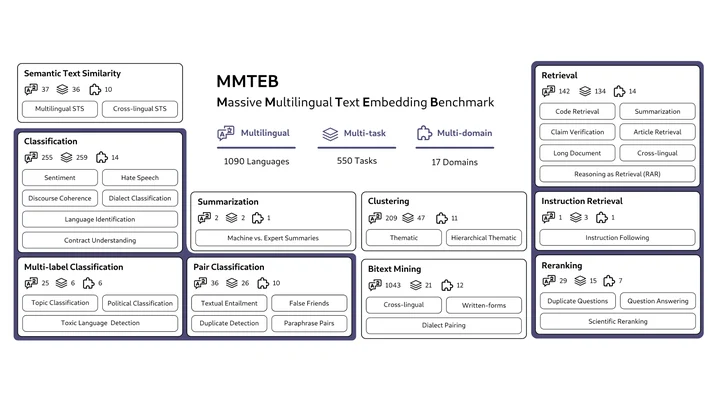
MMTEB is the multilingual extension of MTEB, the reference benchmark suite of Hugging Face for assessing models’ ability to represent text as a useful and exploitable vector. Designed as a large-scale, community-driven project, MMTEB covers more than 500 quality-controlled evaluation tasks across over 250 languages, making it the most comprehensive resource to date for evaluating embedding models in a truly multilingual setting.
The benchmark addresses a critical gap in model evaluation: most existing benchmarks are limited in terms of language coverage, domain diversity, and task variety. MMTEB pushes the boundaries by incorporating challenging and novel tasks such as instruction following, long-document retrieval, and code retrieval. It also introduces optimizations that significantly reduce computational costs, including inter-task correlation-based downsampling and smart negative sampling for retrieval, enabling scalable yet rigorous evaluation.
More specifically, we introduced a simple, interpretable, and effective confidence-based metric that evaluates a model's ability to abstain from making predictions when uncertain. Through this addition, we contributed to extending the MTEB leaderboard, an important step toward more comprehensive evaluation of large language models, a critical area in AI research. Finally, this extension emphasizes fair and inclusive evaluation, with a particular focus on low-resource languages, which are often underrepresented in current benchmarks.
MMTEB is publicly available on the Hugging Face website, where you can explore the benchmark, submit models, and view live results on the official leaderboard.
Learning multiple multicriteria additive models from heterogeneous preferences
ADT - Algorithmic Decision Theory
— October 2024
Co-authored with
Learning multiple multicriteria additive models from heterogeneous preferences
ADT - Algorithmic Decision Theory
— October 2024
Emmanuel Malherbe, Khaled Belahcène, Vincent Auriau, Vincent Mousseau
Affiliations
Description
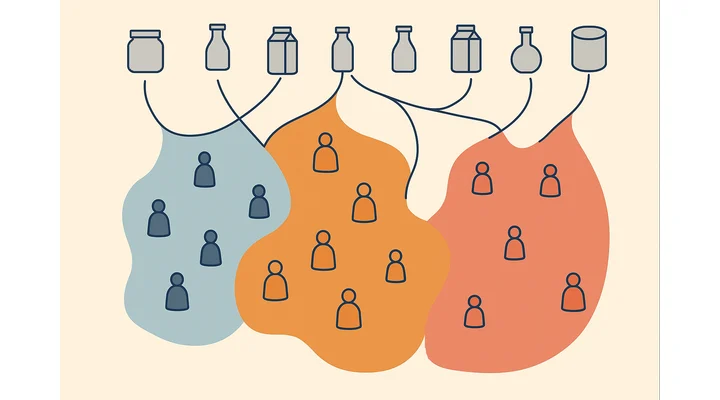
Understanding the diverse preferences of their customers is a major challenge for retailers. Traditional models often assume that all customers think alike, or segment the customer base solely using their characteristics, such as their age and gender.
In this paper, we introduce a new approach that clusterizes customers based on their purchases. The model is based on the well-established literature of preference modeling and is specifically designed to be interpretable. In particular, we present a real-world example in the article where the model highlights distinct customer behaviors, such as purchasing decisions driven primarily by price or, on the contrary, by product quality. A key element and novelty of the proposed approach is its joint optimization. Indeed, the model learns at the same time the different clusters of customers and the preference model for each cluster. Such optimization helps in obtaining better performances but brings some computation challenges that we also tackle.
Is Preference Alignment Always the Best Option to Enhance LLM-Based Translation? An Empirical Analysis
WMT
— November 2024
Co-authored with
Is Preference Alignment Always the Best Option to Enhance LLM-Based Translation? An Empirical Analysis
WMT
— November 2024
Authors
Céline Hudelot, Emmanuel Malherbe, Hippolyte Gisserot-Boukhlef, Nuno M. Guerreiro, Pierre Colombo, Ricardo Rei
Affiliations
Description
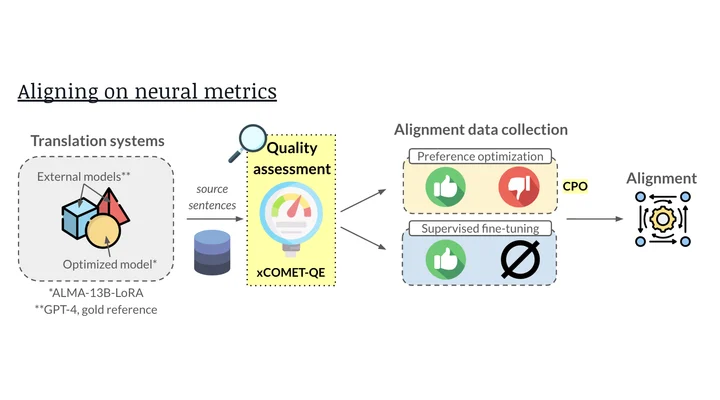
Fine-tuning generative LLMs on domain specific data is essential for achieving strong performance in tasks including translation, summarization, or question answering. In the context of machine translation, preference optimization – where a model learns to prefer one output over another – has shown promising results compared to traditional supervised fine-tuning. Yet, the underlying reasons for its success and its broader implications remain underexplored. In particular, due to the limited availability and specificity of labelled samples, a variety of strategies have emerged to generate preference data needed for this approach.
In our paper, "Is Preference Alignment Always the Best Option to Enhance LLM-Based Translation? An Empirical Analysis", we investigate the effectiveness of preference optimization when compared to supervised fine-tuning. While it's common practice to optimize using preference data, often derived from high-quality outputs by models like GPT-4, our research questions the necessity of this external dependence. Notably, we find that using the model itself as a self-teacher can yield comparable translation quality, while simplifying the pipeline and avoiding reliance on external systems.
Towards Trustworthy Reranking: A Simple yet Effective Abstention Mechanism
TMLR
— October 2024
Co-authored with
Towards Trustworthy Reranking: A Simple yet Effective Abstention Mechanism
TMLR
— October 2024
Authors
Céline Hudelot, Emmanuel Malherbe, Hippolyte Gisserot-Boukhlef, Manuel Faysse, Pierre Colombo
Affiliations
Description
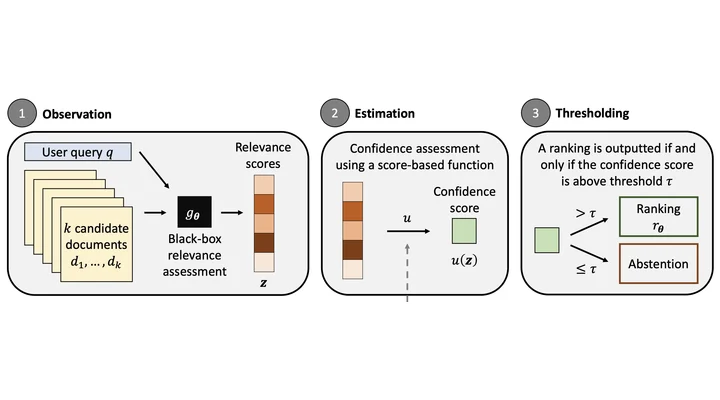
In AI Agent workflows, RAG and Search engines, retrieval failures are the primary driver of hallucinations and downstream reasoning errors. To solve this,we introduced a lightweight, plug-and-play abstention method that can be used as an interpretable, user-facing confidence score. The system analyzes the distribution of document relevance scores to assess decision quality in real time, and can thus raise a visual warning to the user or even decide not to generate an answer from the retrieved documents. In such scenario, the agent can instead ask for clarification rather than delivering misleading information to the user.
Designed specifically for real-world enterprise constraints, this data-driven approach operates entirely as a black-box mechanism, making it fully compatible with third-party API models without requiring internal model access or additional fine-tuning. It can be calibrated on specific use-cases on fewer than 50 labeled reference queries, and vastly outperforms traditional heuristics while adding neglectable computational overhead to the reranking stage. Available as an open-source package, this method provides an instant, production-ready reliability guardrail for document search, agentic decision-making, and trustworthy enterprise RAG deployments.
Choice learn: large scale choice modelling for operational context through the lens of machine learning
JOSS
— September 2024
Co-authored with


Choice learn: large scale choice modelling for operational context through the lens of machine learning
JOSS
— September 2024

Authors
Ali Aouad, Antoine Désir, Emmanuel Malherbe, Vincent Auriau
Affiliations
Description
Choice-Learn is a Python package designed to help you estimate discrete choice models and use them (e.g., assortment optimization plug-in). The package provides ready-to-use datasets and models from the literature. It also provides a lower level use if you wish to customize any choice model or create your own from scratch. Choice-Learn efficiently handles data with the objective to limit RAM usage. It is made particularly easy to estimate choice models with your own, large datasets.
On-Site Deployment of LLMs
Large Language Models in Cybersecurity: Threats, Exposure and Mitigation
— January 2024
On-Site Deployment of LLMs
Large Language Models in Cybersecurity: Threats, Exposure and Mitigation
— January 2024
Zachary Schillaci
Description
Forget multi-million-dollar data centers: consumer hardware like NVIDIA’s RTX 4090 has quietly disrupted AI infrastructure, bringing sovereign, high-performance LLM execution straight to local servers. By combining 4-bit quantization with parameter-efficient fine-tuning (LoRA), organizations can now run and adapt powerful 13B to 70B parameter open-source models completely on-premises. This shift offers security-conscious sectors—such as banking, defense, and cybersecurity—unrivaled control over their data, eliminating private information leaks while bypassing cloud vendor lock-in.
However, bringing frontier models in-house is far from a free lunch. From multi-user serving bottlenecks and GPU power drains to the dual-use threat of unmonitored local models in the hands of cyberattackers, local deployment redefines the entire AI risk landscape. This chapter delivers an essential blueprint for engineers, CSOs, and tech leaders looking to master the technical economics, serving frameworks, and security guardrails of modern on-site LLM deployment.
LLM Adoption Trends and Associated Risks
Large Language Models in Cybersecurity: Threats, Exposure and Mitigation
— January 2024
LLM Adoption Trends and Associated Risks
Large Language Models in Cybersecurity: Threats, Exposure and Mitigation
— January 2024
Zachary Schillaci
Description
This chapter provides an essential, high-level map of current LLM adoption trends, offering engineers, CSOs, and business leaders a crucial framework to navigate the fine line between business transformation and systemic cybersecurity risk. As Generative AI accelerates across the corporate world, organizations are rushing to integrate Large Language Models into everything from customer service and copywriting to automated code generation and enterprise knowledge management. However, behind this unprecedented adoption lies a dangerous governance gap: while one-third of businesses actively deploy generative AI, only a fraction have implemented clear policies to manage its inherent vulnerabilities. From the trade-offs between zero-shot in-context learning and parameter-efficient fine-tuning —which can accidentally dismantle safety guardrails with just a few adversarial examples—to emerging LLMOps architectures like RAG and vector databases, corporate integration is advancing much faster than its safety mechanisms.
Beyond operational shifts, this rapid rollout unlocks a severe threat landscape that exposes modern software infrastructure to critical vulnerabilities. We analyzed and explored the dangers of prompt injection, training data poisoning, insecure output handling, and excessive agency—risks that peak with autonomous LLM agents granted real-time API and code execution power.
A New Dataset for Causality Identification in Argumentative Texts
SIGDIAL - Meeting of the Special Interest Group on Discourse and Dialogue
— September 2023
Co-authored with

A New Dataset for Causality Identification in Argumentative Texts
SIGDIAL - Meeting of the Special Interest Group on Discourse and Dialogue
— September 2023
Anh Le, Benno Stein, Khalid Al-Khatib, Martin Potthast, Michael Völske, Shahbaz Syed
Affiliations
Description
This paper, co-authored by researchers from the University of Groningen, Bauhaus-Universität Weimar, Leipzig University, and ScaDS.AI, introduces WEBIS-CAUSALITY-23, a novel open-source dataset designed for causality identification in computational argumentation. As computational argumentation grows, detecting cause-and-effect relationships across entire arguments—rather than just isolated claims—is critical for tasks like building large-scale argumentation graphs, automated fact-checking, and topic-independent argument mining. Existing datasets suffered from key limitations, such as focusing on narrow input components, biasing toward positive causality, or relying on restrictive sets of linguistic markers like causal verbs.
To overcome these hurdles cost-effectively, the authors combine distant supervision with uncertainty sampling to curate 1,485 high-quality, crowdsourced argumentative sentences spanning diverse topics, balanced causality types (515 positive and 536 negative relations), and complex multi-relation structures. Evaluating transformer-based classifiers trained on this dataset reveals significant gains in identifying causal relations compared to existing benchmarks. By releasing this dataset, the authors provide the NLP community with a robust foundation for building more nuanced causal reasoning models, automated question-answering systems, and explainable AI frameworks.
Weak Segmentation-Guided GAN for realistic color edition
ICIAP
— September 2023
Authors
Emmanuel Malherbe, Matthieu Perrot, Vincent Auriau
Description
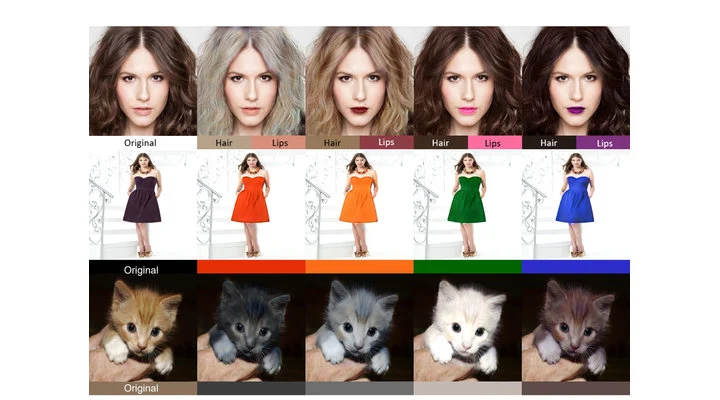
This paper introduces Weak Segmentation-Guided GAN (WSG-GAN), a generative model designed to realistically recolor targeted objects in an image, without disrupting the background or losing fine structural textures. It can deliver both photorealistic quality and precise, user-defined color adjustments, which existing methods fail to both achieve. The proposed method simply relies on a pre-trained segmentation model, that acts as an intelligent spatial guide, isolating the exact regions to be transformed—such as hair, lips, clothing. The realistic recoloring is then fully learned by the proposed GAN.
The framework is an experimental proof that if you can segment an object, then you can change its color in a realistic manner. Moreover, our GAN outperforms existing methods like StyleGAN adaptations in both objective metrics and human preference evaluations. Beyond simple color editing, the architecture seamlessly extends to color transfer and controllable grayscale colorization, offering an efficient, intuitive tool for digital media post-processing.
Analysis and Mitigation of ChatGPT’s Dovish Bias on Classifying Fedspeak.
ssrn
— January 2024
Co-authored with

Analysis and Mitigation of ChatGPT’s Dovish Bias on Classifying Fedspeak.
ssrn
— January 2024
Amaury Mantion, Christophe Morel, Melvin Kianmanesh Rad, Romain Faure, Zachary Schillaci
Affiliations
Description
Central bank communications are notoriously difficult to decipher, but large language models promise an automated revolution for financial markets. However, standard implementations of OpenAI’s ChatGPT reveal a severe underlying dovish bias, frequently misclassifying hawkish statements on Federal Reserve monetary policy as dovish. This systematic distortion likely stems from recency bias in pre-training datasets, which are heavily weighted toward the predominantly dovish economic climate of the past two decades. This research aims at successfully aligning AI interpretations with expert financial analysis, unlocking reliable, automated deciphering of central bank policy.
To overcome this reliance on historical patterns, we propose an efficient multi-pronged mitigation strategy. By enforcing structured prompt engineering—instructing the model to reason step-by-step and output numerical stance scores rather than plain text labels—GPT-4's discriminative ability vastly improved. Incorporating real-time composite economic indicators further suppressed the model's inclination toward dovish interpretations. Additionally, supervised fine-tuning of GPT-3.5 completely eradicated the classification bias.
Classifying complex documents: comparing bespoke solutions to large language models
arxiv
— December 2023
Classifying complex documents: comparing bespoke solutions to large language models
arxiv
— December 2023
Glen Hopkins, Kristjan Kalm
Description
In this paper we search for the best automated classification approach for a set of complex legal documents. Our classification task is not trivial: our aim is to classify ca 30,000 public courthouse records from 12 states and 267 counties at two different levels using nine sub-categories. Specifically, we investigated whether a fine-tuned large language model (LLM) can achieve the accuracy of a bespoke custom-trained model, and what is the amount of fine-tuning necessary. We first give a brief summary of the main results and then detail the data, tasks, and models.
Fundamentals of Generative Large Language Models and Perspectives in Cyber-Defense
arxiv
— January 2023
Co-authored with


Fundamentals of Generative Large Language Models and Perspectives in Cyber-Defense
arxiv
— January 2023
Alain Mermoud, Andrei Kucharavy, Dimitri Percia David, Ljiljana Dolamic, Loïc Maréchal, Maxime Würsch, Remi Sabonnadiere, Vincent Lenders, Zachary Schillaci
Affiliations
Description
In this work, we navigate the landscape of modern Generative Large Language Models, exposing how their raw computational elegance yields surprising vulnerabilities in the digital wild. By dissecting the underlying mechanics of self-attention architectures and tracking the rapid lineage from early Transformers to sophisticated conversational agents, the review exposes a critical paradox: the very traits that make these models irresistibly intuitive also open vast new attack surfaces for cyber-warfare. Focusing on the Swiss defensive operational environments, the paper uncovers how conversational fluency lowers the barrier for spear-phishing, automated social engineering, and deep web target identification. It reveals that beneath their confident explanations, these models possess no intrinsic ground truth, making them susceptible to execution flow hijacking, data leaks through model memorization, and automated malware refinement. Beyond cataloging threats, this research lays out possible strategies for mitigation, spanning differential privacy, federated learning, and robust red-teaming.
Using Linear Initialisation to Improve Speed of Convergence and Fully-Trained Error in Autoencoders
arxiv
— January 2023
Using Linear Initialisation to Improve Speed of Convergence and Fully-Trained Error in Autoencoders
arxiv
— January 2023
George Cevora, Marcel Marais, Mate Hartstein
Description
Good weight initialisation is an important step in successful training of Neural Networks. Over time a number of improvements have been proposed to this process. In this paper we introduce a novel weight initialisation technique called the Straddled Matrix Initialiser. This initialisation technique is motivated by our assumption that major, global-scale relationships in data are linear with only smaller effects requiring complex non-linearities. Combination of Straddled Matrix and ReLU activation function initialises a Neural Network as a de facto linear model, which we postulate should be a better starting point for optimisation given our assumptions. We test this by training autoencoders on three datasets using Straddled Matrix and seven other state-of-the-art weight initialisation techniques. In all our experiments the Straddeled Matrix Initialiser clearly outperforms all other methods.
Instability of Computer Vision Models is a Necessary Result of the Task Itself
arxiv
— February 2023
Instability of Computer Vision Models is a Necessary Result of the Task Itself
arxiv
— February 2023
George Cevora, Oliver Turnbull
Description
Adversarial examples resulting from instability of current computer vision models are an extremely important topic due to their potential to compromise any application. In this paper we demonstrate that instability is inevitable due to a) symmetries (translational invariance) of the data, b) the categorical nature of the classification task, and c) the fundamental discrepancy of classifying images as objects themselves. The issue is further exacerbated by non-exhaustive labelling of the training data. Therefore we conclude that instability is a necessary result of how the problem of computer vision is currently formulated. While the problem cannot be eliminated, through the analysis of the causes, we have arrived at ways how it can be partially alleviated. These include i) increasing the resolution of images, ii) providing contextual information for the image, iii) exhaustive labelling of training data, and iv) preventing attackers from frequent access to the computer vision system.
Achieving Stable Training of Reinforcement Learning Agents in Bimodal Environments through Batch Learning
arxiv
— March 2023
Achieving Stable Training of Reinforcement Learning Agents in Bimodal Environments through Batch Learning
arxiv
— March 2023
Evan Hurwitz, George Cevora, Nelson Peace
Description
Bimodal, stochastic environments present a challenge to typical Reinforcement Learning problems. This problem is one that is surprisingly common in real world applications, being particularly applicable to pricing problems. In this paper we present a novel learning approach to the tabular Q-learning algorithm, tailored to tackling these specific challenges by using batch updates. A simulation of pricing problem is used as a testbed to compare a typically updated agent with a batch learning agent. The batch learning agents are shown to be both more effective than the typically-trained agents, and to be more resilient to the fluctuations in a large stochastic environment. This work has a significant potential to enable practical, industrial deployment of Reinforcement Learning in the context of pricing and others.
Explainable AI does not Provide the Explanations End-users are Asking for
arxiv
— April 2023
Explainable AI does not Provide the Explanations End-users are Asking for
arxiv
— April 2023
George Cevora, Savio Rozario
Description
Explainable Artificial Intelligence (XAI) techniques are frequently required by users in many AI systems with the goal of understanding complex models, their associated predictions, and gaining trust. While suitable for some specific tasks during development, their adoption by organisations to enhance trust in machine learning systems has unintended consequences. In this paper we discuss XAI’s limitations in deployment and conclude that transparency alongside with rigorous validation are better suited to gaining trust in AI systems.
Data-driven method for navigating the Atlantic in a rowing race
arxiv
— January 2021
George Cevora, Mate Hartstein
Description
Ocean rowing not only features epic distances, but also requires adaption to harsh weather conditions. This makes it essential that rowing crews racing across the ocean exploit wind to aid their success. However, the favourable winds rarely follow the shortest path between the start and finishing line of a rowing race. This common discrepancy requires boat crews to make a compromise between shortest path to victory and the path that exploits the wind. These decisions are currently based on experience, consensus and gut-feel; methods that rarely select truly optimal solution. In this paper we demonstrate a generic data-driven method for finding such optimal compromise by considering various route choices for the Atlantic Rowing Race, which requires rowers to make a crossing from the Canary Islands to Antigua. We conclude that the most common routes on this crossing are biased too far south towards areas with favourable trade winds making the journey unnecessarily long. Finally we provide map of a route for this crossing which is optimal according to 2000-2019 weather data.
Forecasting performance of workforce reskilling programmes
arxiv
— January 2021
Evan Hurwitz, George Cevora
Description
Estimating success rates for programmes aiming to reintegrate the unemployed into the workforce is essential for good stewardship of public finances. At the current moment, the methods used for this task are based on the historical performance of comparable programmes. In light of Brexit and Covid-19 simultaneously causing a shock to the labour market in the UK we developed an estimation method that is based on fundamental factors involved - workforce demand and supply - as opposed to the historical values which are quickly becoming irrelevant. With an average error of 3.9% of the re-integration success rate, our model outperforms the best benchmark known to us by 53%.
Our researchers working together on real-world AI challenges.

Oualid Mokhantar
ESCP Business School; Université Paris 1 Panthéon-Sorbonne
Management Science, Sustainability
Oualid Mokhantar
ESCP Business School; Université Paris 1 Panthéon-Sorbonne
Management Science, Sustainability
Oualid's research combines qualitative and quantitative methods to examine how organizations measure, govern, and act upon sustainability data.

Abdoulaye Sakho
Artefact Research Center; LPSM; Sorbonne Université
Tree-based models, Class imbalance, Explainability
Abdoulaye Sakho
Artefact Research Center; LPSM; Sorbonne Université
Tree-based models, Class imbalance, Explainability
Abdoulaye's research focuses on supervised learning with tabular data, leveraging tree-based models to tackle challenges such as class imbalance and model explainability.

Alexia Allal
Artefact Research Center; LERIA; Université d'Angers
Information Retrieval, Generative Retrieval
Alexia Allal
Artefact Research Center; LERIA; Université d'Angers
Information Retrieval, Generative Retrieval
Alexia's research focuses on generative retrieval, exploring efficient document representations to streamline retrieval from databases.

Charles Brunet
Artefact Research Center; Université Paris Cité, Paris Transplant Group
AI for Medicine
Charles Brunet
Artefact Research Center; Université Paris Cité, Paris Transplant Group
AI for Medicine
Charles' research focuses on the application of artificial intelligence to transplantation, with an emphasis on predictive modeling for patient diagnosis and clinical decision support.

Vivien Nicolas
Artefact Research Center; INSA Rennes
Information Retrieval, Generative Retrieval
Vivien Nicolas
Artefact Research Center; INSA Rennes
Information Retrieval, Generative Retrieval
Vivien's research focuses on generative information retrieval with large language models, with an emphasis on document representations, decoding strategies, and efficient retrieval at scale.

Ghewa El Dora
Artefact Research Center; Université Paris 8; CREST
Behavioral Economics, Experimental Economics, Retail
Ghewa El Dora
Artefact Research Center; Université Paris 8; CREST
Behavioral Economics, Experimental Economics, Retail
Ghewa's research examines how information disclosure shapes consumer behavior and market outcomes. Combining experimental and empirical methods, she studies how simplified product ratings influence purchasing decisions and drive strategic responses across the retail landscape.

Veronika Shilova
Artefact Research Center; Toulouse III - Paul Sabatier University; Toulouse Mathematics Institute
Computer Vision, 3D Face Reconstruction, 3DMM, Diffusion Models, Fairness
Veronika Shilova
Artefact Research Center; Toulouse III - Paul Sabatier University; Toulouse Mathematics Institute
Computer Vision, 3D Face Reconstruction, 3DMM, Diffusion Models, Fairness
Veronika's research focuses on fairness in computer vision, developing methods to measure and mitigate bias across both general CV models and applications including 3D face reconstruction and text-to-image diffusion.

Vincent Auriau
Artefact Research Center; MICS; CentraleSupélec; Université Paris-Saclay
Preference Modeling, Discrete Choice Modeling, Machine Learning
Vincent Auriau
Artefact Research Center; MICS; CentraleSupélec; Université Paris-Saclay
Preference Modeling, Discrete Choice Modeling, Machine Learning
After a few years working on machine learning algorithms at L'Oréal Research for diagnostic and formula predictions, Vincent started a PhD at Artefact on modeling customer purchases in retail. In particular, the work focuses on segmenting the observed behaviors as well as estimating products interactions (substitutability, complementarity) in large scale environments.

Charles Moslonka
Artefact Research Center; MICS; CentraleSupélec; Université Paris-Saclay
Natural Language Processing, Large Language Models, Information Retrieval, Statistics, Physics
Charles Moslonka
Artefact Research Center; MICS; CentraleSupélec; Université Paris-Saclay
Natural Language Processing, Large Language Models, Information Retrieval, Statistics, Physics
Charles is a senior research scientist, specialized in evaluation and uncertainty quantification in LLMs and information retrieval. He holds a Ph.D. in statistical physics from PSL University, during which he studied theoretical aspects of the thermodynamics of stochastic processes. ENS Paris-Saclay alumnus, he holds the physics agrégation.

Hicham Randrianarivo
Artefact Research Center; MICS; CentraleSupélec; Université Paris-Saclay
Information Retrieval, Generative Retrieval, Natural Language Processing, Large Language Models
Hicham Randrianarivo
Artefact Research Center; MICS; CentraleSupélec; Université Paris-Saclay
Information Retrieval, Generative Retrieval, Natural Language Processing, Large Language Models
Hicham research focuses on methods for Information retrieval and especially how to use Large Languages Models to improve retrieval methods.

Emmanuel Malherbe
Artefact Research Center
Neural Networks, Machine Learning, Uncertainty Estimation
Emmanuel Malherbe
Artefact Research Center
Neural Networks, Machine Learning, Uncertainty Estimation
Emmanuel joined Artefact to found the research center. He holds a PhD in Machine Learning, with applications in NLP for e-recruitment, and worked as a lead research scientist at L'Oréal Research and Huawei in neural networks for Computer Vision. His interests spans from designing neural networks tailored to specific data structures, uncertainty estimation and models interpretability.
Medium blog articles by our tech experts.
Detecting Hallucinations in LLMs, One Token at a Time
Large Language Models are astonishingly capable. They summarize, translate, reason, and code (better than me). But unlike me, they have also become notorious for inventing...


Will the Future of Agentic AI rely on Knowledge Graphs?
As enterprises rush to operationalize AI, most discover that their data infrastructure was never designed for autonomous reasoning. Today, up to 80% of AI implementation...
Enriching the DIY experience: How ADEO uses AI to connect content and knowledge
Assortment optimization is a critical process in retail that involves curating the ideal mix of products to meet consumer demand while taking into account the many logistics...
MotherDuck Explained: How the Next-Gen AI & Analytics Solution Fits Into Your Data Stack
MotherDuck extends DuckDB's analytical performance to the cloud with collaborative features, delivering 4x faster performance than BigQuery and cost savings over traditional data warehouses through...
Assortment Optimization with discrete choice models in Python
Assortment optimization is a critical process in retail that involves curating the ideal mix of products to meet consumer demand while taking into account the many logistics...
Is Preference Alignment Always the Best Option to Enhance LLM-Based Translation? An Empirical Analysis
Neural metrics for machine translation (MT) evaluation have become increasingly prominent due to their superior correlation with human judgments compared to traditional lexical metrics
Choice-Learn: Large-scale choice modeling for operational contexts through the lens of machine learning
Discrete choice models aim at predicting choice decisions made by individuals from a menu of alternatives, called an assortment. Well-known use cases include predicting a...
The era of generative AI: What’s changing
The abundance and diversity of responses to ChatGPT and other generative AIs, whether skeptical or enthusiastic, demonstrate the changes they're bringing about and the impact...
How Artefact managed to develop a fair yet simple career system for software engineers
In today’s dynamic and ever-evolving tech industry, a career track can often feel like a winding path through a dense forest of opportunities. With rapid...
Why you need LLMOps
This article introduces LLMOps, a specialised branch merging DevOps and MLOps for managing the challenges posed by Large Language Models (LLMs)...
Unleashing the Power of LangChain Expression Language (LCEL): from proof of concept to production
LangChain has become one of the most used Python library to interact with LLMs in less than a year, but LangChain was mostly a library...
How we handled profile ID reconciliation using Treasure Data Unification and SQL
In this article we explain the challenges of ID reconciliation and demonstrate our approach to create a unified profile ID in Customer Data Platform, specifically...