


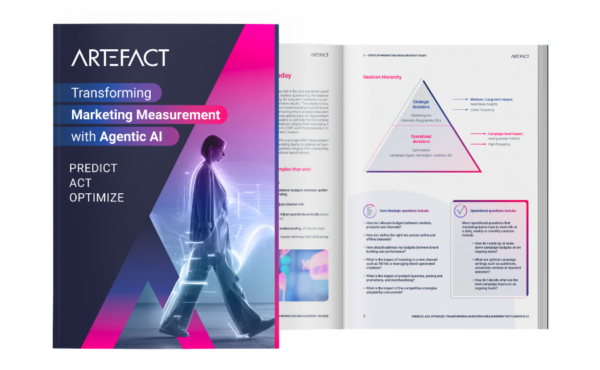
Im ersten Teil dieser Serie von zwei Artikeln über das White Paper von Artefact, “Vorhersagen, Handeln, Optimieren: Marketing-Messung mit agentenbasierter KI verändern”, erkundeten wir die “Goldenes Dreieck” der Marketingmessung und zeigt, wie Marketing-Mix-Modellierung (MMM), Inkrementalitätstest, und Namensnennung zusammenarbeiten, um kurzfristige Leistung mit langfristigem Markenaufbau in Einklang zu bringen.
In der Vergangenheit bestand der Engpass dieses Systems jedoch in der immensen manuellen Arbeit, die zu seiner Pflege erforderlich war. Data-Ingenieure verbringen Wochen damit, data zu harmonisieren, die Modelle werden nur vierteljährlich aktualisiert, und die Erkenntnisse kommen oft erst Wochen nach Ende des Berichtszeitraums.
Heute geht die Branche von diesem episodischen, projektbasierten Ansatz zu einem eine kontinuierliche, stets aktive Messinfrastruktur. Dieser Wandel wird von zwei großen Kräften vorangetrieben: der Open-Source-Revolution und dem Aufstieg der Agentischen KI.
Ausgleich zwischen kurzfristiger Aktivierung und langfristigem Markenaufbau
Bevor KI die Messung automatisieren kann, müssen die zugrunde liegenden Modelle zugänglich sein. Die Einführung von Meridian von Google im Jahr 2025 signalisierte einen massiven Wandel in der Branche und bewies, dass das Ökosystem der Messtechnik floriert, wenn die Methoden gemeinsam genutzt werden und nicht hinter den Mauern proprietärer SaaS-Anbieter versteckt sind.
Meridian hat die grundlegenden Herausforderungen des traditionellen MMM durch die Einführung von zeitgebundene Inkrementalitätsprioritäten, die das Modell mit aktuellen, realen Testergebnissen verankern, anstatt dass die Jahre alten data aktuelle ROI-Schätzungen verzerren. Außerdem konnten die Modelle Erreichen Sie und Frequenz data und nicht nur rohe Eindrücke. So können Sie nicht nur optimieren, wie viel Sie ausgeben, sondern auch in welcher Häufigkeit. Mit jüngsten Ergänzungen wie dem no-code Scenario Planner und integrierte Geo-Experimente (GeoX), Die Kluft zwischen dem, was ein internes data Wissenschaftsteam für die Kosten von cloud Computing aufbauen kann, und dem, was teure SaaS-Anbieter anbieten, hat sich erheblich verringert.
Der Aufstieg der agentenbasierten KI: Von der Erkenntnis zum Handeln
Während die erste Welle der Technologie den Zugang und die zweite die Geschwindigkeit brachte, bringt die dritte Welle - die agentenbasierte KI - die Autonomie. Agentische KI generiert nicht nur Text oder beantwortet Fragen; sie nimmt den Kontext wahr, erstellt einen Plan, führt Aktionen toolübergreifend aus, bewertet die Ergebnisse und passt ihre Vorgehensweise an.
Hier sehen Sie, wie diese Autonomie das Goldene Dreieck aktiv umgestaltet:
- MMM automatisieren: Agenten verwalten jetzt die mühsame “Klempnerarbeit” von MMM, indem sie die API-Verbindungen zu Medienplattformen kontinuierlich überwachen, Anomalien wie plötzliche CPM-Spitzen markieren und die Modelle nahtlos aktualisieren. Dadurch wird die Messkadenz beschleunigt, vierteljährliche Modellaktualisierungen in monatliche oder sogar zweiwöchentliche Einblicke zu verwandeln.
- Skalierung der Inkrementalitätstests: Die Durchführung strenger Experimente ist zeitaufwändig, aber Agenten können geobasierte Inkrementalitätstests entwerfen: Auswahl abgestimmter Märkte, Definition von Holdout-Größen und Identifizierung von Störfaktoren in Stunden statt in Wochen. Sobald die Agenten in Betrieb sind, überwachen sie kontinuierlich die Testbedingungen, um die Teams vor unerwarteten Ereignissen zu warnen. So wird verhindert, dass ein Test über die gesamte Dauer läuft, nur um dann durch eine data-Anomalie ungültig zu werden.
- LLM-gestützte Einblicke: Große Sprachmodelle (LLMs) demokratisieren den Zugang zu komplexen data. Anstatt sich auf einen data-Wissenschaftler zu verlassen, der die Modellausgaben übersetzt, GMOs können jetzt fragen Fragen in natürlicher Sprache wie z. B. “Wie sieht die optimale Aufteilung des Budgets zwischen YouTube und Meta aus, wenn ich eine Umsatzsteigerung von 15% mit weniger Ausgaben benötige?” und erhalten Sie in Sekundenschnelle eine modellgestützte Empfehlung.
Die Vision 2026: Multi-Agenten-Orchestrierung
Der spannendste Bereich ist die Multi-Agenten-Architektur, bei der Agenten über den gesamten Mess-Stack hinweg arbeiten. Stellen Sie sich ein Ökosystem vor, in dem ein MMM-Agent hält kontinuierlich die Budgetoptimierung aufrecht, ein inkrementeller Agent verwaltet die Testpipeline und speist validierte Ergebnisse zurück in das MMM, und ein Zurechnungsagent überwacht die wöchentliche Kampagnenleistung auf Anomalien.
Über ihnen allen thront ein Orchestrierungsagent das diese unterschiedlichen Ergebnisse zusammenfasst, erkennt, wann sie aufeinander abgestimmt sind oder in Spannung zueinander stehen, und der Marketingleitung eine einheitliche, umsetzbare Ansicht präsentiert. Diese “immer eingeschaltet” trianguliert Messung wird schnell zum Standard für 2025 und 2026.
Die Prämie für menschliches Urteilsvermögen
Es mag den Anschein erwecken, dass dieser Grad der Automatisierung menschliche Analysten überflüssig macht, aber die Realität ist das genaue Gegenteil. Da die mechanische Arbeit der data-Vorbereitung, der Modellläufe und der Berichterstellung automatisiert wird, der Wert von echtem Messwissen nimmt nicht ab: er konzentriert sich.
Agentische Systeme erfordern immer noch starke menschliche Prinzipien, um Ziele zu setzen, die Lernagenda festzulegen, Ergebnisse zu validieren und den entscheidenden geschäftlichen Kontext zu liefern die das Modell nicht hat. Am wichtigsten ist, dass LLMs mit Sicherheit falsch liegen können. Unternehmen brauchen Experten, die die KI auffangen, wenn sie plausibel klingende Antworten generiert, die in Wirklichkeit über den data hinaus extrapoliert werden.
Letztendlich werden Unternehmen, die KI einsetzen, um ihre Teams zu stärken, erfolgreich sein, während Unternehmen, die sie lediglich als Ersatz für Fachwissen einsetzen, eine Verschlechterung ihrer Ergebnisse erleben werden. Die Instrumente der Marketingmessung werden sich weiterentwickeln, aber die zugrunde liegende Disziplin der Eine rigorose, von Menschen geleitete Strategie bleibt die Grundlage für nachhaltiges Wachstum.