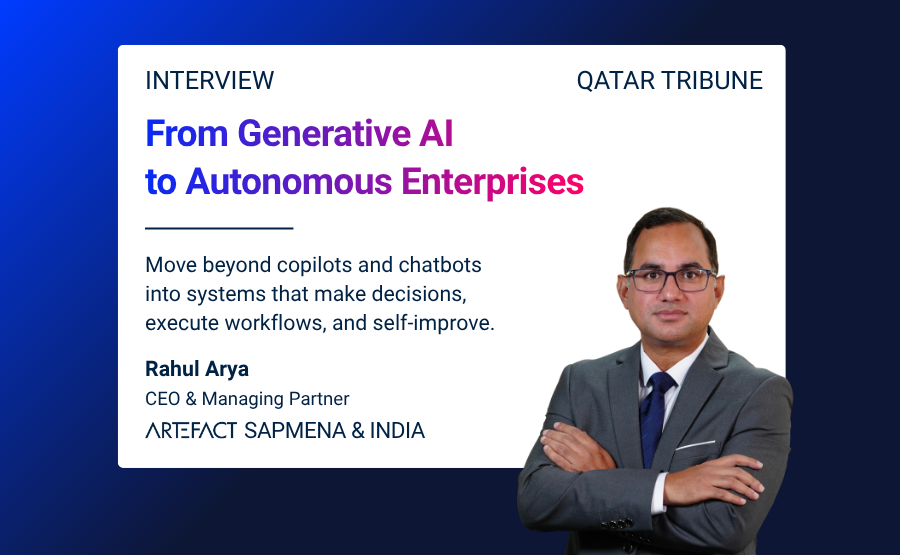
Bekijk het interview in Qatar Tribune hier.
De afgelopen twee jaar waren de meeste gesprekken over AI gericht op copilots en chatbots, systemen die ontworpen waren om mensen te helpen met het genereren van inhoud, aanbevelingen en productiviteit. Deze systemen bleven grotendeels passief terwijl ze mensen adviseerden, maar mensen namen nog steeds de beslissingen en voerden het werk uit.
Er is al een verschuiving gaande.
We komen nu in de fase van autonome ondernemingen waar AI-systemen niet alleen workflows ondersteunen, maar deze in toenemende mate coördineren, operationele beslissingen nemen, acties in gang zetten in verschillende systemen en continu resultaten optimaliseren in realtime.
Deze overgang wordt mogelijk gemaakt door de convergentie van generatieve AI, agentgebaseerde systemen, workflowautomatisering, data platforms voor bedrijven en realtime computerinfrastructuur. Bovendien kunnen moderne AI-systemen context interpreteren, probabilistisch redeneren en zich dynamisch aanpassen aan veranderende omgevingen. Dit betekent een grote verschuiving van automatisering naar autonomie.
In de praktijk is deze evolutie al zichtbaar in verschillende sectoren. We ontwikkelen en implementeren al autonome AI-systemen in verschillende sectoren. In de detailhandel hebben we AI-agents geïmplementeerd die in staat zijn om zelfstandig voorlopige markt- en financiële analyses uit te voeren voor mogelijkheden om winkels uit te breiden, en dat in minuten in plaats van maanden. Andere agentgebaseerde systemen valideren aanbestedingsdocumenten van leveranciers, detecteren discrepanties in financiële afsluitingsprocessen en orkestreren vergoedingsworkflows voor klanten met minimale menselijke tussenkomst, wat productiviteitsstijgingen tot 50% oplevert.
In de reis- en toerismesector hebben we autonome conciërgeplatformen geïmplementeerd die verder gaan dan traditionele chatbotinterfaces door dynamisch reisroutes samen te stellen, verstoorde reizen opnieuw te boeken en boekingen van meerdere aanbieders in realtime te coördineren. In de energiesector hebben we grootschalige AI-implementaties ondersteund op het gebied van operations, toeleveringsketen, klantenservice en infrastructuurbeheer, waardoor de operationele besluitvorming aanzienlijk is versneld en inefficiënties zijn verminderd.
De verschuiving is ook zichtbaar in overheids- en gezondheidszorgomgevingen, waar we autonome systemen hebben ontwikkeld ter ondersteuning van claimverwerking, risicoscoring, data governance en levenscycli voor softwareontwikkeling via agentic coding workflows die ontworpen zijn om de engineeringproductiviteit te verhogen.
De overgang naar volledige autonomie zal echter aanzienlijk verschillen in tempo en maturiteit tussen bedrijfsfuncties, afhankelijk van hoe geschikt ze zijn voor autonome uitvoering. Hoogvolume, repetitieve operationele workflows evolueren al snel in de richting van AI-gestuurde orkestratie. Strategische beslissingen, ethische afwegingen, crisisbeheer en reputatiegevoelige interacties blijven sterk afhankelijk van menselijk beoordelingsvermogen.
Dit creëert een van de bepalende leiderschapsuitdagingen van de AI-verschuiving: governance.
De meeste huidige governancemodellen zijn ontworpen voor AI-systemen die aanbevelingen doen. Autonome ondernemingen hebben governance nodig voor systemen die handelen. Organisaties hebben duidelijke kaders nodig die beslissingsgrenzen, escalatiemechanismen, controleerbaarheidsnormen en verantwoordingsstructuren definiëren. Menselijk toezicht kan niet verdwijnen, maar moet evolueren van directe uitvoering naar toezichthoudende controle.
Uiteindelijk zal de toekomstige onderneming niet bepaald worden door de hoeveelheid AI die ze inzet, maar door hoe effectief ze een evenwicht vindt tussen autonomie en vertrouwen, snelheid en verantwoordelijkheid, en machine-intelligentie en menselijk beoordelingsvermogen.
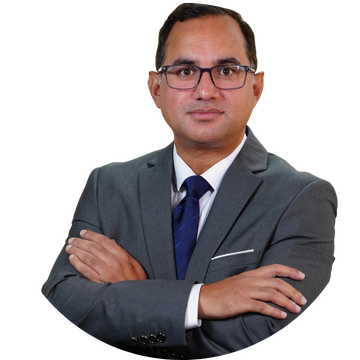
Rahul Arya is CEO & Managing Partner van Artefact SAPMENA en India, en lid van het Global Executive Committee (COMEX) van Artefact. Met meer dan 20 jaar internationale ervaring heeft hij leiding gegeven aan de snelle uitbreiding van de regionale activiteiten van Artefact in het Midden-Oosten, India en APAC. Hij is een alumnus van IIT Delhi, IIM Bangalore en de IAS.