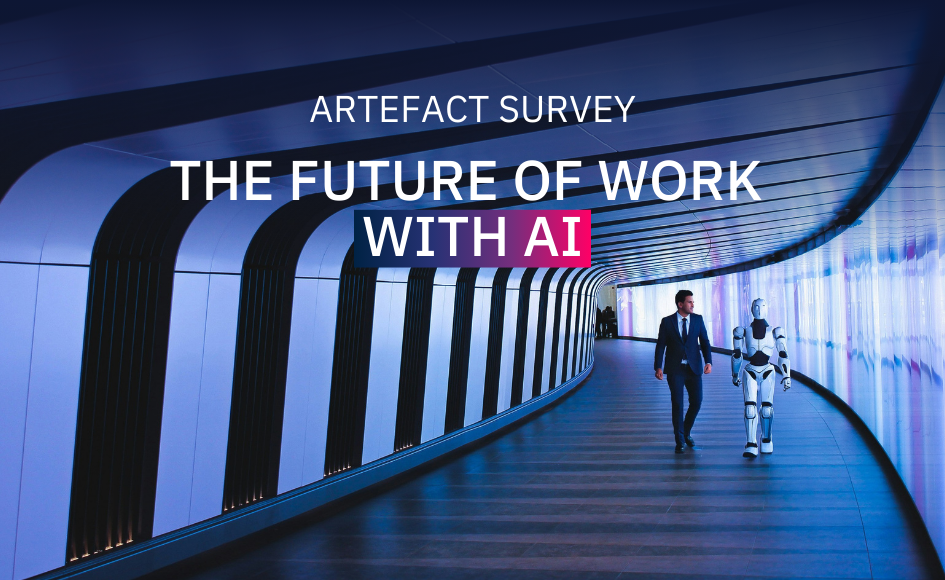
París, 7 de febrero de 2025 - Artefact, líder europeo en data e IA, y Odoxa, instituto de investigación independiente, han publicado un estudio pionero sobre el impacto de las artificial intelligence en el mundo laboral.
Este estudio ofrece un análisis en profundidad de la adopción e integración de la IA, sus efectos en la transformación organizativa y el futuro del trabajo. Realizada entre octubre y noviembre de 2024, la encuesta cuantitativa recopiló información de un panel de más de 2.000 participantes. Como complemento a este enfoque estadístico, se realizaron una treintena de entrevistas con figuras clave de la transformación digital, incluidos directores generales, directores de operaciones y líderes de transformación.
Algunas conclusiones clave del análisis cruzado del data cuantitativo y de las entrevistas a clientes y expertos:
1. La adopción de la IA en el lugar de trabajo está creciendo rápidamente, sin vuelta atrás para los usuarios
La IA se ha convertido en algo esencial en el lugar de trabajo, moldeando cada vez más las rutinas diarias de los empleados. En la actualidad, 12% de los empleados franceses ya utilizan la IA, y otros 30% afirman que la utilizan en su empresa. Entre los que la utilizan, 92% expresan su satisfacción.
2. La IA ahorra mucho tiempo a los empleados
La IA permite a los empleados optimizar su tiempo de trabajo, reduciendo significativamente las tareas repetitivas y tediosas. Por término medio, los usuarios de IA ahorran casi una hora (57 minutos) al día, y los más avanzados recuperan hasta tres horas. Este tiempo liberado se reinvierte en tareas más estratégicas, lo que permite a los empleados asumir nuevas responsabilidades y ampliar su conjunto de habilidades: 75% afirman sentirse “más liberados” en sus tareas, y 21% creen que la IA les ha ayudado a desarrollar nuevas habilidades.
3. A pesar de los aumentos de productividad individuales, las empresas luchan por conseguir mejoras de productividad generalizadas
Mientras que el 60% de los encuestados observan transformaciones en los procesos a través de la simplificación o la automatización, el impacto global en el rendimiento corporativo sigue sin estar claro. A diferencia de la IA tradicional, que ya ha demostrado su eficacia en la optimización de procesos, la IA generativa aún no ha producido ganancias de productividad mensurables a escala. Sin embargo, la aparición de agentes de IA podría suponer un cambio en las reglas del juego, al permitir la automatización avanzada de tareas cognitivas repetitivas y mejorar significativamente la productividad general. Los primeros despliegues en el servicio de atención al cliente ya han reducido a la mitad los tiempos de respuesta y han aumentado la productividad de los agentes humanos en 20%.
4. El impacto positivo de la IA en el empleo, a pesar de las zonas de alto riesgo
Contrariamente a lo que se suele temer, la IA está creando actualmente más puestos de trabajo de los que elimina-25% de los empleados afirman que la IA ha dado lugar a la creación de nuevas funciones. Este impacto es doble: mientras que la IA está impulsando la creación de empleo en campos técnicos y data relacionados, también está remodelando o desplazando los roles existentes. Aunque las perspectivas generales parecen positivas, se espera que ciertos departamentos -como los de TI, relaciones con los clientes y operaciones administrativas- sufran importantes alteraciones.
5. Las empresas deben dar prioridad a la alfabetización en IA y apoyar a los empleados en su transición al “trabajo aumentado por la IA”
A medida que la IA evoluciona rápidamente, las empresas deben convertirse en centros de aprendizaje continuo. El reto es doble: mejorar las competencias actuales de los empleados y prepararlos para funciones totalmente nuevas. Sin embargo, el cambio no es puramente técnico: también requiere una formación y un apoyo estructurados. En la actualidad, 51% de los usuarios de IA consideran que carecen de las habilidades necesarias para aprovechar plenamente la IA.
6. La confianza en la IA es crucial para el éxito de su adopción
La integración de la IA sólo puede tener éxito en un marco de confianza. Las empresas que aplican una gobernanza clara e integradora y garantizan la transparencia en el despliegue de la IA son las que reinventan con éxito sus modelos de negocio. Además, las organizaciones que invierten en soluciones de IA propias y de confianza tienen cuatro veces más probabilidades de lograr aumentos de productividad. Entre los empleados de las empresas que han adoptado IA patentada, 54% informan de mejoras significativas de la productividad, frente a 28% de media.
7. Acelerar la innovación y la transformación del empleo mediante la IA
La integración efectiva de la IA ya está dando lugar a la creación de empleo para una parte cada vez mayor de los encuestados (25% frente a 20%). La IA también está impulsando la innovación y democratizando el acceso a servicios de vanguardia, facilitando el espíritu empresarial y la creación de empleo. Campos como las industrias creativas, la investigación y la ingeniería -incluido el desarrollo de software- se ven especialmente afectados. La IA proporciona potentes herramientas que permiten a los individuos crear prototipos de aplicaciones, acelerar la I+D y generar contenidos de formas sin precedentes.
“El mayor riesgo para las empresas y los empleados es no adoptar la IA con la suficiente rapidez. Las empresas tienen un papel fundamental que desempeñar: en primer lugar, generando confianza entre sus trabajadores, sobre todo teniendo en cuenta que dos tercios de los empleados siguen percibiendo la IA como una amenaza. Actualmente, casi la mitad de los empleados no ha recibido ninguna formación sobre IA, y entre los que sí la han recibido, la mitad se siente inadecuadamente formado. Es esencial hacer de la adopción de la IA una prioridad absoluta”.”Vincent Luciani, director general y cofundador de Artefact
“Probar la IA es adoptarla Aunque los usuarios de IA siguen siendo una minoría dentro de las empresas, su entusiasmo es innegable-92% satisfacción, un índice que muchas marcas envidiarían. ¿Los factores clave? Eficacia, disfrute y conexiones humanas reavivadas. ¿El reto a superar? La confianza en la tecnología”.”Céline Bracq, Directora General de Odoxa
Los resultados completos del estudio están disponibles en enlace.
Las principales conclusiones de este informe se presentaron en un acto celebrado el 7 de febrero, que reunió a los Ministra de Trabajo y Empleo, Madame Astrid Panosyan-Bouvet, el ex Ministro de Transformación del Sector Público Stanislas Guerini, la Directora de Talento y Transformación, CHRO en Natixis Cristel Guillain y el Presidente y Fundador de Topics, Bruno Mettling.
Acerca de Artefact:
Artefact es una empresa francesa de consultoría e ingeniería especializada en data e IA, y líder europea en este campo. Con sede en París, estamos presentes en 23 países de todos los continentes y contamos con un equipo de 1.500 empleados.
Nuestra misión es ayudar a las empresas a liberar todo el potencial de la IA y la data desarrollando soluciones a medida que aborden sus retos industriales específicos. Como pioneros en este campo, combinamos la experiencia tecnológica con la excelencia operativa, colaborando con los principales actores del mercado. Desde la estrategia hasta las operaciones, ofrecemos un enfoque y soluciones integrales: data estrategia, data calidad y gobernanza, data platforms, AI Factory, data-driven experiencia del cliente y marketing ROI.
Nuestros clientes abarcan todos los sectores económicos clave -industria, comercio minorista, lujo, bienes de consumo, sanidad, finanzas, etc.-, incluidas las grandes empresas internacionales.
Más allá de la consultoría, estamos activamente comprometidos con la promoción de una IA ética y accesible. Lanzamos la “Escuela de Data” para facilitar las transiciones profesionales hacia funciones tecnológicas y establecidas Artefact AI Research Centers en París y Shanghai.
Más información en www.artefact.com
Acerca de Odoxa :
Odoxa es un instituto de sondeos independiente, fundado en 2014 por Gaël Sliman y Céline Bracq, especializado en encuestas de opinión sobre tendencias sociales, políticas, económicas y sanitarias. Odoxa realiza y analiza estudios cuantitativos y cualitativos para empresas, organizaciones y medios de comunicación.
Contacto de prensa :
Maud Ollieric / maud.ollieric@taddeo.fr / 06.23.38.90.09
Celine Braque / celine.bracq@odoxa.fr / 06.42.61.75.48